
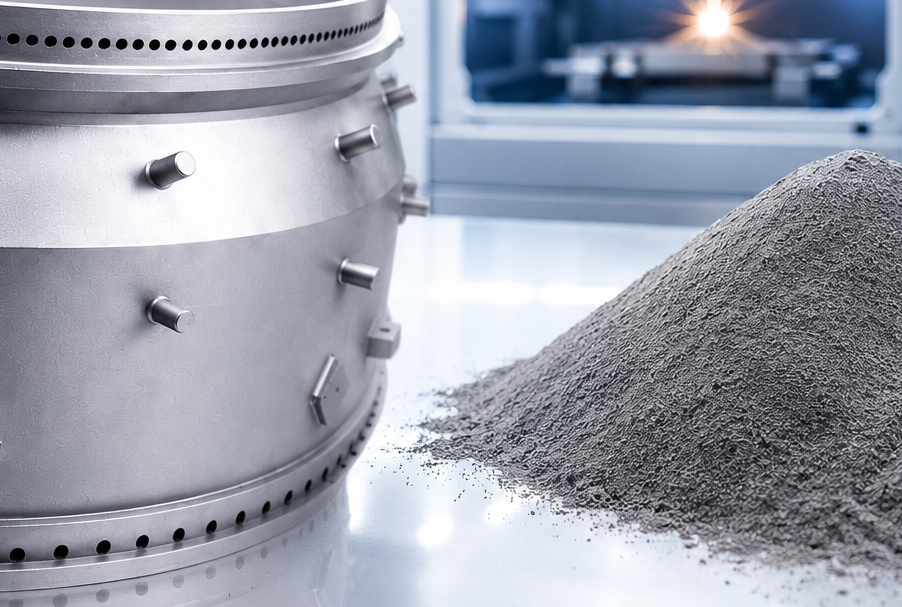
Metal additive manufacturing keeps expanding across aerospace, automotive, healthcare, energy, tooling, and research. As that demand grows, buyers ask a practical question: can you actually buy metal 3D printing powder in stock and ready to ship? Yes. Manufacturers, service providers, research labs, and production facilities can source a wide range of metal powders today. Whether you run LPBF, EBM, or DED, multiple material options are available for prototyping, tooling, and end-use production.
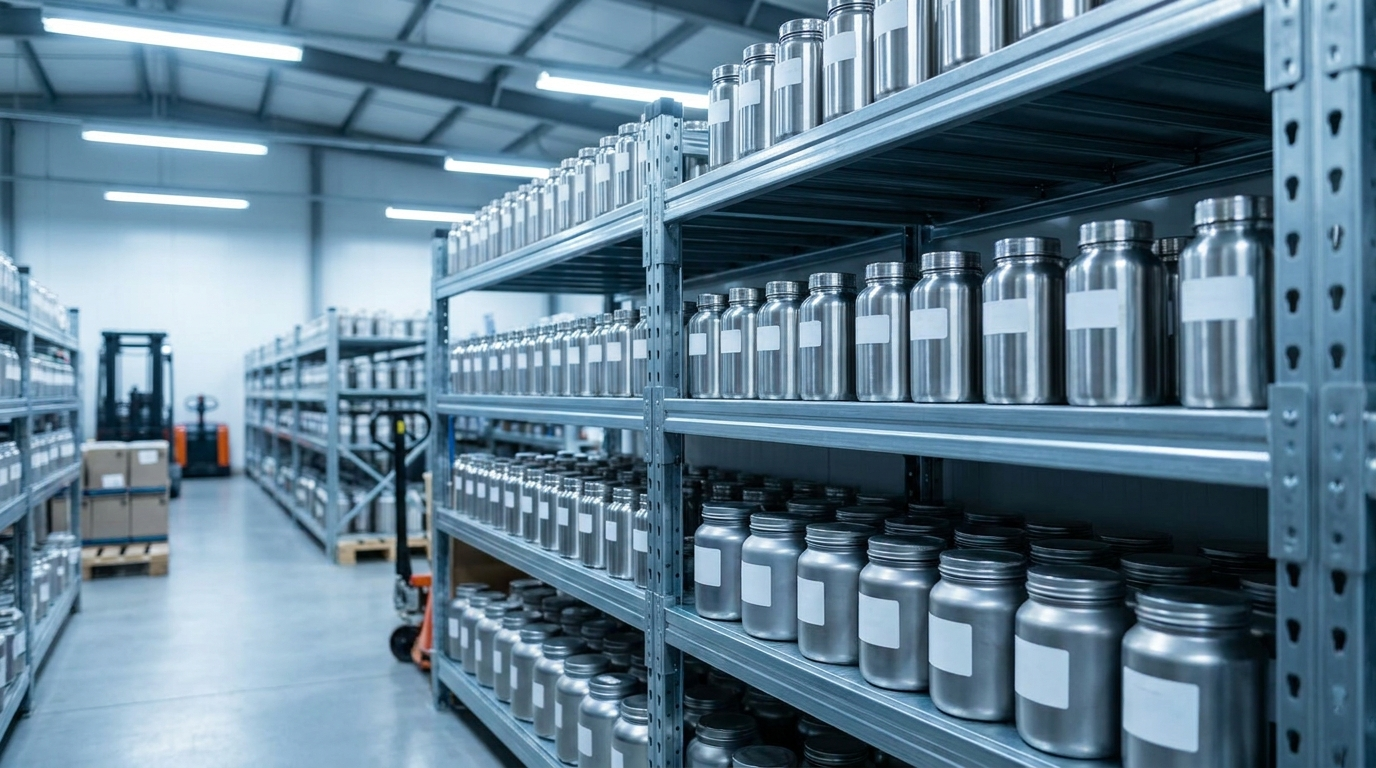
What is metal 3D printing powder?
Metal 3D printing powder is a finely atomized material engineered for additive manufacturing processes:
- Laser Powder Bed Fusion (LPBF)
- Electron Beam Melting (EBM)
- Directed Energy Deposition (DED)
These powders are built to deliver consistent particle size distribution, good flowability, high density, stable printing performance, and strong mechanical properties. Industries use them to build lightweight parts, complex geometries, tooling components, implants, and high-performance production parts. For a broader primer on how the process works, see our guide to additive metal printing with powder.
Are metal powders available in stock?
Many suppliers now hold industrial metal powders in stock for immediate purchase. Availability depends on material type, particle size range, packaging size, printing compatibility, and industry demand. Popular alloys such as stainless steel, titanium, aluminum, cobalt chrome, and Inconel are often ready for fast shipping.
Before you order, verify the powder chemistry, printing process compatibility, batch consistency, material certifications, and packaging options. Those five checks separate a smooth production run from a batch of scrapped builds.
Aluminum powders for lightweight applications
Aluminum alloys are among the most widely used materials in metal additive manufacturing, combining low weight, strength, thermal conductivity, and corrosion resistance. Aerospace, automotive, robotics, electronics, motorsports, and general industrial manufacturing rely on aluminum powders to produce high-performance parts with reduced weight and optimized geometries. Additive manufacturing also enables lightweight lattice structures, internal cooling channels, and optimized designs that are difficult or impossible to machine conventionally.
Common aluminum options include AlSi10Mg in 5 kg (11 lbs) and 10 kg (22 lbs) LPBF-compatible packaging. AlSi10Mg is one of the most common aluminum alloys for LPBF because of its printability and mechanical performance. The silicon and magnesium content improves strength, hardness, and processing stability during printing.
Why AlSi10Mg works well
- Thermal properties. Strong thermal conductivity suits heat exchangers, electronic housings, cooling systems, and components exposed to elevated temperatures.
- Lightweight performance. Low density cuts system weight while holding mechanical performance, which matters in aerospace, electric vehicles, drones, and motorsports.
- Corrosion resistance. Solid corrosion resistance keeps parts durable in industrial, marine, and outdoor environments.
- Strength. A strong strength-to-weight ratio, with enhanced mechanical properties achievable after heat treatment and post-processing.
- Printability. Stable, repeatable behavior in LPBF systems: good layer adhesion, high-density builds, fine feature resolution, reduced cracking risk, and consistent surface quality.
Typical aluminum parts include functional prototypes, lightweight structural components, aerospace brackets, automotive performance parts, heat exchangers, electronic enclosures, robotics components, tooling and fixtures, and end-use production parts. Compared with traditional methods, aluminum 3D printing supports faster design iterations, reduced material waste, part consolidation, lightweight optimization, shorter lead times, and complex internal geometries.
Cobalt chrome powders for medical and industrial parts
Cobalt chrome powders are trusted for their combination of mechanical performance, corrosion resistance, and long-term durability. They hold up under demanding environments, repeated mechanical stress, and exposure to heat or chemicals. Buyers select them for wear resistance, corrosion resistance, high-temperature stability, strong mechanical performance, long service life, and biocompatibility in medical use.
Available options include CoCrMo (CCM MC) powder in 1 kg (2.2 lbs) rated LPBF/EBM/DED compatible, a CoCrMo LPBF-compatible powder in 10 kg (22 lbs), and a medical-grade cobalt chrome alloy in 10 kg (22 lbs) rated LPBF/EBM/DED compatible. These powders run on LPBF, EBM, and DED systems.
Common cobalt chrome parts include dental crowns and bridges, orthopedic implants, surgical instruments, aerospace engine components, turbine and high-temperature parts, wear-resistant industrial components, and custom medical devices. Medical-grade cobalt chrome is valued for implants because it offers biocompatibility, corrosion resistance inside the body, and the ability to print detailed patient-specific geometries.
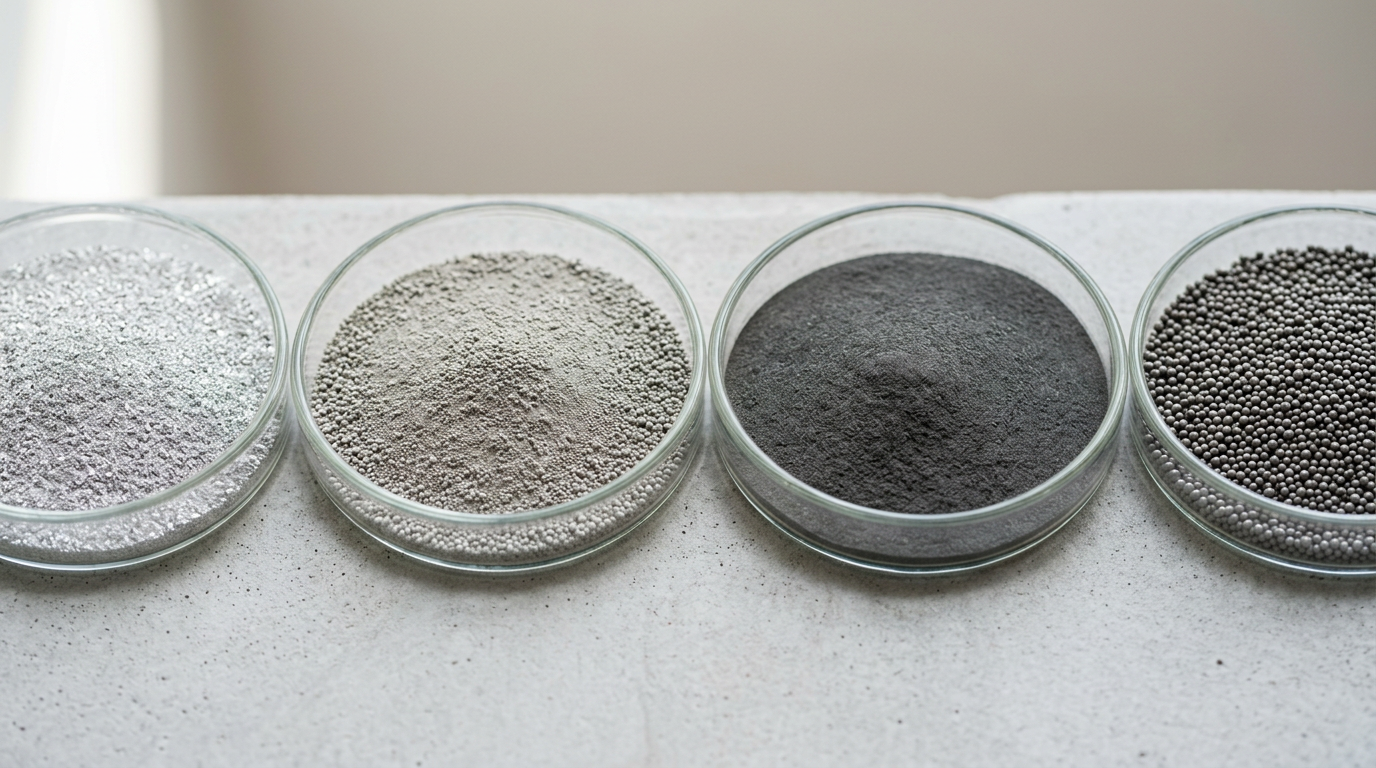
Tool steel and stainless steel powders
Steel powders play a major role in industrial metal 3D printing thanks to their versatility, durability, and cost-effective performance. Tool steels and stainless steels are chosen for tooling, production parts, functional prototypes, manufacturing aids, and end-use industrial components. Across the family, steel powders deliver high mechanical strength, toughness and durability, corrosion resistance, heat resistance, good machinability and post-processing, dimensional stability, and reliable repeatability.
Three alloys cover most requirements, available in LPBF-ready packaging:
- H13 Tool Steel Powder, 10 kg (22 lbs), LPBF
- M300 Maraging Steel Powder, 10 kg (22 lbs), LPBF/EBM/DED compatible
- SS316L Stainless Steel Powder, 10 kg (22 lbs), LPBF compatible
H13 tool steel powder
H13 is a hot-work tool steel known for hardness, thermal fatigue resistance, and durability under repeated heating cycles. It is used for injection molding tools, die casting tooling, extrusion dies, industrial tooling components, and high-temperature production environments.
M300 maraging steel powder
M300 maraging steel offers ultra-high strength with good toughness and low distortion after heat treatment. It suits aerospace tooling, high-performance engineering parts, injection molds, structural industrial components, and precision manufacturing.
SS316L stainless steel powder
SS316L is one of the most widely used stainless steel powders in additive manufacturing because of its corrosion resistance and broad industrial compatibility. Typical uses include industrial equipment components, chemical processing parts, medical and laboratory devices, food-grade manufacturing components, and functional prototypes or end-use parts. For more on this alloy family, see our explainer on stainless steel alloy.
More broadly, steel powders build molds and tooling, jigs and fixtures, functional industrial parts, production and replacement components, engineering prototypes, and manufacturing equipment parts. With strong mechanical properties and compatibility across multiple platforms, they remain a dependable choice for durable additive manufacturing.
Nickel alloy and Inconel powders
Nickel-based superalloys are built for high-temperature and extreme-performance environments, holding strength and corrosion resistance as temperatures climb. Available products include:
- IN625 Nickel Alloy Powder, 10 kg (22 lbs), LPBF/EBM/DED compatible, plus an IN625 LPBF-compatible option in 10 kg (22 lbs)
- IN718 Inconel Alloy Powder, 10 kg (22 lbs), LPBF compatible, plus an IN718 LPBF/EBM/DED-compatible option in 10 kg (22 lbs)
- IN939 Nickel Alloy Powder, 10 kg (22 lbs), LPBF/EBM compatible
These alloys serve aerospace turbines, energy systems, motorsport components, high-temperature tooling, and industrial equipment, especially mission-critical parts exposed to thermal stress.
Titanium powders for aerospace and medical manufacturing
Titanium remains one of the most in-demand materials in metal additive manufacturing. Available titanium powders include:
- Ti64 Grade 23 ELI Titanium Alloy Powder, 5 kg (11 lbs), LPBF/EBM/DED compatible
- Ti64 Titanium Alloy Powder, 10 kg (22 lbs), LPBF compatible
- Ti-6Al-4V Grade 5 Titanium Powder (TC4), 15–53 µm, 10 kg (22 lbs), LPBF compatible
Titanium alloys combine an exceptional strength-to-weight ratio, corrosion resistance, biocompatibility, heat resistance, and lightweight performance. They fit aerospace structures, medical implants, motorsports, and advanced engineering.
How to choose the right metal powder
When selecting a metal powder for additive manufacturing, weigh these factors:
- Printing technology compatibility (LPBF, EBM, or DED)
- Mechanical property requirements
- Surface finish expectations
- Heat resistance
- Corrosion resistance
- Regulatory requirements
- Application type
Then confirm the operational details before buying: particle size distribution, powder reuse guidelines, storage requirements, material data sheets, and process parameter support. Particle size distribution deserves particular attention because it drives flowability, layer consistency, packing density, and final part quality, and different processes may call for different specifications.
Storage and reuse
Store metal powders in controlled environments that limit exposure to moisture, oxygen, and contamination, typically in sealed containers with controlled handling. That preserves powder quality and prevents oxidation or degradation. Many powders can be partially reused depending on the process, machine settings, and handling, but repeated reuse can shift particle size distribution and oxidation levels and affect material performance. Establish reuse guidelines to keep print quality and mechanical properties consistent.

Where to buy metal 3D printing powders
Manufacturers and engineers can source industrial metal powders from specialized additive manufacturing suppliers that support LPBF, EBM, and DED. Specialized suppliers generally offer better material traceability, technical support, process knowledge, and quality control than general distributors, along with certifications, printing recommendations, and powders tuned for specific systems and applications.
Additive Plus stocks aluminum, titanium, stainless steel, cobalt chrome, and nickel-based alloys in a range of particle size distributions and packaging sizes for research, prototyping, and production. Start with the metal powder buyer landing page, or browse the full metal powders category to compare alloys and pack sizes. If you also need finished parts rather than raw powder, see our overview of where to get metal parts 3D printed.
When you compare suppliers, evaluate material certifications, powder consistency, particle size distribution, machine compatibility, traceability, and technical support. Those criteria drive reliable printing performance and part quality.
Final thoughts
Metal 3D printing powders are more accessible than ever, with many materials held in stock for industrial use. From aluminum and stainless steel to titanium and nickel superalloys, you can source powders designed for high-performance production and research. As adoption expands, choosing the right supplier and material is what secures reliable print quality, strong mechanical performance, and repeatability.
Frequently asked questions
What are the most common metal powders used in additive manufacturing?
The most common include AlSi10Mg aluminum alloy, SS316L stainless steel, Ti64 titanium alloy, cobalt chrome alloys, H13 tool steel, M300 maraging steel, and nickel-based superalloys such as IN625 and IN718. Each offers mechanical and thermal properties suited to specific applications.
Why is aluminum powder popular for metal 3D printing?
Aluminum combines lightweight performance with good mechanical strength and corrosion resistance. AlSi10Mg is used in aerospace, automotive, robotics, and electronics where cutting weight without losing structural integrity matters, and its thermal conductivity suits cooling systems and heat exchangers.
What industries use cobalt chrome powders?
Medical, dental, aerospace, and industrial manufacturing. Cobalt chrome is valued for wear resistance, corrosion resistance, heat resistance, and durability. In healthcare it is used for orthopedic implants, dental crowns and bridges, and surgical instruments because of its biocompatibility and mechanical performance.
What is the difference between stainless steel powder and tool steel powder?
SS316L stainless steel is used mainly for corrosion-resistant industrial components, medical devices, and functional prototypes. Tool steels like H13 are built for high hardness, wear resistance, and thermal fatigue resistance, which suits molds, dies, and industrial tooling. The choice depends on the part's performance requirements.
Why are titanium powders important in additive manufacturing?
Titanium pairs lightweight performance with high mechanical strength and corrosion resistance. Ti-6Al-4V is common for aerospace structures, motorsport parts, medical implants, and advanced engineering, and its biocompatibility makes it a strong choice for patient-specific medical devices.
Are metal powders compatible with all metal 3D printers?
No. Compatibility depends on particle size distribution, machine parameters, laser settings, and the process itself. Confirm whether a powder is optimized for LPBF, EBM, or DED before purchasing.
What should companies check before buying metal powders?
Review powder chemistry, particle size distribution, material certifications, batch consistency, and process compatibility. Also evaluate storage requirements, packaging sizes, and whether the supplier provides technical documentation and printing support. These checks support stable production and repeatable quality.
Are metal 3D printing powders reusable?
Many can be partially reused depending on the process, machine settings, and handling. Repeated reuse can affect particle size distribution, oxidation levels, and performance over time, so manufacturers set reuse guidelines to keep print quality and mechanical properties consistent.
How should metal 3D printing powders be stored?
Store them in controlled environments that limit moisture, oxygen, and contamination, typically in sealed containers with controlled handling. Proper storage preserves powder quality and prevents oxidation or degradation.
Can metal powders be used for end-use production parts?
Yes. Metal powders are used for fully functional end-use components across aerospace, medical, automotive, and industrial sectors. Modern processes achieve strong mechanical performance, dimensional accuracy, and repeatability, which makes metal 3D printing suitable for both prototyping and serial production.
Have a question or a project? Let’s talk.
Tell us what you need — a real applications engineer replies within 24 hours. NDA standard, no sales script.