
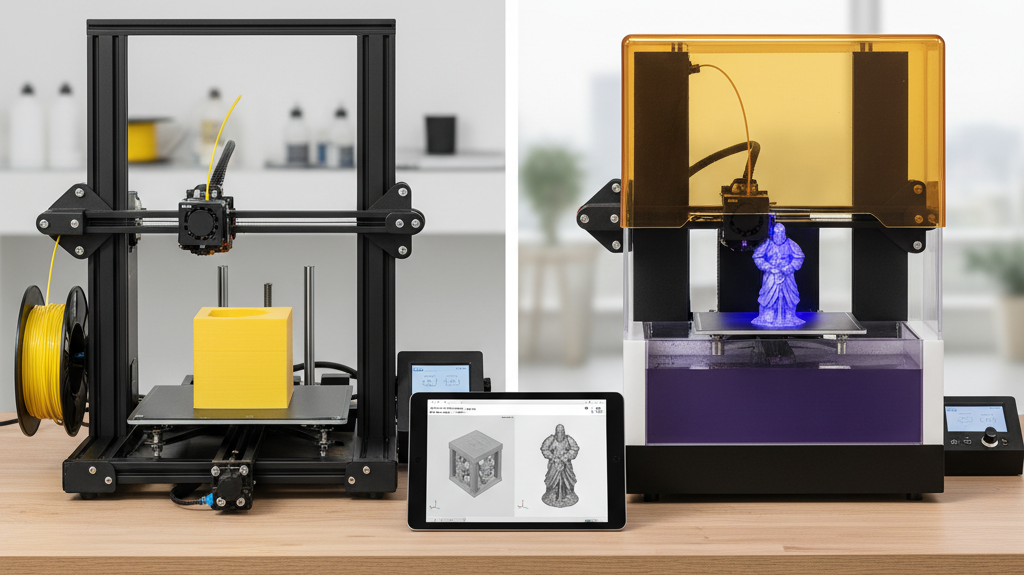
The ability to transform digital designs into tangible objects has revolutionized countless industries and empowered creators worldwide. At its core, 3D printing, or additive manufacturing, precisely builds three-dimensional parts layer by layer from a digital model. For those embarking on their 3D printing journey, or even seasoned professionals evaluating their next investment, two technologies frequently emerge as primary contenders: Fused Deposition Modeling (FDM) and Stereolithography (SLA).
Understanding the fundamental differences between FDM vs SLA 3D printing is crucial for making an informed decision. FDM, the most widely accessible method, utilizes thermoplastic filament that is melted and extruded through a nozzle. In contrast, SLA employs a UV laser or projector to cure liquid photopolymer resin layer by layer. This comprehensive guide will delve into the intricacies of each process, comparing the strengths and weaknesses of filament vs resin 3D printers across key aspects such as precision, material properties, cost-effectiveness, and ideal applications.
Whether you’re looking to produce robust functional prototypes, intricate miniatures, or high-fidelity visual models, discerning which is better for your needs comes down to understanding the distinct advantages each technology offers. We aim to equip you with the knowledge to confidently select the 3D printing technology that best aligns with your project requirements and creative ambitions.
FDM vs SLA: Which 3D Printer is for You?
When diving into the exciting world of 3D printing, beginners often encounter two prominent technologies: Fused Deposition Modeling (FDM) and Stereolithography (SLA). These methods represent the core of additive manufacturing for many enthusiasts and professionals alike. This guide will thoroughly explain both FDM 3D printing and SLA 3D printing, outlining their unique processes, typical materials, and ideal applications. By understanding the fundamental differences between FDM and SLA, you will be better equipped to decide which technology, whether a filament-based or resin 3D printer, is better for your specific needs, considering factors like print quality, cost, and the types of parts you aim to create.
Understanding FDM 3D Printing: The Workhorse of Additive Manufacturing
FDM, short for Fused Deposition Modeling, is one of the most common and accessible forms of 3D printing. It is also known as Fused Filament Fabrication (FFF). This technology works by building objects layer by layer from the bottom up.
The process begins with a spool of thermoplastic filament—a solid plastic string—which is fed into a heated print head. Inside the print head, the filament melts to a semi-liquid state and is then precisely extruded through a tiny nozzle. This molten plastic is deposited onto a build platform according to the digital design, hardening almost instantly as it cools. Each subsequent layer adheres to the one below it, gradually forming the desired three-dimensional object.
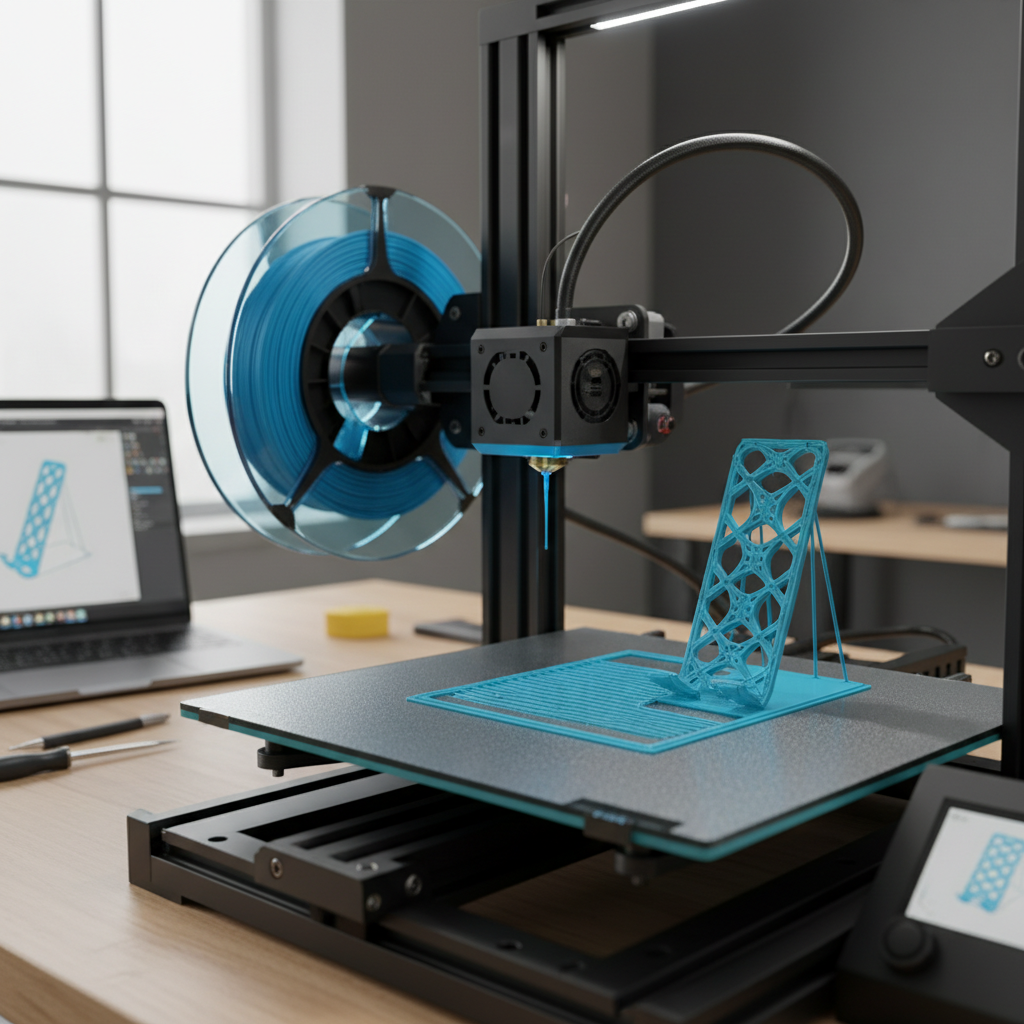
Common materials for FDM 3D printing include PLA filament, ABS, PETG, and TPU, among others. These materials are generally quite affordable per kilogram compared to resins, making FDM an economical choice. FDM 3D printers are often chosen for functional prototypes, jigs, fixtures, enclosures, and general hobby parts due to their material strength and typically larger available build volumes. They also offer a vast array of material and color options, providing flexibility for various projects. Many beginners start with FDM 3D printing because of its lower entry cost and relatively straightforward operation.
Understanding SLA 3D Printing: Precision Through Photopolymerization
SLA, or Stereolithography, represents a different approach to additive manufacturing, known for its remarkable precision and smooth surface finishes. Unlike FDM’s melted plastic, SLA uses a liquid material called photopolymer resin.
The process involves a tank filled with this liquid resin. A UV laser or projector shines light onto the resin, curing or hardening it layer by layer. The build platform then moves incrementally, allowing the laser to cure the next cross-section of the object in the liquid bath until the entire part is formed.
The primary characteristics of SLA 3D printing are its very high resolution and exceptionally smooth surface finish. This allows SLA 3D printers to reproduce intricate details and fine features far better than most FDM machines.
SLA utilizes a variety of thermoset photopolymer resins, which can include standard, tough, flexible, or specialized resins for applications such as dental models, medical devices, or jewelry patterns, including Castable SLA 3D Printing Resin. These resins are often more expensive than FDM filaments and can be more brittle than common FDM plastics. SLA 3D printing excels in creating miniatures, figurines, detailed visual prototypes, and other small parts where aesthetic quality and fine detail are paramount. If you’re looking for a SLA 3D printer, understanding these advantages is crucial.
The Fundamental Differences: FDM vs SLA – A Side-by-Side Comparison
To truly grasp which technology suits your needs, it’s essential to look at the fundamental differences between FDM and SLA 3D printing head-on. Here’s a concise comparison:
| Aspect | FDM (Filament) | SLA (Resin) |
|---|---|---|
| Material state | Solid thermoplastic filament | Liquid photopolymer resin |
| Process | Filament melted and extruded through a nozzle builds layers on a bed. | UV laser/projector cures resin layer by layer in a tank. |
| Resolution | Lower; visible layer lines, typically 50–500 µm. | Higher, smoother surfaces, typically 25–300 µm, finer details. |
| Surface finish | Rougher, needs sanding or vapor smoothing for smoothness. | Very smooth out of the printer, minimal finishing for cosmetic parts. |
| Build volume | Often larger (including very large industrial FDM). | Generally smaller due to resin tank size limits. |
| Part strength | Good mechanical strength, especially with ABS/nylon; anisotropic across layers. | Fine detail but often less robust; some resins are more brittle. |
| Cost | Lower printer and material costs overall. | Higher printer and resin costs. |
Material Matters: Exploring Resin vs Filament
The choice between FDM and SLA largely boils down to the properties and practicalities of resin vs filament for 3D printing. This impacts not only print quality but also cost, strength, and post-processing requirements.
FDM technology utilizes thermoplastic filaments like PLA, ABS, PETG, nylon, and TPU. Fiber-reinforced grades extend that list where stiffness matters — see carbon fiber filament. These materials can be melted and re-solidified, offering a wide range of mechanical properties. In contrast, SLA uses thermoset photopolymer resins, which cure permanently when exposed to UV light and cannot be remelted.
Generally, filament is cheaper per kilogram than resin, making FDM more cost-effective for larger prints or batch production. For strength and durability, FDM materials like ABS or nylon often produce parts that are stronger and more durable under mechanical stress compared to many standard SLA resins. While tough and engineering resins exist for SLA, general-purpose resin prints are better suited for short-term use, detailed visuals, and fine features.
Both technologies offer flexibility and special properties in their materials. FDM boasts a wide range of engineering materials, including carbon-filled, high-temperature, and truly flexible filaments. SLA resins are known for specialized applications, with options like dental, jewelry, and castable resins designed for very specific industry needs.
The post-processing workflow also differs significantly. FDM prints typically require removing support structures and sometimes sanding for a smoother finish. SLA prints, however, demand a more intensive and often messier process: parts must be removed from the build plate, washed in a solvent (like isopropyl alcohol) to remove uncured resin, have supports carefully removed, and then undergo a UV post-curing step to achieve their final hardness and properties. This involves more steps and handling of chemicals.
Regarding safety and handling, filament is generally cleaner and easier to manage, though good ventilation is recommended for some plastic fumes. Resin, on the other hand, requires gloves, eye protection, and proper ventilation due to the nature of liquid photopolymers. Careful storage and disposal of uncured resin and solvent are also crucial.
Advantages of FDM 3D Printing: Why Choose Filament?
For many aspiring 3D printing enthusiasts and professionals, FDM offers compelling advantages, particularly for those focused on functional parts and budget-friendly projects. The core benefits include the lower upfront cost for both the printers themselves and the filament materials. This makes FDM an excellent entry point into additive manufacturing.
Another significant draw is the availability of larger build volumes. FDM printers can often create much bigger objects, from large prototypes to custom tools and fixtures, without compromising on affordability. The wide range of materials and colors further expands FDM’s versatility. Beyond standard plastics, you can find engineering-grade plastics, flexible filaments, and even specialty options, allowing for diverse applications.
Ultimately, FDM is a go-to for printing strong, functional parts. If your project requires jigs, brackets, end-use components, or robust prototypes that can withstand mechanical stress, FDM 3D printing excels. The overall workflow for FDM is generally simpler and cleaner, making it a popular choice in educational settings and makerspaces for beginners. For rapid prototyping, FDM delivers a balance of speed, cost, and functional output.
Disadvantages of FDM 3D Printing: Understanding the Limitations
While FDM offers numerous benefits, it’s equally important to understand its limitations to set realistic expectations, especially if you’re aiming for highly detailed or aesthetically perfect models. One of the most common observations is the presence of visible layer lines and a generally rougher surface finish on FDM prints. Achieving a perfectly smooth, cosmetic surface often requires additional post-processing, such as sanding or vapor smoothing.
Furthermore, FDM typically offers lower resolution and struggles with very small or intricate features compared to SLA. Delicate details, sharp corners, and tiny text can be challenging to reproduce accurately.
Users can also encounter issues like warping and adhesion problems, particularly with certain materials like ABS or when printing large, flat parts. This occurs when parts cool unevenly, causing corners to lift from the build plate. Another important consideration is anisotropic strength: FDM parts are generally weaker between layers than along the layers. This means the orientation of your print significantly impacts the final part’s strength, which is vital for functional components. Lastly, support structures, while necessary for complex geometries and overhangs, can leave marks on the finished part and may be more challenging to remove cleanly than with resin printing.
Understanding these disadvantages of FDM helps in making informed decisions about whether this technology is suitable for your specific project, particularly when considering detailed models or miniatures where a smooth finish and high precision are crucial.
Awesome Things About SLA Printers
Stepping beyond the workhorse FDM, SLA 3D printing offers a compelling suite of advantages, particularly for those prioritizing aesthetics and minute accuracy. What makes a resin 3D printer the right choice when high detail is paramount?
- Unrivaled Detail and Precision: This is SLA’s undisputed superpower. Where FDM might show subtle layer lines, SLA (Stereolithography) produces prints with exceptionally fine features, sharp corners, and incredibly smooth curves. This precision is due to the laser or projector curing liquid resin with pinpoint accuracy, allowing for layer heights often as low as 25 microns (0.025 mm) – thinner than a human hair. This capability translates into models that capture the most intricate design elements, from delicate filigree on jewelry to the subtle facial expressions on a miniature figurine.
- Superior Surface Finish: Models emerge from an SLA printer with a naturally smooth, almost glossy surface, often requiring minimal post-processing for cosmetic applications. This inherent smoothness means parts are ready for painting, plating, or immediate display, making SLA ideal for visual prototypes, design models, and end-use parts where appearance is critical.
- Ideal for Specialized Applications: For creators in fields like art, dental, jewelry, or intricate model-making, SLA is the clear winner. Its ability to reproduce extremely small and complex geometries makes it perfect for crafting high-fidelity jewelry masters for casting, precise dental models for aligners, or detailed character miniatures for tabletop gaming. When exploring options, a comprehensive guide to choosing the right SLA 3D printer can help navigate the market for these specialized needs.
- Efficiency for Batch Production: While individual FDM prints can be faster for large, simple objects, an SLA printer can often be more efficient when producing multiple small, detailed items simultaneously. The print time per layer remains largely consistent regardless of how many objects are on the build plate, allowing for quicker batch production of intricate components.
The Not-So-Great Things About SLA Printers
Despite its impressive capabilities, it’s crucial to understand the disadvantages of resin 3D printing for home users and professional environments alike. SLA comes with its own set of trade-offs that can influence your decision.
- Higher Costs: Both the upfront investment for an SLA printer and the ongoing cost of liquid resin are generally higher than FDM systems. This higher material cost can be a significant factor for hobbyists or those undertaking large projects. Specialized resins, like those used for castable SLA 3D printing, can further increase material expenses due to their unique properties and formulations.
- Limited Build Volume: The vast majority of consumer and prosumer SLA printers feature significantly smaller build volumes compared to their FDM counterparts. While industrial SLA machines can be quite large, most desktop models are constrained by the size of their resin tank. This limits the size of single objects you can print, often requiring larger designs to be split into multiple parts and assembled.
- Intensive and Messy Post-Processing: Perhaps the most significant hurdle for new users is the multi-step post-processing required for SLA prints. After printing, parts are covered in uncured, sticky liquid resin. They must be carefully removed from the build plate, washed in a solvent (typically isopropyl alcohol) to remove excess resin, have supports painstakingly removed, and then post-cured under UV light to achieve their final mechanical properties. This process can be messy, requires proper ventilation, and generates chemical waste that needs careful disposal.
- Material Brittleness and Safety Concerns: While specialized tough and flexible resins are available, many standard SLA resins tend to be more brittle than common FDM thermoplastics like ABS or nylon. This makes them less suitable for functional parts that will endure significant mechanical stress. Furthermore, liquid resin is a chemical irritant and requires careful handling with gloves and eye protection in a well-ventilated area. Proper storage and disposal protocols are essential for safe operation.
Applications and Use Cases: FDM vs SLA for Your Projects
Understanding the strengths and weaknesses of each technology helps in determining which is better for miniatures or functional parts. Let’s break down concrete scenarios for choosing between FDM vs SLA for your next project.
Choose FDM (Filament) when you prioritize:
- Functional Parts and Tooling: For creating robust, usable items like custom brackets, jigs, fixtures, enclosures, or replacement parts, FDM is often the superior choice. Its ability to print with strong engineering thermoplastics makes it ideal for components that need to withstand mechanical stress. If you’re prototyping for functionality, FDM offers a cost-effective way to iterate and test designs. Learn more about effective strategies for rapid prototyping with 3D printing.
- Large-Scale Prototypes and Objects: When you need significant build volume, whether for a large architectural model, a cosplay prop, or substantial industrial components, FDM printers typically offer much larger print beds. This allows for the production of big parts in a single print, reducing assembly time. For truly massive endeavors, exploring Large-Format Additive Manufacturing (LFAM) might be your next step.
- Cost-Effectiveness and Iteration: If budget is a primary concern, both for the printer and materials, FDM provides a more economical entry point into 3D printing. It’s excellent for rapid, low-cost prototyping where you might print multiple versions of a design.
- Educational and Maker Environments: FDM’s simpler workflow, safer materials (like PLA filament), and lower cost make it a staple in schools, makerspaces, and home workshops, fostering accessible learning and experimentation. For a deeper dive into common FDM materials, explore our comprehensive guide to PLA filament.
Choose SLA (Resin) when you prioritize:
- High-Fidelity Visual Prototypes and Models: For design reviews, marketing mock-ups, or any application where a flawless surface finish and intricate detail are paramount, SLA excels. It allows designers to present concepts with a high degree of realism.
- Miniatures, Figurines, and Collectibles: The ability to capture tiny textures, sharp edges, and delicate features makes SLA indispensable for creators of tabletop miniatures, collectible statues, and highly detailed action figures.
- Jewelry, Dental, and Medical Applications: These fields demand extreme precision and smooth surfaces for functional and aesthetic reasons. SLA is widely used for creating castable patterns for jewelry, accurate dental models for crowns and bridges, and anatomical models for medical planning.Small, Complex Parts with Delicate Features: If your design features very thin walls, intricate lattice structures, or tiny embossed details that FDM struggles to reproduce cleanly, SLA will deliver superior results.
Whether you’re looking for 3D printing services in Los Angeles or aiming to set up your own workshop, matching the technology to your project’s needs is key.
Beyond FDM and SLA: A Brief Look at SLA vs SLS
As you delve deeper into additive manufacturing, you might encounter another common acronym: SLS. While our focus remains firmly on FDM vs SLA, it’s worth a moment to clarify the SLA vs SLS difference to avoid confusion.
SLS stands for Selective Laser Sintering. Unlike both FDM and SLA, which use filament or liquid resin, SLS employs a powerful laser to selectively fuse together layers of a fine plastic powder (often nylon). This powder-bed fusion process is distinctly different from SLA’s photopolymerization of liquid resin. A key advantage of SLS is that the surrounding unfused powder acts as a natural support for the printed part, eliminating the need for generated support structures and enabling highly complex geometries.
Generally, SLS printers are industrial-grade machines with a significantly higher cost and more complex operational requirements than typical desktop FDM or SLA printers. They are often used for producing strong, isotropic (uniform strength in all directions) end-use parts and for efficient batch production in manufacturing settings. So, remember: SLA is about light and liquid resin, while SLS is about lasers and powder.
Let’s Decide! Which 3D Printer is Right for You?
Ultimately, the choice between FDM and SLA boils down to your specific priorities, project requirements, and comfort level with the associated workflows. There is no universal “best” printer, only the best one for your unique needs.
To help solidify your decision, consider these key questions:
- Is a tight budget your absolute top priority, both for the machine and materials? If yes, FDM is your most accessible entry point.
- Do your projects primarily demand maximum detail, incredibly smooth surfaces, and intricate designs (e.g., highly detailed miniatures, jewelry, display models)? If so, SLA will deliver the superior aesthetic quality.
- Are you creating strong, functional components, tools, jigs, or parts that need to withstand real-world use and moderate stress? Then FDM, particularly with robust materials like ABS or nylon, is typically the better fit.
- Do you frequently need to print large objects or prototypes? The generally larger build volumes available with FDM printers make it the more practical choice for bigger parts.
- Are you willing to engage in a more involved, sometimes messy, post-processing routine involving chemicals to achieve premium surface quality and detail? If your answer is yes, then SLA‘s results will justify the extra effort.
The best 3D printer for you is one that aligns with your creative vision, budget, and desired output. Don’t be afraid to start with one technology, master it, and then potentially explore the other as your needs evolve. Many professional services also offer 3D scanning services and printing in various technologies, allowing you to experience the capabilities without a significant hardware investment.
Conclusion: Your Guide to Mastering FDM vs SLA
Navigating the landscape of 3D printing begins with understanding the core differences between FDM vs SLA. This journey reveals a clear trade-off: FDM offers a cheaper, more robust, and generally larger-scale printing solution with a wider array of filament options for functional parts. Conversely, SLA excels in delivering higher resolution, exquisitely smooth surfaces, and finer details by leveraging specialized resin for visually stunning models and intricate components.
Remember, the right choice depends entirely on your budget, the intended size of your parts, the level of detail required, and the ultimate use case. Embrace the learning curve, choose the technology that best matches your immediate projects, and prepare to unlock a world of creative and functional possibilities.
Conclusion
Navigating the world of FDM vs SLA 3D printing ultimately boils down to understanding your priorities. FDM printers are the sturdy, all-around builders, excelling in producing functional, larger parts at a lower cost, and offering a wide array of robust materials. SLA, conversely, stands as the champion of detailed artistry, unmatched for intricate details, ultra-smooth surfaces, and high-fidelity visual models.
Your ultimate decision hinges on your specific project requirements: your budget, the size and desired detail of your parts, and their intended use. There is no universal “best” technology, only the best fit for your application.
Whether you dive into the versatile world of filament or explore the precision of resin, starting with the technology that aligns best with your immediate needs is key. Remember, you can always leverage 3D printing services if you wish to experiment with the alternative without a full hardware investment. Embrace the journey of transforming your digital designs into tangible reality; happy printing!
Frequently asked questions
Is FDM or SLA better for beginners?
For most beginners, FDM is generally recommended. FDM printers are often less expensive, use safer and cleaner filament materials, and have a simpler post-processing workflow. While FDM prints might not be as smooth, they offer a great entry point into the world of 3D printing, focusing on functionality and ease of use. SLA involves more steps, careful handling of liquid resin, and more involved cleanup.
What are the main safety differences when operating FDM vs SLA printers?
FDM printers are relatively safe. You should ensure good ventilation when printing certain filaments like ABS, which can release fumes, but the materials themselves are solid and non-toxic to handle. SLA printers require more stringent safety measures. You must always wear gloves and eye protection when handling liquid resin, as it can cause skin irritation. Proper ventilation is crucial due to resin fumes, and you need to safely dispose of uncured resin and solvent waste.
Can FDM and SLA models be painted or finished in similar ways?
Both FDM and SLA prints can be painted, but their initial surface finish dictates the prep work. FDM prints typically have visible layer lines, requiring sanding, priming, and filling if you want a perfectly smooth, paint-ready surface. SLA prints come out with an exceptionally smooth surface, often ready for immediate priming and painting after post-curing and support removal. This makes SLA ideal for highly detailed models where aesthetics are key.
Which technology offers faster print times: FDM or SLA?
The speed depends on the object's geometry and the printer's settings. For large, simple objects, FDM can often be faster due to thicker layers. However, for many small, detailed objects printed simultaneously, or if you need high resolution, SLA can be significantly faster. SLA's light-curing process cures entire layers at once, which can outpace the FDM nozzle tracing each line.
Can I print truly flexible parts with either FDM or SLA?
Yes, both technologies offer options for flexible parts. FDM is very popular for flexible prints using TPU (Thermoplastic Polyurethane) filament, which can create rubber-like, highly bendable objects. For SLA, specific flexible or elastic resins are available, allowing you to print parts that can bend, compress, or stretch, though these resins are often more specialized and expensive.
What are some common mistakes beginners make when choosing between FDM and SLA?
A common mistake is choosing based solely on price without considering the desired print quality or application. Beginners might pick FDM for highly detailed miniatures, then be disappointed by visible layer lines. Conversely, choosing SLA for large, functional prototypes can lead to high material costs and brittle parts. Another mistake is underestimating the post-processing and safety requirements for SLA.
Is it possible to combine FDM and SLA parts in a single project?
Absolutely! Many advanced projects combine FDM and SLA parts to leverage the strengths of each technology. For example, you might print a large, sturdy enclosure or chassis using FDM for its strength and lower cost, then add intricate details like buttons, logos, or delicate character features using SLA for their superior resolution and smooth finish. This allows for a balance of durability, detail, and cost-effectiveness.
How do I dispose of waste materials from FDM and SLA printing?
For FDM, waste filament (supports, failed prints) is solid plastic, which can often be recycled with other plastics (check local recycling guidelines) or disposed of as general waste. For SLA, disposal is more complex. Uncured liquid resin is a chemical and must never be poured down the drain. It should be cured under UV light (e.g., sunlight) until solid and then disposed of as solid plastic waste. IPA or other cleaning solvents used for washing prints also become contaminated with resin and need proper disposal, often requiring specialized chemical waste collection. Always follow your local regulations for chemical waste disposal.
Have a question or a project? Let’s talk.
Tell us what you need — a real applications engineer replies within 24 hours. NDA on request, no sales script.