
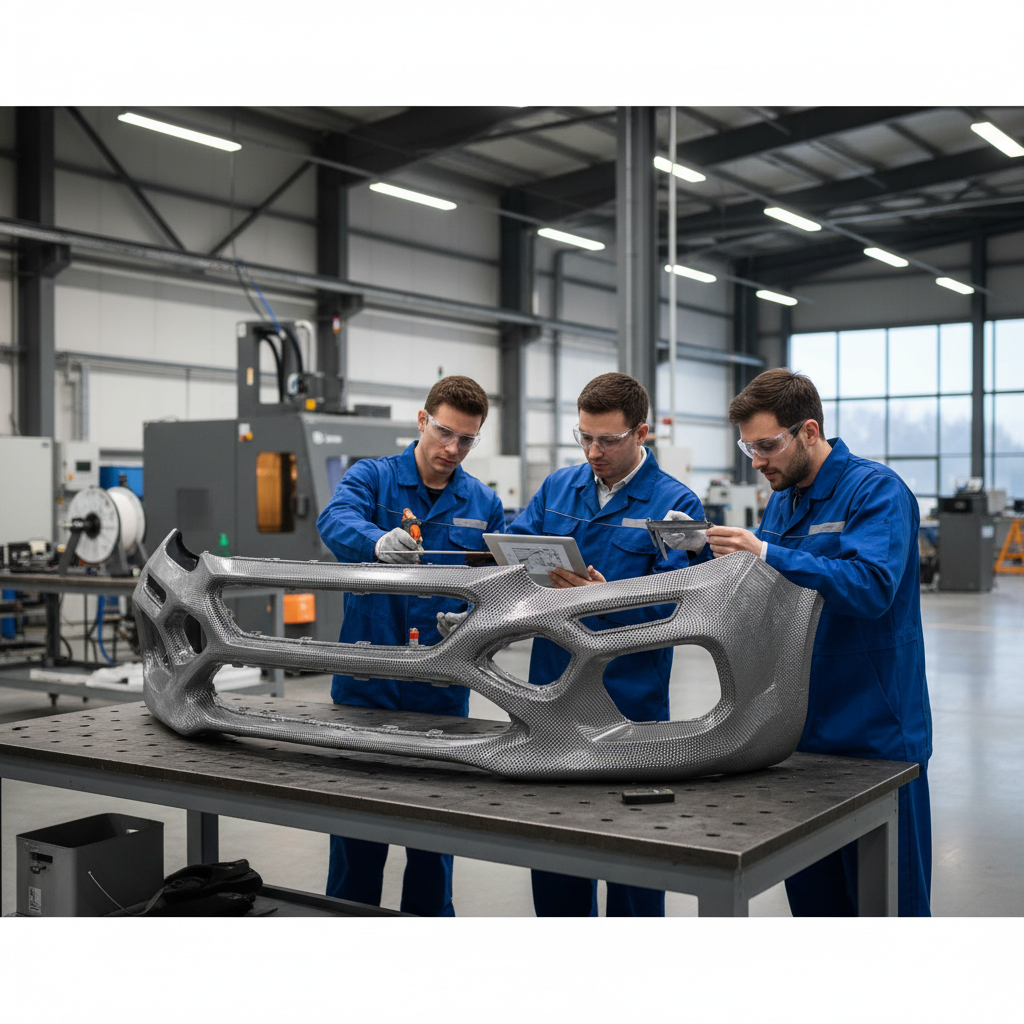
In an era demanding greater design freedom, rapid prototyping, and efficient production of substantial components, conventional 3D printing often falls short. This is where the profound capabilities of a large scale 3d printing service become indispensable. Moving beyond the limitations of desktop-sized machines, these specialized services redefine additive manufacturing, enabling the production of truly oversized objects that transform how industries approach complex projects.
These advanced services are not merely about printing bigger; they represent a paradigm shift in industrial manufacturing, allowing for the creation of 3d printing large objects with unparalleled precision and speed. From full-scale prototypes to specialized tooling and even critical end-use parts, businesses leverage large-format additive manufacturing for significant competitive advantages, including accelerated product development cycles and substantial cost efficiencies.
The ability to 3d print large components is powered by sophisticated technologies like Fused Deposition Modeling (FDM), Stereolithography (SLA), and Selective Laser Sintering (SLS).
This guide delves into the definition, core technologies, strategic benefits, and critical industrial applications of large scale additive manufacturing. We’ll explore how these services empower innovation across various sectors and what considerations are vital when selecting the right partner for your ambitious projects.
Giant Creations: A Kid’s Guide to a Large-Scale 3D Printing Service
You’ve probably seen a 3D printer before, maybe at your school or in a cool tech video. These incredible machines are like little robot artists that build objects layer by layer, often using melted plastic. They can make all sorts of fun things, from small toys and action figures to phone cases and intricate models. Think of it like a super-smart hot glue gun that precisely squeezes out material to create whatever you design on a computer. But what if you wanted to print something much, much bigger? Something that wouldn’t fit on your desk or even in your whole room? That’s where a large-scale 3d printing service comes in! These specialized services use printers that are absolutely enormous, designed to build incredible, oversized things that would be impossible for smaller machines. They’re changing the way many big industries create their products.
How Big Are We Talking?
When we talk about “large scale” in 3D printing, we’re not just talking about slightly bigger. We’re talking about a significant jump in size. A typical desktop 3D printer might be able to create an object roughly the size of a soda can or a small toy car, usually limited to a build area of about 300 x 300 x 300 mm. But imagine needing a part for a car, a piece of furniture, or even a section of an airplane wing. These are the kinds of challenges that a large-scale 3d printing service is built to handle.
These industrial-grade machines define large scale by build volumes that start at around 300 x 300 x 300 mm, but they quickly grow much, much larger. Some industrial printers can reach impressive dimensions of up to 2100 x 900 x 700 mm. That’s like being able to print something as tall as a person, or as wide as a small sofa, all in one continuous piece! This incredible capability allows for 3d printing large objects without the need to print multiple smaller pieces and then assemble them, which saves time, reduces error, and often results in stronger, more robust parts. Whether it’s a full-scale prototype for an automotive component or an oversized prop for a movie set, these giant printers make it possible.
The Super-Printer Secret Powers
So, how do these giant machines manage to build such amazing things on a massive scale? They don’t just use one type of technology; they have a few different “superpowers” or methods, each best suited for different kinds of projects and materials.
The Plastic Squeezer: Fused Deposition Modeling (FDM)
One of the most common and versatile methods for large-scale printing is Fused Deposition Modeling (FDM). Imagine a giant, incredibly precise hot glue gun. This “squeezer” melts a spool of thermoplastic filament – essentially a long string of plastic like ABS or Nylon – and then extrudes it through a nozzle, laying down thin layers. Each layer hardens instantly, bonding to the one below it, slowly building the object from the ground up.
FDM is fantastic for creating large prototypes, tools, and end-use parts because it’s cost-effective and can work with very durable materials. Industrial FDM printers can have build volumes up to 1000 x 610 x 610 mm, making them perfect for producing large, strong plastic components efficiently.
The Magic Powder Zapper: Selective Laser Sintering (SLS)
Another incredible technology, especially for complex and highly detailed parts, is Selective Laser Sintering (SLS). This method is truly like something out of a science fiction movie! An sls 3d printing service uses a machine that spreads a very thin layer of fine powder – often nylon, but it can also be metals or ceramics – onto a build platform. Then, a powerful laser zaps specific points on this powder layer, heating it just enough to fuse (or “sinter”) the particles together to form a solid cross-section of the object.
After each layer is zapped, the platform moves down slightly, a new layer of powder is spread, and the laser repeats its magic. What’s particularly amazing about SLS is that the unfused powder acts as its own support structure, allowing for incredibly intricate and complex geometries without the need for additional, removable supports. This results in parts with excellent mechanical properties and smooth finishes, ideal for demanding applications like aerospace and automotive components. For instance, creating intricate prototypes or functional parts using durable materials like Nylon 12 becomes far more efficient with SLS.
The Liquid Light Shaper: Stereolithography (SLA)
Stereolithography (SLA) uses a different approach. Instead of melting plastic or fusing powder, SLA printers use a laser to cure liquid resin. A vat holds a special photopolymer resin, and a UV laser traces the shape of each layer onto the surface of the resin, hardening it. The build platform then lowers, and the next layer is traced. SLA is renowned for producing parts with exceptionally fine details and incredibly smooth surface finishes, making it ideal for visual prototypes, master patterns, and intricate medical models. Large-scale SLA machines can achieve build volumes of up to 800 x 800 x 600 mm.
The Metal Master: Selective Laser Melting/Direct Metal Laser Sintering (SLM/DMLS)
For truly strong, high-performance parts, especially in metals, Selective Laser Melting (SLM) and Direct Metal Laser Sintering (DMLS) are the go-to technologies. Similar to SLS, these processes use a laser to fuse metal powder, but they completely melt the particles, creating fully dense, incredibly strong metal parts. Initially, these printers might have had smaller build envelopes (around 9 inches for metals), but advancements are constantly pushing the boundaries, allowing for larger and larger metal components for critical industrial applications.
These core technologies, sometimes even used in hybrid approaches with traditional manufacturing methods like CNC machining or casting, are what empower large scale 3d printing services to tackle almost any manufacturing challenge.
What Awesome Stuff Can They Make?
Because these printers are so big and powerful, they can create things that genuinely help build our world and bring incredible designs to life. The possibilities are vast and continue to expand.
Cool Cars and More
One of the most exciting areas is the automotive industry. Car companies constantly innovate, and additive manufacturing automotive applications are at the forefront of this evolution. These services help create new designs for everything from dashboards and grilles to bumpers, air ducts, and even entire vehicle body panels. Being able to print large car parts in one piece significantly speeds up the prototyping process. Instead of spending weeks or months creating molds and tooling, a company can have a full-scale prototype part in just a few days, allowing engineers to test designs faster, identify flaws sooner, and bring new car models to market much quicker. This also extends to creating custom tooling and fixtures for manufacturing lines.
Awesome Airplanes and Rockets
The aerospace industry also heavily relies on large-scale 3D printing. Imagine needing parts for airplanes, helicopters, or even rockets that must be incredibly strong yet lightweight. Large format printers can create large certified components, often consolidating multiple smaller parts into one complex printed piece. This not only reduces the number of assembly steps but also decreases the overall weight of the aircraft or spacecraft, which is critical for fuel efficiency and performance. From intricate engine components to interior cabin parts, 3D printing helps make air travel safer and more efficient.
Fun Furniture & More
Beyond the heavy industries, large-scale 3D printing is also making its mark in consumer products, art, and construction. Think about custom furniture – instead of mass-produced chairs, you could have a unique, ergonomically designed chair printed just for you. Large printers can create entire pieces of furniture, oversized sculptures for museums, unique architectural elements, or even massive props for Hollywood movies and theatrical productions. The ability to produce large objects with complex geometries opens up a world of creative expression and practical application, transforming industries from marine and energy to construction with custom tools and large structures.
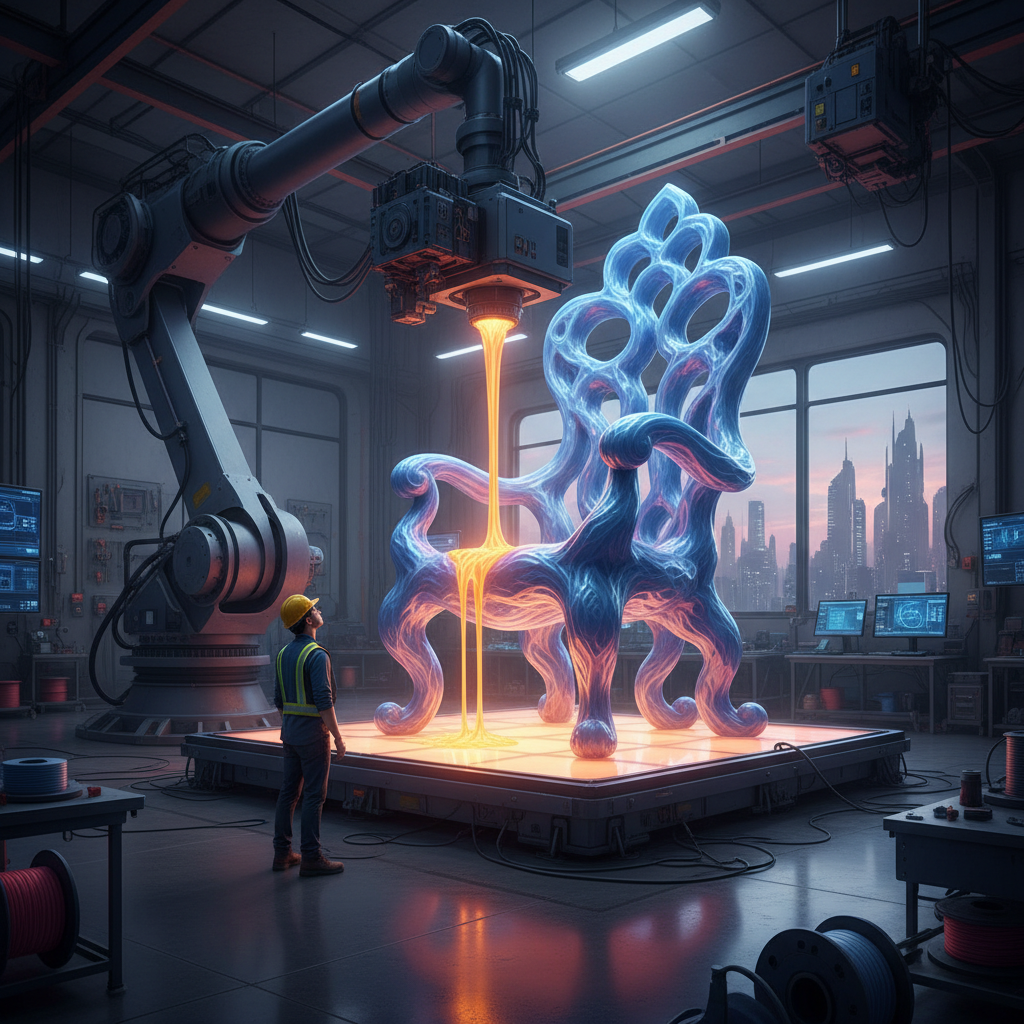
These are just a few examples of how large-scale 3d printing services are impacting the real world, leveraging speed, precision, and the ability to handle complexity to create solutions that were once unimaginable.
The Technologies Powering Industrial-Scale Additive Manufacturing
While we’ve touched upon the “Plastic Squeezer” (FDM) and “Magic Powder Zapper” (SLS), the landscape of industrial large scale 3d printing service providers encompasses a much broader array of sophisticated technologies, each optimized for different materials and specific performance characteristics. Understanding these distinctions is crucial for businesses looking to leverage the full potential of 3d printing large objects.
1. Fused Deposition Modeling (FDM) / Fused Filament Fabrication (FFF): The Workhorse of Large Prototypes
As mentioned, FDM operates by extruding melted thermoplastic filament layer by layer. For large-scale applications, industrial FDM machines are significantly more robust, featuring heated build chambers, larger nozzles for faster deposition, and often multiple extruders. These systems can handle high-performance engineering thermoplastics like ABS, Nylon, and even carbon fiber-reinforced composites, producing parts up to 1000 x 610 x 610 mm. This makes FDM ideal for large-scale functional prototypes, jigs, fixtures, and end-use parts where strength and cost-effectiveness are paramount. The ability to produce durable, sizable components quickly means businesses can iterate on designs for additive manufacturing automotive parts or large industrial tools with unprecedented speed.
2. Selective Laser Sintering (SLS): Unlocking Design Freedom
An SLS 3d printing service takes complexity to a new level. Unlike FDM, SLS uses a laser to sinter (fuse) powdered material, typically nylon (polyamide) or other engineering plastics, without the need for support structures. The unsintered powder acts as a natural support, allowing for highly intricate geometries, internal channels, and nested parts. This capability is revolutionary for industries like aerospace, where lightweight, complex components are essential, or in medical applications for custom prosthetics. The result is durable, functional parts with excellent mechanical properties and a slightly rough, porous surface finish that can be further processed. The versatility of materials and design freedom offered by SLS truly enables the creation of 3d printing large objects that would be impossible with traditional manufacturing.
3. Stereolithography (SLA): Precision and Smooth Finishes on a Grand Scale
SLA utilizes a UV laser to cure liquid photopolymer resin, layer by layer. While historically known for smaller, high-detail models, industrial SLA machines have dramatically scaled up. Modern systems can boast build volumes up to 800 x 800 x 600 mm, producing incredibly smooth surfaces and fine details. This makes large-format SLA perfect for aesthetic prototypes, master patterns for molding, or large transparent components. The range of resins has also expanded to include materials with properties like high temperature resistance, flexibility, or even ceramic-like characteristics, broadening its application for specialized parts. For projects demanding impeccable surface quality on a grand scale, such as large architectural models or detailed product casings, SLA stands out.
4. Selective Laser Melting (SLM) / Direct Metal Laser Sintering (DMLS): The Power of Metal
When strength and performance in extreme conditions are required, metal additive manufacturing steps in. SLM and DMLS use a laser to fully melt (SLM) or sinter (DMLS) powdered metal, such as stainless steel, aluminum, titanium, or nickel alloys. While early systems had smaller build volumes, advancements now allow for metal parts up to 9 inches (approximately 230 mm) in a single dimension, and larger through clever part segmentation and welding. These processes are vital for creating high-strength, lightweight components for aerospace, medical implants, and complex industrial tooling. The ability to print intricate metal structures reduces weight, consolidates assemblies, and improves performance in critical applications.
Elevating Manufacturing: Advanced Benefits and Strategic Impact
Beyond the basic advantages of speed and reduced waste, leveraging a large scale 3d printing service offers profound strategic benefits that reshape entire production cycles and supply chains.
- Part Consolidation: One of the most significant advantages is the ability to design and print complex assemblies as a single, integrated component. This drastically reduces part counts, minimizes assembly time and costs, and often leads to lighter, stronger, and more reliable final products. Imagine an aerospace bracket that once required ten separate pieces and dozens of fasteners now being printed as one optimized unit.
- Tooling Elimination and On-Demand Production: For many traditional manufacturing methods like injection molding or casting, creating large components necessitates expensive, time-consuming tooling. Large scale 3d printing bypasses this entirely, allowing for the rapid production of prototypes, molds, or even end-use parts without upfront tooling investments. This facilitates low-volume, high-cost production runs, mass customization, and genuine on-demand manufacturing, revolutionizing sectors from bespoke furniture to specialized medical devices.
- Optimized Supply Chains: With the capacity to produce large, complex parts locally and on demand, companies can significantly shorten lead times, reduce reliance on global supply chains, and minimize inventory holding costs. This agility is a game-changer in dynamic markets.
- Performance Enhancement through Design Freedom: The design freedom offered by large-scale additive manufacturing allows engineers to create geometries previously impossible – organic shapes, internal lattices, and optimized structures that reduce material usage while maintaining or even increasing strength. This is particularly valuable in additive manufacturing automotive for lightweighting vehicles or in aerospace for optimizing aerodynamic components.
From Concepts to Reality: Where Large Scale 3D Printing Excels
The real-world impact of large scale 3d printing services is best illustrated through their diverse applications across critical industries.
Automotive: Driving Innovation and Speed
The automotive sector is a prime adopter of large scale 3d printing. Beyond simple prototypes, car manufacturers utilize these services for:
- Full-scale functional prototypes: Rapidly iterating on large components like bumpers, dashboards, air ducts, and even entire body panels for concept vehicles.
- Jigs, Fixtures, and Tooling: Creating custom tools and manufacturing aids for assembly lines, which are often large and require precision, but without the high costs and lead times of traditional machining.
- Customization and Low-Volume Parts: Producing bespoke interior components, aerodynamic elements for specialty vehicles, or replacement parts for classic cars where traditional molds no longer exist. This agile production capability means new designs for additive manufacturing automotive applications can go from concept to physical part in a matter of days.
Aerospace: Lighter, Stronger, More Efficient
For aircraft and spacecraft, every gram saved counts. Large scale 3d printing delivers:
- Lightweight Structural Components: Printing large, complex parts with internal lattice structures that maintain strength while drastically reducing weight, directly translating to fuel efficiency and payload capacity.
- Functional Prototypes: Developing and testing large components like wing sections, engine cowlings, or interior cabin elements.
- Consolidated Parts: Integrating multiple functions into a single printed component, reducing assembly time, potential failure points, and overall part count.
Marine, Energy, and Construction: Scaling Up Solutions
These sectors deal with inherently large structures, making 3d printing large objects a natural fit:
- Marine: Producing large molds for boat hulls and components, customized interior fittings, or durable prototypes for underwater vehicles.
- Energy: Manufacturing prototypes for turbine blades, specialized components for oil and gas infrastructure, or large-scale models for design validation in renewable energy projects.
- Construction & Architecture: Creating oversized architectural models, custom formwork for concrete, or even structural elements with unique geometries that would be cost-prohibitive with traditional methods.
Medical Devices and Consumer Products: Customization and Creativity
While often associated with smaller implants, large scale 3d printing also plays a role in:
- Medical: Creating full-scale anatomical models for surgical planning, custom orthotics, or large prosthetic fairings.
- Consumer Products: Developing oversized prototypes for appliances, furniture (as depicted in the image above), or highly customized promotional items and installations. The ability to print large, complex pieces quickly opens doors for unique consumer experiences.
Conclusion
Large-scale 3D printing services are undeniably reshaping the manufacturing landscape, offering an unparalleled ability to produce oversized, complex components with remarkable efficiency and design freedom. From defining vast build volumes to harnessing advanced technologies like FDM, SLA, and SLS 3D printing service, these capabilities are driving unprecedented innovation across industries. Businesses are leveraging these services to slash lead times, reduce costs, and gain a competitive edge by bringing sophisticated designs to life faster than ever before.
The strategic benefits are clear: rapid prototyping, optimized production of large objects, and the flexibility to create bespoke tooling and end-use parts, particularly evident in demanding sectors like additive manufacturing automotive and aerospace. Selecting the right service provider, one equipped with a diverse material library, robust post-processing, and expertise, is crucial for maximizing these advantages.
The future of large-scale additive manufacturing promises even greater integration, automation, and material science breakthroughs. As build volumes expand and hybrid manufacturing techniques become more prevalent, the capacity to create, innovate, and disrupt will only grow. Embrace this transformative technology to unlock your next big idea and build a future limited only by imagination, not by size.
Frequently asked questions
What exactly makes 3D printing "large scale"?
Large scale 3D printing refers to the production of objects with significantly larger dimensions than what standard desktop printers can handle. Typically, this means build volumes starting around 300 x 300 x 300 mm (12 x 12 x 12 inches) and going up to industrial machines capable of producing parts several meters long. It allows for creating full-scale prototypes or consolidated components that would be impossible with smaller equipment.
What are the main technologies used for large scale 3D printing?
The primary technologies include FDM (Fused Deposition Modeling) for robust plastic prototypes, SLS (Selective Laser Sintering) for complex geometries using powdered materials like nylon without support structures, and SLA (Stereolithography) for highly detailed parts with smooth finishes using liquid resins.
What are the biggest advantages of using a large scale 3D printing service?
Businesses benefit from unprecedented design freedom, allowing for the creation of complex, large objects in one piece or with fewer assembly steps. Other advantages include faster time-to-market due to rapid prototyping, significant cost savings by reducing material waste and eliminating expensive tooling, and improved supply chain efficiency for low-volume, high-value production.
How does large scale 3D printing contribute to the automotive industry?
In the automotive sector, large scale additive manufacturing is crucial for rapid prototyping of interior and exterior components, creating custom tooling and jigs, and even producing end-use parts from high-strength plastics or metals. This accelerates design iterations, improves vehicle performance, and reduces manufacturing lead times for new models and specialized vehicles.
What types of materials can be used for large scale 3D printed objects?
Large scale 3D printing utilizes a wide range of materials, depending on the technology. FDM typically uses engineering thermoplastics like ABS and Nylon. SLS is versatile with plastics (e.g., nylon), metals, and even ceramics. SLA uses various liquid resins, allowing for different properties like strength or flexibility.
Are there specific challenges with printing very large objects?
Yes, printing large objects comes with unique challenges. These include ensuring material stability and preventing warping over extended print times, maintaining precision and accuracy across large build volumes, and managing post-processing for oversized parts (e.g., surface finishing, assembly of modular components). Experienced service providers have specialized equipment and expertise to overcome these hurdles.
How should I choose the right large scale 3D printing service provider?
When selecting a provider, look for their maximum build envelope capabilities, the breadth of their material library (including specialized composites), their industry-specific certifications (e.g., for aerospace or medical), and their post-processing capabilities. Also, consider their project management approach for agile timelines and any hybrid manufacturing capabilities they offer to ensure your project's success.
Have a question or a project? Let’s talk.
Tell us what you need — a real applications engineer replies within 24 hours. NDA on request, no sales script.