
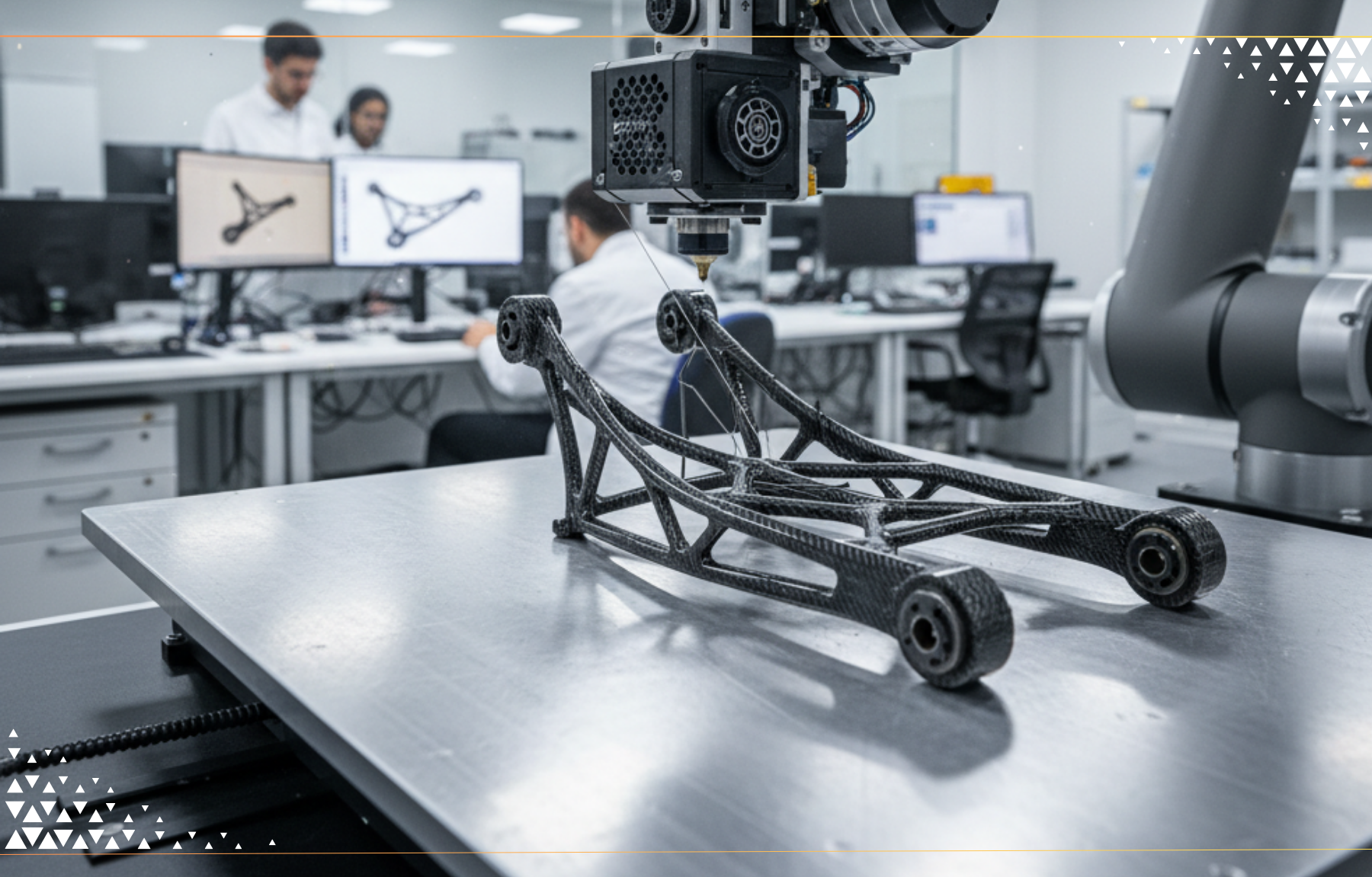
The automotive industry, long defined by traditional manufacturing processes, is undergoing a profound transformation. At the heart of this revolution is 3D printing car parts, a technology rapidly evolving from a specialized prototyping tool to a critical enabler for design innovation, rapid validation, complex tooling, and even end-use components. This shift is not merely incremental; it represents a paradigm change in how vehicles are conceived, developed, and produced.
Major original equipment manufacturers (OEMs) like Ford, BMW, Porsche, and Volkswagen are no longer merely experimenting with additive manufacturing. They are actively integrating it into core development and production workflows, leveraging its unparalleled ability to produce intricate geometries, optimize weight, and accelerate product cycles. This widespread adoption underscores the technology’s proven value in an increasingly competitive and innovation-driven market.
For automotive teams and aftermarket suppliers, understanding the nuances of modern additive technologies is paramount. This guide will explore the pivotal methods shaping the industry, from the robust versatility of FDM 3D printing to the precision and performance offered by high-temp resin printing, and the lightweight strength achieved through 3D printing carbon fiber.
Why Automotive is Embracing 3D Printing for Car Parts
The automotive industry, always at the forefront of innovation, has rapidly adopted 3D printing, moving it from a niche prototyping tool to a vital part of manufacturing. The ability to create 3D printing automotive parts with unprecedented speed, complexity, and customization offers profound advantages across the entire vehicle lifecycle.
- Rapid Prototyping and Design Validation: Historically, transforming a digital car design into a physical model was a time-consuming, expensive process. With 3D printing, designers can move from CAD models to tangible parts in days, not weeks. This acceleration enables engineers to conduct far more design iterations, validate concepts sooner, and make critical decisions earlier in the development cycle. For deeper insights into this process, explore our guide on rapid prototyping with 3D printing.
- Complex Geometries and Performance Optimization: Traditional manufacturing methods often struggle with intricate shapes. Additive manufacturing, however, excels at producing highly complex geometries, such as internal lattice structures, conformal cooling channels, and optimized airflow paths. These designs are crucial for creating lightweight structures and components that enhance performance, thermal management, and aerodynamic efficiency—elements that conventional machining or molding simply cannot achieve.
- Lightweighting and Efficiency: Reducing vehicle weight is paramount for improving fuel efficiency in internal combustion engines and extending the range of electric vehicles. 3D printing car parts allows for the use of advanced engineered plastics and composites that offer high strength-to-weight ratios. This strategic lightweighting contributes significantly to overall vehicle performance and environmental sustainability.
- Tooling, Jigs, and Fixtures: Beyond direct vehicle parts, 3D printing offers immense value in the manufacturing process itself. Automakers can produce on-demand assembly aids, custom molds, and specialized dies, dramatically reducing lead times and the costs associated with external machining. These custom tools improve factory floor ergonomics, increase precision, and boost manufacturing line efficiency.
- Customization and Low-Volume Production: For bespoke interiors, high-performance motorsport components, specialized concept cars, or even legacy spare parts, traditional molding is economically unfeasible due to high tooling costs. 3D printing makes low-volume, highly customized production not only possible but cost-effective, opening new avenues for personalized vehicles and niche markets.
- Supply Chain Resilience: The ability to digitally store designs and print 3D-printed automotive parts on demand, close to the point of use, significantly enhances supply chain resilience. This distributed manufacturing model reduces the need for large physical inventories and mitigates logistics risks, ensuring parts are available precisely when and where they are needed.
FDM 3D Printing: Robust and Versatile Automotive Workhorse
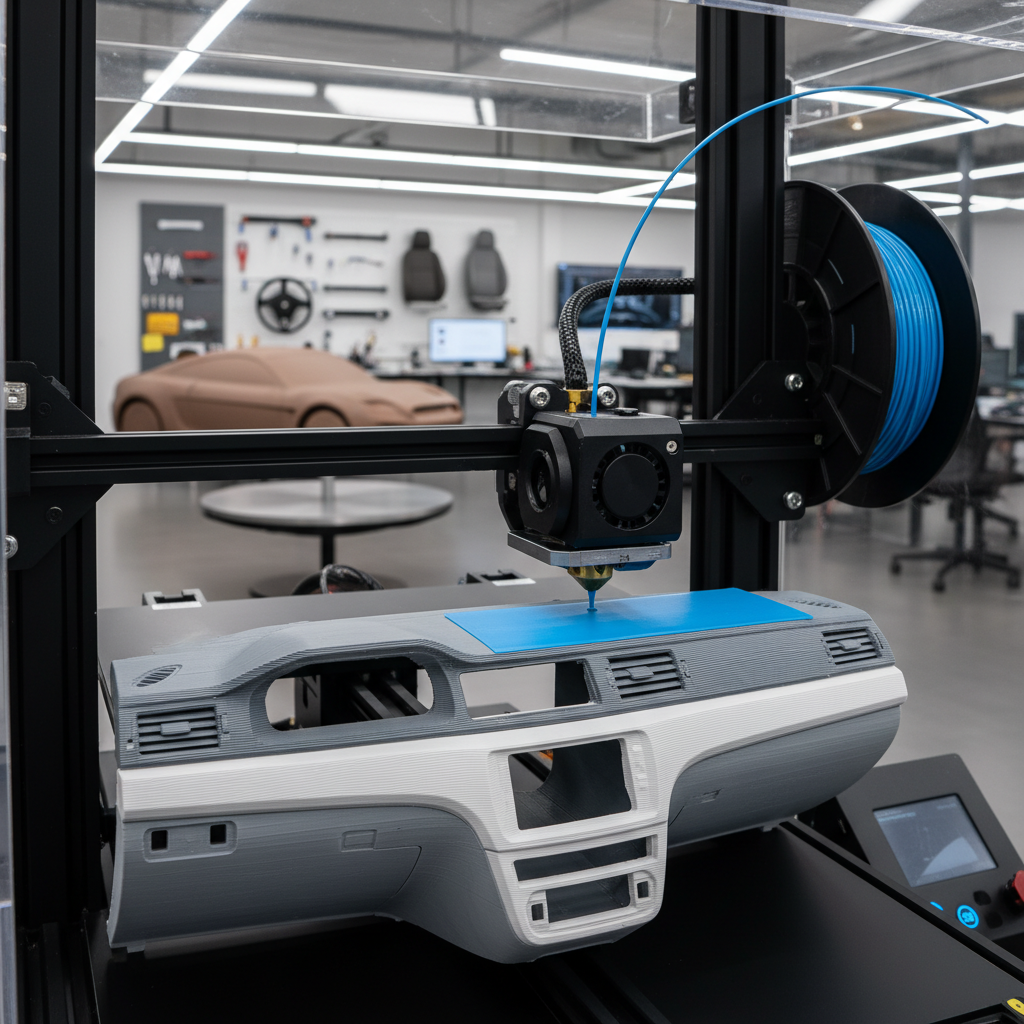
Fused Deposition Modeling (FDM), also known as Fused Filament Fabrication (FFF), stands as one of the most widely adopted forms of 3D printing in the automotive sector. This technology operates by extruding a thermoplastic filament, melting it, and then depositing it layer-by-layer to build a three-dimensional object. Its straightforward process and ability to work with robust materials make it an indispensable tool for a wide range of automotive applications.
Core Automotive Applications
FDM 3D printing is a true workhorse, excelling in creating sturdy, functional parts for various stages of vehicle development and production:
- Rapid Prototypes: It’s ideal for quickly producing prototypes of interior components, functional brackets, housings, and air ducts, allowing for swift physical evaluation of designs.
- Jigs, Fixtures, and Assembly Aids: On production lines, FDM printers produce custom jigs, fixtures, and assembly aids that enhance ergonomics, improve worker efficiency, and ensure consistent, repeatable part placement. These tools are crucial for streamlining assembly processes.
- Low-Volume Functional Parts: For components that don’t require extreme surface aesthetics or aren’t exposed to the most rigorous conditions—such as non-cosmetic interior pieces or hidden structural elements—FDM offers a cost-effective solution for functional end-use parts in low volumes.
Material Options and Relevance
The versatility of FDM 3D printing is further extended by its compatibility with a diverse array of thermoplastic materials:
- Standard Engineering Thermoplastics: Materials like ABS (Acrylonitrile Butadiene Styrene), ASA (Acrylonitrile Styrene Acrylate), PC (Polycarbonate), and PA (Nylon) are widely used for durable prototypes and robust fixtures, offering good mechanical strength and thermal stability.
- High-Performance Thermoplastics: For more demanding applications, select FDM systems can process advanced materials from the PEEK (Polyether Ether Ketone), PEKK (Polyetherketoneketone), and PEI (Polyetherimide) families. These materials provide exceptional temperature and chemical resistance, making them suitable for parts exposed to harsh automotive environments.
- Specialty Materials: Rubber-like filaments are used for seals and gaskets, while translucent materials enable fluid flow visualization and the creation of light guides, expanding FDM’s utility in specialized component development.
Key Benefits for Automakers
The adoption of FDM technology brings several critical advantages to the automotive industry. It offers cost-effective, in-house production without the need for expensive traditional tooling. This capability significantly supports lightweighting initiatives and facilitates incredibly fast design loops, allowing engineers to iterate and refine designs at an accelerated pace.
High-Temp Resin Printing: Precision and Performance for Demanding Parts
While FDM excels in strength and speed for many applications, other additive technologies offer superior detail and surface finish. High-temp resin printing encompasses stereolithography (SLA), digital light processing (DLP), and Low Force Stereolithography (LFS) processes that utilize specialized photopolymer resins. These resins are cured by light, layer by layer, to create parts with exceptionally fine details, remarkably smooth surface finishes, and, critically for automotive use, elevated heat deflection temperatures.
Automotive-Specific Use Cases
The precision and thermal stability of high-temp resin prints make them invaluable for specific, demanding automotive components:
- High-Resolution Functional Prototypes: This technology is ideal for creating functional prototypes of intricate interior trim, HVAC vents, complex switchgear, and lighting components where aesthetic quality and precise fit are paramount. For industrial-scale precision, solutions like the Kings 1200Pro – Large-Format SLA 3D Printer for Industrial Use demonstrate the capabilities of such systems.
- Under-the-Hood and Under-Body Components: Components operating in environments exposed to heat, fluids, and chemicals, such as fixtures for engine bay testing, fluid manifolds, and sensor housings, benefit significantly from the inherent properties of high-temp resins.
- Master Patterns and Molds: Resin printers are extensively used to create highly accurate master patterns and direct molds for processes like silicone casting, urethane casting, or composite layup tooling.
Performance Characteristics That Matter
The critical attributes of high-temp resin prints for automotive applications include:
- Heat Resistance: They offer a level of heat resistance suitable for many demanding “under-hood” validation tasks, ensuring prototypes can withstand realistic operating temperatures.
- Dimensional Accuracy and Fine Features: The technology delivers exceptional dimensional accuracy and the ability to reproduce extremely fine features, essential for intricate snap-fits, clips, and aesthetically critical surfaces.
When to Choose High-Temp Resins vs. FDM
The choice between FDM and high-temp resin printing depends on the specific application’s requirements. Engineers typically choose resin printing for projects demanding high detail, fine tolerances, and exceptionally smooth surface finishes, particularly for visual prototypes or components requiring precise fit. Conversely, FDM is preferred for larger, tougher, and more cost-effective tooling, robust brackets, or initial functional prototypes where ultimate surface quality is less critical than mechanical strength and rapid turnaround. When considering choosing the right SLA 3D printer, these distinctions are key.
Advanced Materials: The Power of 3D Printing Carbon Fiber
Beyond standard thermoplastics and resins, the world of 3D printing car parts continues to evolve with advanced materials, none more impactful than carbon fiber. When discussing 3D printing carbon fiber, it typically refers to two main approaches: using thermoplastics filled with chopped (short) carbon fibers for enhanced strength, or more advanced systems that incorporate continuous carbon fiber strands for truly structural components.
Why Carbon Fiber Is Strategic for Automotive
Carbon fiber is a game-changer for the automotive industry due to its unparalleled mechanical properties:
- High Stiffness-to-Weight and Strength-to-Weight Ratio: Carbon fiber offers exceptional strength and stiffness while being remarkably lightweight. This makes it invaluable for performance vehicles, motorsports, and electric vehicles where every gram saved translates to improved speed, handling, and energy efficiency.
- Structural and Semi-Structural Components: The material enables the creation of lightweight structural or semi-structural components, such as custom brackets, mounting points, aerodynamic elements, and various support structures that require robust performance without the weight penalty of metal.
Typical Automotive Applications
The applications for 3D printed carbon fiber are diverse and impactful:
- Structural Brackets and Mounts: In low-volume scenarios, 3D printed carbon fiber parts can replace machined aluminum components, offering similar strength with significantly reduced weight.
- Suspension and Aero Development: Motorsport teams frequently leverage 3D printed carbon fiber for developing and testing suspension components and aerodynamic parts, allowing for rapid iteration and performance gains.
- Stiff, Lightweight Jigs, Fixtures, and Gauges: On the factory floor, stiff and lightweight jigs, fixtures, and checking gauges made from carbon fiber composites improve ergonomics for workers and maintain precision over extended use.
Benefits vs. Conventional Materials
3D printing carbon fiber offers distinct advantages over traditional materials:
- It achieves lower weight than many metal alternatives while maintaining competitive stiffness and strength.
- It allows for faster design iterations compared to the time-consuming processes of creating machined carbon-fiber laminates or metal prototypes.
- For small series production, it reduces the dependence on expensive and time-intensive composite tooling, making advanced materials more accessible.
Transforming the Automotive Lifecycle: Key Applications of 3D Printed Car Parts
The impact of 3D printed car parts stretches across every phase of vehicle development, manufacturing, and even post-sales support. From initial sketches to long-term maintenance, additive manufacturing introduces efficiency, innovation, and flexibility.
Concept & Styling
In the earliest stages of design, 3D printing accelerates concept validation. Automakers utilize large-format FDM and resin systems to create full-scale exterior and interior design models, conduct ergonomic studies, and produce bespoke show-car components. BMW, for example, has famously leveraged 3D printing for concept and styling, enabling designers to quickly visualize and refine intricate interior elements and body panels, making design decisions with tangible feedback.
Engineering & Validation
For engineers, 3D printing is critical for functional testing and validation. This stage involves producing functional prototypes for rigorous airflow testing, cooling system analysis, and fluid dynamics simulations. Components such as complex engine covers, intake manifolds, and various housings with intricate internal geometries are prime candidates for 3D printing automotive parts, allowing for real-world performance testing before committing to expensive tooling. Ford extensively uses 3D printing in this phase, rapidly prototyping parts to evaluate fit, function, and performance under various conditions, significantly shortening development cycles.
Manufacturing & Assembly
On the factory floor, 3D printing plays a vital role in enhancing manufacturing and assembly processes. It is used to produce a wide array of production aids, including jigs, fixtures, positioning tools, clamps, and even custom robot end-effectors. These tools often feature integrated ergonomic designs and are lightweighted for ease of use. Volkswagen, for instance, has integrated 3D printed tools into its production lines, creating customized guides and templates that improve precision and reduce manual effort for assembly workers.
End-Use and Custom Components
For low-volume production or highly specialized applications, 3D printing car parts offers a cost-effective solution for end-use components. This includes custom interior parts, performance upgrades for motorsport vehicles, specialized components for EV conversions, and unique appearance trim pieces. The ability to produce these items on demand, without the need for traditional tooling, makes customization and niche product development more accessible than ever.
Spare Parts and Aftermarket
The aftermarket and spare parts sector is another area profoundly transformed by 3D printing. For vintage or low-volume vehicles where original parts are scarce or discontinued, 3D printing enables the on-demand production of exact replicas. Porsche Classic, for instance, utilizes 3D printing to create highly accurate spare parts for its older models, ensuring these iconic vehicles can be maintained for future generations, reducing inventory burdens and guaranteeing long-term support for its cherished classics. This ensures vehicle longevity and provides flexibility for 3D printing automotive parts when traditional supply chains falter.
The Magic Goo: High-Temp Resin Printing for Precision and Performance
While FDM 3D printing excels at robust, larger components, another transformative technology known as high-temp resin printing offers unparalleled precision, surface finish, and thermal resistance for automotive applications. This method typically employs Stereolithography (SLA), Digital Light Processing (DLP), or Low Force Stereolithography (LFS) processes. Instead of extruding plastic filament, these printers utilize specialized photopolymer resins that are selectively cured (hardened) by a light source—often a laser or a high-resolution projector—layer by microscopic layer.
The “high-temp” aspect is crucial here. Unlike standard resins, these advanced formulations maintain their structural integrity and dimensional stability at elevated temperatures, making them suitable for environments where conventional plastics would deform or melt.
Automotive-Specific Use Cases:
- High-Resolution Functional Prototypes: Imagine interior trim pieces, HVAC vents, complex switchgear, or intricate lighting components. High-temp resin printing allows engineers to create highly detailed, accurate functional prototypes that closely mimic the final injection-molded part in aesthetics and fit.
- Under-the-Hood Components: This is where the thermal resistance truly shines. Engineers can print fixtures and test components for engine bays, fluid manifolds with complex internal channels, or sensor housings that must withstand heat, oils, and various chemicals.
- Master Patterns and Tooling: For low-volume production or specialized components, high-temp resins are perfect for creating master patterns that can then be used to cast silicone, urethane, or even composite layup tooling. The exceptional surface finish minimizes post-processing, accelerating tooling production.
For automotive teams that require both rapid turnaround and uncompromising accuracy, Kings 3D delivers advanced resin 3D printing solutions built for performance-driven development. Leveraging high-speed industrial SLA and DLP technologies, Kings 3D enables the fast production of high-resolution parts with exceptional surface quality and dimensional precision—ideal for prototyping, fit checks, and functional validation.
Kings 3D offers a versatile portfolio of engineering-grade resins designed to meet demanding automotive applications. General-purpose and high-detail resins support early-stage concept models and design verification, while high-strength and high-temperature resins produce durable components capable of withstanding mechanical stress, heat, and real-world testing conditions. For specialized manufacturing needs such as investment casting, Kings 3D’s castable resins provide clean burnout characteristics with minimal residue, ensuring reliable mold quality and superior metal part outcomes.
By combining speed, material performance, and local manufacturing expertise, Kings 3D helps automotive teams accelerate development cycles without sacrificing precision or reliability.
When to Choose High-Temp Resins vs. FDM:
The choice between high-temp resin printing and FDM 3D printing largely depends on application requirements. Opt for high-temp resins when:
- High Detail and Fine Tolerances are paramount (e.g., snap-fits, intricate grilles, aesthetic surfaces).
- Smooth Surface Finish is critical for visual prototypes or master patterns.
- Elevated Heat Resistance is required for functional testing in warm environments.
Conversely, FDM remains the go-to for larger, tougher, lower-cost tooling, brackets, and robust prototypes where ultimate surface aesthetics are less critical than strength and material cost.
The Superpower Material: 3D Printing Carbon Fiber for Unrivaled Strength
As the automotive industry pushes for ever-lighter, stronger, and more efficient vehicles, advanced materials are key. This is where 3D printing carbon fiber becomes a strategic asset. When we talk about 3D printing carbon fiber, we’re referring to two main approaches: using thermoplastics filled with chopped (short) carbon fibers, or, in more advanced systems, integrating continuous carbon fiber strands for maximum strength.
The integration of carbon fiber significantly enhances the mechanical properties of 3D printed parts. Carbon fiber boasts an exceptional stiffness-to-weight and strength-to-weight ratio, making it an ideal choice for performance, motorsport, and electric vehicles where every gram saved translates into improved speed, efficiency, and range. This capability allows for the creation of lightweight structural or semi-structural components that can withstand high loads without adding significant mass.
Typical Automotive Applications of 3D Printing Carbon Fiber:
- Structural Brackets and Mounts: Replacing traditionally machined aluminum brackets with 3D printed carbon fiber composites can offer significant weight savings in low-volume applications, without compromising structural integrity.
- Suspension and Aerodynamic Development Parts: In competitive motorsport, rapid iteration of suspension components, wing elements, and other aerodynamic parts is critical. 3D printing carbon fiber allows teams to quickly test and optimize designs.
- Stiff, Lightweight Jigs, Fixtures, and Checking Gauges: On the factory floor, heavy metal tools can contribute to worker fatigue and production bottlenecks. Lightweight, stiff carbon fiber 3D printed alternatives enhance ergonomics and maintain precision.
The benefits of 3D printing carbon fiber are clear when compared to conventional materials and manufacturing methods. It offers lower weight than many metals with competitive stiffness, allowing engineers to push design boundaries. Compared to traditionally machined carbon-fiber laminates, 3D printing enables faster design iterations and reduces dependence on expensive, time-consuming composite tooling for small series production. This combination of material performance and manufacturing agility makes it indispensable for developing next-generation 3D printing automotive parts.
From a Dream to the Driveway: Transforming the Automotive Lifecycle
3D printing car parts isn’t just a niche technology; it’s a fundamental shift impacting every stage of the automotive lifecycle, from initial concept to long-term vehicle support.
1. Concept & Styling:
At the earliest stages, designers translate digital sketches into physical reality. Large-format FDM and high-precision resin systems are deployed to create full-scale exterior and interior design models, enabling ergonomic studies and validating aesthetic appeal. Show-car components, often requiring flawless finishes and complex geometries, are also brought to life with additive manufacturing. For example, BMW has famously used 3D printing to create intricate interior and exterior components for their concept and production vehicles, allowing designers to visualize and refine details with unprecedented speed.
2. Engineering & Validation:
This is where functional performance is rigorously tested. Engineers leverage 3D printed prototypes for critical applications like airflow testing, cooling system validation, and fluid dynamics analysis. Components such as engine covers, intake manifolds, and various housings with complex internal geometries can be rapidly produced and iterated. This allows for quick, cost-effective adjustments before expensive hard tooling is committed. Ford, for instance, has extensively used 3D printing for rapid prototyping, enabling faster design cycles and comprehensive testing of new vehicle components.
3. Manufacturing & Assembly:
The impact extends directly to the production line. 3D printing automotive parts translates to on-demand creation of essential manufacturing aids. This includes specialized jigs, fixtures, positioning tools, clamps, and even robot end-effectors. These tools are often customized with integrated ergonomic features and lightweight designs, improving worker efficiency and product quality. Volkswagen has been a pioneer in deploying 3D printed tooling across its global manufacturing plants, significantly reducing lead times and costs for production-line equipment.
4. End-Use and Custom Components:
While full-scale production of every car part via 3D printing is still evolving, the technology shines in low-volume, high-value, and custom applications. This includes bespoke interior parts, performance upgrades for motorsport, specialized components for EV conversions, and unique appearance trim where traditional manufacturing methods are uneconomical.
5. Spare Parts and Aftermarket:
The longevity of vehicles is a significant concern, especially for classic or low-volume models. 3D printed car parts offer a revolutionary solution for on-demand spare parts. Companies like Porsche have embraced this for their classic car division, digitally archiving designs and printing replacement parts as needed. This approach reduces the need for vast physical inventories, extends the lifespan of vehicles, and ensures long-term support for even the rarest models.
This integration across the entire product lifecycle underscores how 3D printing is no longer just a trend, but a foundational technology reshaping how cars are envisioned, engineered, manufactured, and maintained. The journey from digital blueprint to tangible, high-performance 3D printing automotive parts is accelerating, paving the way for even more innovative advancements in the near future.
Conclusion
The automotive industry stands at the precipice of a profound manufacturing transformation, with 3D printing car parts leading the charge. What began as a tool for rapid prototyping has rapidly matured into a strategic capability, reshaping how vehicles are designed, engineered, manufactured, and maintained. From the robust, large-format components enabled by FDM 3D printing to the precision and performance offered by advanced high temp resin printing and the unparalleled strength-to-weight of 3D printing carbon fiber, additive manufacturing provides a comprehensive toolkit for modern automotive challenges.
This technology isn’t just about faster iterations; it’s about unlocking geometric complexity for performance, drastically reducing weight for efficiency, and empowering on-demand customization and resilient supply chains. Leading OEMs like Ford, BMW, VW, and Porsche are already leveraging these capabilities across the entire vehicle lifecycle, proving that 3D printing automotive parts is a competitive imperative, not merely an experimental pursuit.
Looking ahead, the future of resin 3D printing is defined by greater production scalability, ongoing material innovation, and tighter integration with digital manufacturing workflows. As high-speed industrial resin systems continue to advance, Additive Plus is positioned to support higher-throughput production while maintaining the precision and repeatability required for automotive applications.
With continued development of specialized, application-driven resins—ranging from high-strength and high-temperature materials to castable and end-use–capable formulations—the ability to manufacture functional automotive components on demand will continue to grow. Combined with the inherent advantages of additive manufacturing, including reduced material waste, lightweight part optimization, and localized production, Additive Plus resin 3D printing capabilities are helping shape a more agile, efficient, and sustainable future for the automotive industry.
To remain at the forefront, automotive innovators must continue to embrace these advanced additive manufacturing solutions, moving decisively from supportive applications to strategic, high-value production. The era of the truly 3D printed car part is no longer a distant vision, but a present-day reality for those ready to lead the charge.
The processes and materials we run for automotive work are covered on our automotive 3D printing page.
Frequently asked questions
What exactly are 3D printed car parts?
3D printed car parts are components created layer-by-layer from a digital design using an additive manufacturing process. This can range from early prototypes and assembly tools to custom interior elements and even functional, end-use parts. The technology allows for incredible design freedom and the use of advanced materials.
Why are car manufacturers increasingly using 3D printing?
Automakers embrace 3D printing automotive parts for numerous reasons, including accelerating design cycles, creating complex lightweight structures, and optimizing performance. It enables rapid prototyping, cost-effective customization for low-volume production (like concept cars or motorsport), and helps build robust tooling and fixtures for assembly lines.
What types of car parts are best suited for FDM 3D printing?
FDM 3D printing (Fused Deposition Modeling) is excellent for producing strong, functional prototypes for interiors, air ducts, and brackets. It's also the go-to method for durable jigs, fixtures, and custom assembly aids on the production floor due to its cost-effectiveness and wide range of robust thermoplastic materials.
When is high-temp resin printing preferred for automotive applications?
High temp resin printing is chosen when exceptional detail, smooth surface finish, and resistance to elevated temperatures are crucial. It's ideal for high-resolution functional prototypes like HVAC vents, switchgear, or lighting components, as well as under-the-hood test parts or master patterns for molds.
How does 3D printing carbon fiber enhance automotive components?
3D printing carbon fiber allows for the creation of exceptionally strong, stiff, and lightweight parts. By incorporating carbon fibers into thermoplastics, it significantly improves the strength-to-weight ratio, making it invaluable for performance vehicles, motorsport components, and EVs seeking to reduce mass and boost efficiency. Applications include structural brackets, aerodynamic elements, and high-performance tools.
Are 3D printed car parts only used for prototypes, or are they integrated into actual vehicles?
While prototypes are a major application, 3D printed car parts are increasingly moving into end-use. They are commonly found in custom interiors, specialized motorsport components, and low-volume production runs. OEMs like Porsche even use 3D printing to produce scarce spare parts for vintage cars, ensuring long-term vehicle support.
Are 3D printed car parts strong and durable enough for real-world driving conditions?
Absolutely. The strength and durability depend heavily on the 3D printing process and the materials used. High-performance polymers, often reinforced with materials like carbon fiber, are rigorously tested to meet automotive standards for temperature, vibration, and chemical resistance. Manufacturers validate these parts extensively before integration.
Is 3D printing car parts more cost-effective than traditional manufacturing?
For certain applications, yes. While it might not replace mass production entirely, 3D printing is highly cost-effective for prototyping, low-volume production, and customization. It eliminates expensive tooling costs, reduces lead times, and allows for rapid design iterations, leading to overall savings in the product development lifecycle.
What does the future hold for 3D printing in the automotive industry?
The future is bright, with ongoing advancements in material science creating more robust and specialized polymers. We're seeing a trend towards scaling 3D printing from prototyping to higher-volume production, with faster machines and more integrated digital workflows. This will lead to further lightweighting, improved performance, and more sustainable manufacturing practices across the automotive lifecycle.
Have a question or a project? Let’s talk.
Tell us what you need — a real applications engineer replies within 24 hours. NDA on request, no sales script.