
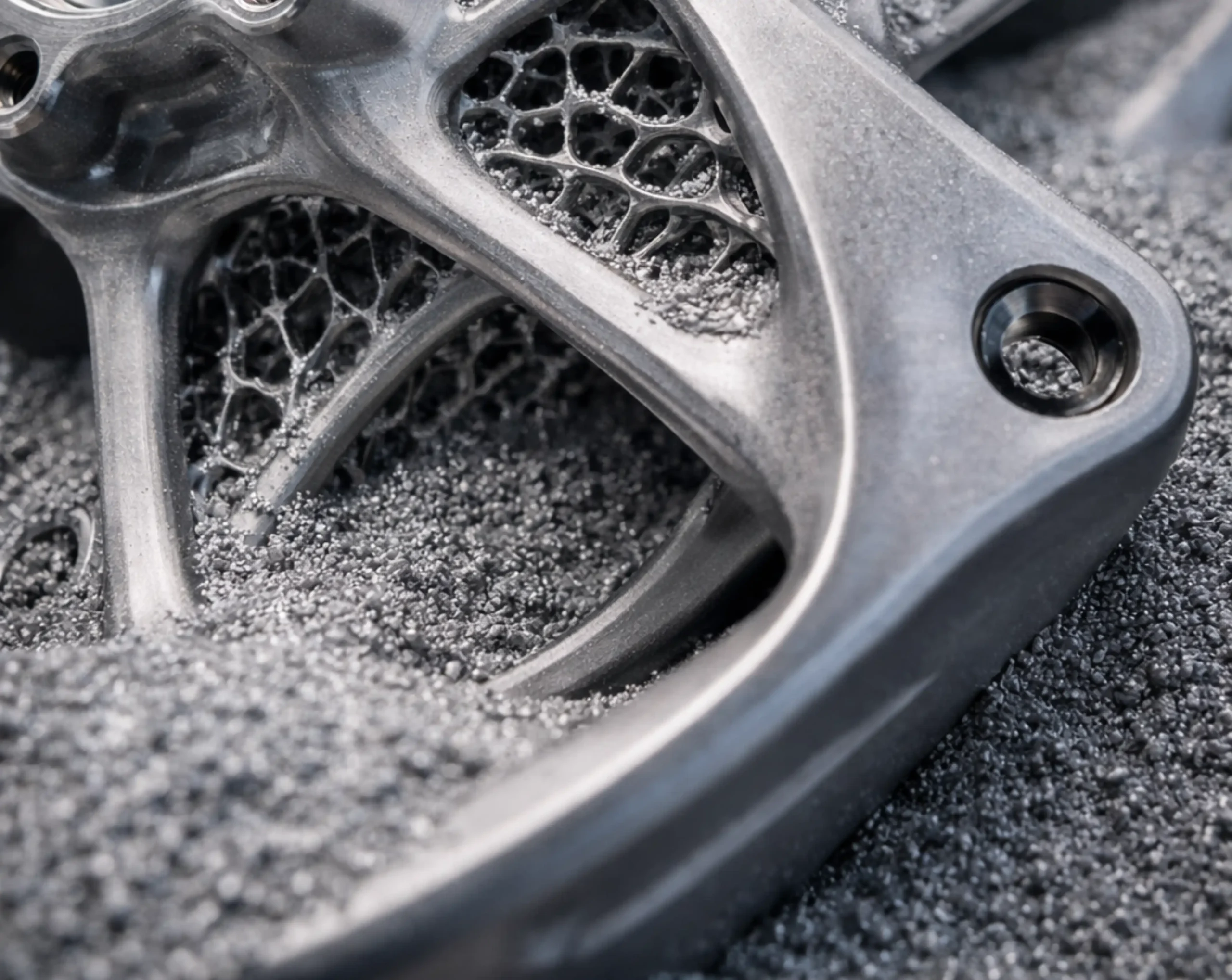
Imagine transforming lightweight, versatile aluminum powder into intricate, high-strength components with unprecedented precision. This isn’t a distant future; it’s the reality driving modern industrial metal 3D printing. As a foundational feedstock, aluminum powder has emerged as a game-changer, enabling engineers and manufacturers to push the boundaries of design and performance across critical sectors.
Specifically utilized in advanced additive manufacturing processes like Selective Laser Melting (SLM) and Direct Metal Laser Sintering (DMLS), this fine metallic dust possesses a unique combination of properties. Its inherent low density (approximately 2.7 g/cm³), coupled with an exceptional strength-to-weight ratio, high thermal conductivity, and inherent corrosion resistance, makes it indispensable for creating parts where every gram counts. From intricate aerospace brackets to robust automotive frames, aluminum powder facilitates the production of components that are not only lighter but also incorporate complex geometries impossible to achieve with traditional manufacturing methods.
The rising significance of aluminum powder in industrial 3D printing is further underscored by its ability to facilitate rapid prototyping, significantly reduce material waste through recyclability, and enable part consolidation – transforming multi-component assemblies into single, integrated units. This guide delves into the transformative role of aluminum powder, exploring its unique characteristics, myriad benefits, and diverse applications that are shaping the next generation of high-performance products. We’ll also touch upon how advanced aluminum alloy formulations are further enhancing these capabilities, contrasting them with other advanced metal powders like nickel alloy and iron nickel alloy to provide a comprehensive understanding of its niche and immense potential.
Metal Team-Ups: Forging the Future with Aluminum Alloys
While pure aluminum boasts impressive characteristics, the true marvel of modern additive manufacturing often lies in its ability to harness aluminum alloy powders. These aren’t just aluminum; they are meticulously engineered blends, creating “super-teams” where other elements contribute unique strengths. Think of it as tailoring the material to the exact demands of an application, pushing the boundaries far beyond what pure aluminum could achieve.
Alloys such as AlSi10Mg, Al6061, and Al7075 are at the forefront of this revolution. Each composition offers distinct advantages, significantly boosting key mechanical properties. For instance, AlSi10Mg, commonly used in industrial 3D printing, introduces silicon and magnesium to enhance strength, improve weldability, and reduce hot cracking during the laser melting process. This makes it a preferred choice for intricate geometries requiring robust structural integrity. Meanwhile, alloys like Al6061 and Al7075, renowned in traditional manufacturing for their high strength and fatigue resistance, are now being adapted for additive processes, albeit with unique challenges.
The advancement isn’t just in mixing elements; it’s also in how we manipulate these materials at a microscopic level. A cutting-edge technique called nanofunctionalization is transforming how these alloys perform. By introducing nanoparticles as nucleation sites within the powder, engineers can precisely control the microstructure that forms during solidification. This prevents common issues like cracking and distortion, especially in alloys like 6061 and 7075 which can be prone to hot tearing during rapid laser processing. The result? Parts that retain the inherent strength and characteristics of the alloy, but with vastly improved printability and structural integrity. This allows for the creation of components that are not only strong but also exceptionally reliable under stress, opening doors for even more critical applications.
Aluminum Powder in Context: A Strategic Comparison with Other Advanced Metal Powders
Understanding the unparalleled utility of aluminum powder in additive manufacturing also requires appreciating its position within the broader landscape of advanced metal powders. While aluminum excels in certain areas, other materials offer specialized capabilities critical for different industrial demands. It’s not about one material being inherently “better,” but rather about selecting the optimal material for the job.
Nickel Alloys: When applications demand extreme temperature resistance and superior corrosion performance, nickel alloy powders, such as Inconel 718 or 625, become indispensable. These superalloys are the workhorses in environments where aluminum would simply melt or degrade. Think of turbine blades in jet engines or components within high-temperature chemical reactors – places where materials endure relentless heat and corrosive agents. The inherent high reflectivity of aluminum can also be a limiting factor in certain high-power laser systems, making nickel alloys a preferred choice where consistent energy absorption and stability at elevated temperatures are paramount. They stand as the benchmark for high-heat, high-stress environments.
Iron Nickel Alloys: For applications prioritizing brute strength, exceptional wear resistance, or specific magnetic properties, iron nickel alloy powders, like Maraging steels, take center stage. These materials are often employed in critical tooling, high-load structural components, or specialized defense applications where sheer durability and resistance to deformation are more important than lightweighting. While aluminum powder is ideal for reducing mass, an iron nickel alloy offers a different kind of advantage: robustness. For example, Maraging steels are known for their combination of high strength and ductility, making them perfect for creating molds, jigs, and fixtures that undergo significant mechanical stress during their operational life.
However, aluminum also carves out its own significant niche in tooling. While iron nickel alloy excels in tooling requiring extreme durability for repetitive, high-stress applications, aluminum also plays a crucial role in creating specialized tooling. For instance, aluminum molds are increasingly vital for processes like plastic injection molding, offering excellent thermal conductivity for faster cooling cycles and lighter weight for easier handling.
The choice ultimately hinges on a nuanced understanding of the component’s required performance envelope. Aluminum dominates when weight-saving, thermal management, and geometric complexity are primary drivers. Nickel alloy steps in for extreme thermal and corrosive conditions, while iron nickel alloy is chosen for its unparalleled strength and wear characteristics. This strategic material selection ensures that each component is optimized for its intended function, maximizing efficiency and performance across diverse industries.
Navigating the Hurdles: Challenges and the Future Outlook for Aluminum Powder Additive Manufacturing
Despite its remarkable advantages, the journey of aluminum powder in additive manufacturing isn’t without its challenges. Overcoming these hurdles is a continuous process of innovation, driving the material and technology forward.
One of the primary difficulties lies in aluminum’s high reflectivity. When a powerful laser strikes the shiny surface of aluminum powder, a significant portion of the energy is reflected rather than absorbed. This can lead to inefficient melting, inconsistent part quality, and the formation of defects like porosity within the printed structure. To counteract this, manufacturers often employ higher laser power settings, meticulously adjust scanning strategies, and operate within inert gas atmospheres to control the melt pool dynamics.
Oxidation is another persistent concern. Aluminum readily forms a thin, tough oxide layer when exposed to air. While this layer provides natural corrosion resistance in finished parts, its presence on the powder particles can interfere with the melting process, affecting powder flowability and the metallurgical bonding between layers. This is why processing aluminum in inert gas environments, typically argon or nitrogen, is critical to prevent oxygen contamination and ensure the purity of the build.
Furthermore, issues such as poor flowability for certain powder morphologies and the management of residual stress remain active areas of research. Irregularly shaped powder particles can clog feed systems and lead to inconsistent layering, whereas spherical particles, often produced via gas atomization, significantly mitigate this. Residual stress, a common byproduct of rapid heating and cooling cycles inherent to laser-based AM, can cause part warping or cracking. Solutions involve optimizing build parameters, implementing pre-heating strategies for the build plate, and post-processing heat treatments to relieve internal stresses.
The future of aluminum powder additive manufacturing is exceptionally bright, driven by relentless innovation. The development of non-explosible materials like NExP-1 represents a monumental leap forward, eliminating the long-standing dust hazard associated with fine aluminum powders. This allows for safer operations, simplified storage (conforming to standard industrial safety guidelines like NFPA without requiring specialized explosion-proof infrastructure), and enables the full potential of high-throughput L-PBF machines. Such advancements significantly lower the barrier to entry for many manufacturers, accelerating the industrial adoption of aluminum 3D printing.
Beyond safety, ongoing research into nanofunctionalization and the development of novel aluminum alloy compositions promises even greater performance. Imagine parts with tailored microstructures that exhibit unprecedented strength, ductility, or specific thermal properties. These emerging technologies will unlock broader applications, moving aluminum powder additive manufacturing from specialized prototyping into widespread, production-scale industrial fabrication. As materials science and AM technology continue to converge, aluminum powder is poised to remain a foundational material for innovation, driving advancements across aerospace, automotive, defense, and electronics sectors.
This continuous evolution underscores why staying at the forefront of material science and manufacturing processes is crucial for unlocking the next generation of industrial applications.
Conclusion
Aluminum powder has unequivocally established itself as a transformative material in industrial metal 3D printing. Its unparalleled combination of a high strength-to-weight ratio, excellent thermal conductivity, and the ability to produce complex geometries has propelled innovation across aerospace, automotive, and defense sectors. From drastically reducing component weight to enabling rapid prototyping and efficient part consolidation, the benefits are clear and profound.
The continuous evolution of aluminum alloy powders, such as AlSi10Mg and Al7075, further expands its utility, pushing boundaries in terms of strength, ductility, and fatigue resistance. While challenges like high reflectivity and oxidation persist, ongoing innovations in powder metallurgy and process parameters are steadily overcoming these hurdles, paving the way for even broader adoption and enhanced printability.
The trajectory for aluminum powder in additive manufacturing is one of relentless advancement, promising to unlock new efficiencies and design possibilities for lightweight, high-performance components. For businesses looking to leverage the cutting edge of metal AM, exploring solutions like advanced tooling or specialized components is a logical next step.
Frequently asked questions
What is aluminum powder and why is it used in industrial 3D printing?
Aluminum powder is a lightweight metal feedstock (around 2.7 g/cm³ density) used in additive manufacturing processes like Selective Laser Melting (SLM) and Direct Metal Laser Sintering (DMLS). It's crucial for creating high-performance metal parts in industries such as aerospace and automotive due to its unique properties and the ability to form complex geometries.
What Properties Make Aluminum Powder Stand Out For Additive Manufacturing?
Aluminum powder is highly valued for its high strength-to-weight ratio, excellent thermal conductivity, and natural corrosion resistance. Its low density is ideal for lightweight components. When produced via methods like gas atomization, it yields spherical particles with optimal flowability and size for precise layer-by-layer printing
What are the key benefits of using aluminum powder for industrial metal 3D printing?
Using aluminum powder enables lightweight design, unparalleled geometric freedom for complex parts, rapid prototyping, and reduced waste through material efficiency and recyclability. Advanced dust-free powders can also lead to faster build rates, streamlined handling, and lower infrastructure costs by avoiding explosion-proof systems
How do aluminum alloy powders improve performance in 3D printed parts?
Alloys like AlSi10Mg, Al6061, and Al7075 are formulated to boost specific mechanical properties such as strength, ductility, and fatigue resistance beyond what pure aluminum offers. These alloys can also improve printability, preventing cracks and allowing for more robust components without requiring special coatings.
How does aluminum powder compare to other advanced metal powders like nickel alloy?
Aluminum powder excels in applications where lightweighting and thermal conductivity are critical. In contrast, nickel alloy powders (e.g., Inconel) are preferred for high-temperature resistance and oxidation tolerance, like in turbine blades. Iron nickel alloy powders (e.g., Maraging steel) are chosen for extreme strength, wear, or specific magnetic properties where durability outweighs the need for lightness.
What are some common applications for 3D printed aluminum components?
Aluminum powder is widely used in aerospace for lightweight brackets (like Airbus A320 cabin door components), in automotive for frames and complex manifolds, and in defense/electronics for integrated RF antennas and heat exchangers. These applications leverage its properties for efficiency gains and functional improvements.
What challenges exist when 3D printing with aluminum powder, and how are they being addressed?
Challenges include aluminum's high reflectivity (which can cause porosity), susceptibility to oxidation, and sometimes poor flowability. These are addressed through using inert gases during printing, optimizing laser parameters, utilizing spherical powder particles, and developing advanced non-explosible formulations like NExP-1 that minimize dust hazards and allow for higher throughput.
Can aluminum powder be used for creating molds or tooling?
Yes, aluminum powder is increasingly being used to create molds and tooling via additive manufacturing. Its ability to produce complex internal cooling channels can significantly improve mold efficiency and lifespan.
Is aluminum powder 3D printing a sustainable manufacturing method?
Absolutely. Aluminum powder 3D printing is considered highly sustainable. It allows for reduced material waste compared to traditional subtractive manufacturing processes, as parts are built layer-by-layer using only the necessary material. Furthermore, aluminum is a highly recyclable metal, and unused powder can often be reprocessed, contributing to a circular economy.
Have a question or a project? Let’s talk.
Tell us what you need — a real applications engineer replies within 24 hours. NDA on request, no sales script.