
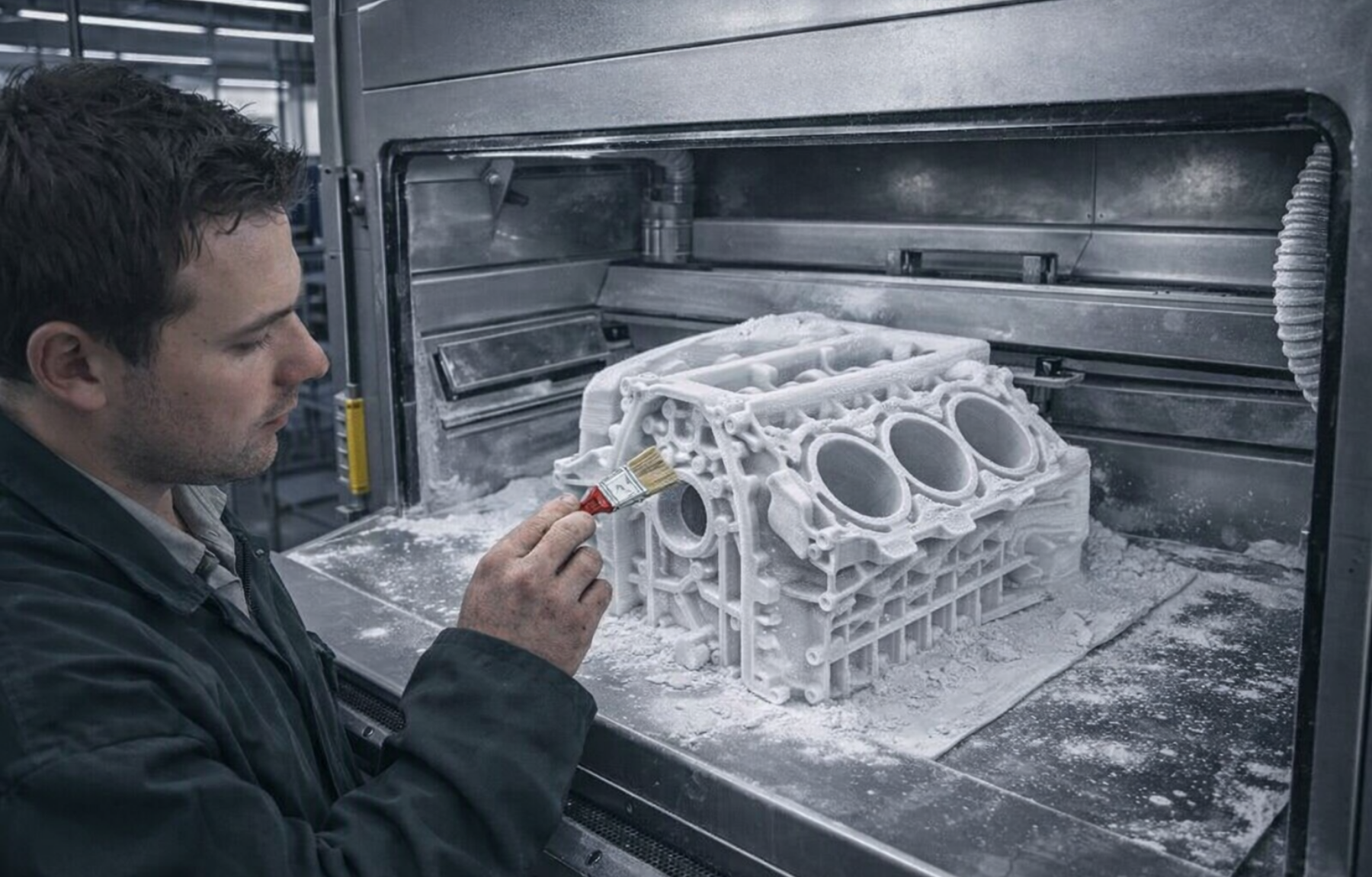
Polymer 3D printing stands as a transformative pillar within additive manufacturing, fundamentally reshaping how industries approach design, prototyping, and production. This cutting-edge technology meticulously builds three-dimensional parts, layer by layer, from a diverse array of polymer materials, allowing for the creation of intricate geometries and complex structures that were once deemed impossible or prohibitively expensive with traditional manufacturing methods. From initial concept validation to the creation of robust end-use components, its evolution continues to drive innovation across virtually every sector.
The significance of polymer 3D printing has grown exponentially, particularly for manufacturing large components and intricate automotive parts. It offers unparalleled advantages, including dramatically accelerated iteration cycles, significant reductions in tooling costs and lead times, and enhanced resilience within global supply chains. Manufacturers are increasingly leveraging this capability to innovate faster, customize at scale, and bring products to market with unprecedented agility.
Behind this revolution lies a spectrum of sophisticated technologies. From Fused Deposition Modeling (FDM) to Selective Laser Sintering (SLS) and Multi Jet Fusion (MJF), each offers distinct capabilities. Among these, Stereolithography (SLA) excels in producing parts with exceptional detail and surface finish, utilizing UV light to cure liquid photopolymers.
This article will delve into the core technologies, diverse applications, and profound impact of industrial polymer 3D printing on modern manufacturing.
Unpacking the Core Technologies Behind Polymer 3D Printing
The remarkable capabilities of polymer 3D printing stem from a variety of advanced technologies, each suited for different manufacturing demands. Understanding these methods is crucial to appreciating how this process transforms digital designs into tangible, high-performance objects.
One of the most widely recognized methods is FDM/FFF (Fused Deposition Modeling/Fused Filament Fabrication). This process involves heating a thermoplastic filament and extruding it through a nozzle, building the part layer by layer. FDM printers are often prized for their ability to produce strong, functional prototypes and tooling using robust materials like ABS and nylon. Many industrial applications benefit from FDM for creating custom jigs and fixtures, streamlining operations on factory floors.

Another prominent technology is SLA (Stereolithography). Unlike FDM, SLA uses a precisely directed UV laser to selectively cure liquid photopolymer resin, solidifying it layer by layer. This method is renowned for its exceptional detail, smooth surface finish, and accuracy, making it ideal for intricate prototypes, master patterns, and high-fidelity models.
Moving into powder-bed fusion, SLS (Selective Laser Sintering) employs a laser to fuse powdered polymer particles together, layer by layer, within a heated chamber. SLS parts are known for their excellent mechanical properties, isotropic strength (meaning strength in all directions), and the ability to produce complex geometries without the need for support structures, as the unfused powder acts as its own support. This makes SLS suitable for strong, functional end-use components.
Finally, MJF (Multi Jet Fusion) is a newer powder-bed technology that uses a fusing agent and a detailing agent applied by an inkjet array, followed by a heating element, to consolidate polymer powder. MJF is particularly effective for high-volume production of functional nylon parts, offering competitive costs and fast turnaround times. Both SLS and MJF excel in creating robust end-use components, often surpassing the strength profiles of FDM and SLA for certain applications.
Scaling Up: The Advancements in Large-Scale Polymer 3D Printing
The ability to create larger and larger objects has been a significant driver in the adoption of polymer 3D printing in industrial settings. Large-scale 3d printing addresses the demand for bigger components, whether for prototypes, tooling, or even structural elements. This evolution has spurred innovations in printer design, material science, and process control.
One of the primary challenges in 3D printing large objects involves managing material deposition uniformity across vast print areas and mitigating thermal stresses that can lead to warping. Industrial systems, often utilizing gantry-based FDM printers, tackle these issues through controlled heated build chambers and advanced slicing software that can optimize print paths and even segment builds for ultimate assembly.
Driving Innovation: Polymer 3D Printing for Automotive Parts
The automotive industry stands as a prime example of how polymer 3D printing revolutionizes manufacturing workflows. From the earliest stages of design to the production of end-use components, 3d printing automotive parts offers unparalleled agility and innovation.
In rapid prototyping, polymer 3D printing significantly accelerates the design iteration cycle. Engineers can go from a CAD model to a physical part in a matter of days, allowing for quick testing and refinement of designs. This speeds up product development and reduces the time-to-market for new vehicles. Furthermore, the technology is invaluable for producing custom tooling, jigs, and fixtures for assembly lines. Toyota, for instance, has leveraged 3D printing to produce 95% of its jigs in-house, drastically reducing dependency on CNC machining and external suppliers.
Beyond prototyping and tooling, polymer 3D printing is increasingly used for end-use automotive components. These include interior elements like customizable seats, under-hood enclosures, engine covers, and aerodynamic features. Porsche has famously experimented with TPU lattice seats that offer customized firmness and body contouring. BMW utilizes lightweight lattice structures for electric vehicle components to reduce overall weight and improve efficiency. Ford employs the technology for on-demand spare parts and a variety of engine components, while Volkswagen uses it for molds for interior parts.
The benefits of 3d printing car parts are numerous:
- Design Freedom: Complex geometries, previously impossible or cost-prohibitive with traditional manufacturing, can be realized, leading to optimized designs for performance and aesthetics.
- Weight Reduction: By incorporating intricate lattice structures and using advanced lightweight polymer composites, such as carbon-fiber reinforced materials, vehicle weight can be significantly reduced. This directly contributes to improved fuel efficiency and enhanced performance, particularly crucial for electric vehicles.
- Faster Iterations: The ability to move from CAD design to physical part in days allows for rapid testing and design validation, drastically cutting down development cycles.
- Performance Gains: Optimized designs can lead to improved airflow for better aerodynamics, enhanced cooling for engine components, and superior ergonomics for driver and passenger comfort.
Essential Polymer Materials for Industrial 3D Printing
The success of polymer 3D printing in industrial applications, particularly for large-scale 3d printing and automotive parts, heavily relies on the availability of high-performance polymer materials. Each material boasts unique properties that make it suitable for specific uses:
- ABS (Acrylonitrile Butadiene Styrene): Known for its toughness, impact resistance, and heat resistance, ABS is a staple for automotive prototypes, functional models, and custom tools.
- Nylon (Polyamide): Available in various formulations, nylon offers excellent flexibility, durability, and chemical resistance. It’s a popular choice for SLS and MJF processes, used for jigs, fixtures, and end-use spare parts due to its robust mechanical properties.
- Polycarbonate (PC) and PEI (Polyetherimide): These engineering thermoplastics deliver high heat resistance and exceptional strength, making them suitable for demanding applications, including under-hood components where thermal stability is critical.
- PEEK/PEKK (Polyether Ether Ketone/Polyether Ketone Ketone): These high-performance polymers are at the pinnacle of thermoplastic strength and heat resistance. They are often used in extreme environments where parts need to withstand high temperatures, chemicals, and mechanical stresses, such as critical engine components or molds for high-temperature materials.
- TPU (Thermoplastic Polyurethane): Offering excellent elasticity, abrasion resistance, and shock absorption, TPU is ideal for flexible components like seals, gaskets, and even customizable ergonomic automotive seating, as seen with Porsche.
- PPS CF (Polyphenylene Sulfide Carbon Fiber-reinforced): The addition of carbon fiber significantly enhances the strength, stiffness, and heat resistance of PPS, creating a high-performance composite suitable for lightweight yet incredibly strong end-use parts, including engine covers and structural components that demand properties approaching metals.
These advanced materials enable the creation of components that are not only lightweight but also possess superior strength and specific properties that match or even exceed those of traditionally manufactured parts, addressing the rigorous demands of automotive and other industrial sectors.
The Future Landscape: Benefits and Adoption Considerations for Polymer 3D Printing
Integrating polymer 3D printing into manufacturing workflows offers a multitude of benefits that are reshaping industries. One of the most significant advantages is enhanced supply chain resilience. By enabling on-demand production of spare parts and components, companies can reduce inventory levels, mitigate risks associated with global supply chain disruptions, and ensure continuity in operations. This capability is vital for industries requiring specialized parts that might otherwise have long lead times.
The technology also facilitates customization at scale. Manufacturers can produce highly tailored products without the prohibitive costs and time associated with traditional mass customization methods. This is particularly appealing in the automotive sector for personalized interiors or specific tooling. The ability to move from design concept to physical product with unprecedented speed translates into a significantly reduced time-to-market for new products and iterations. Furthermore, cost savings can be substantial by eliminating the need for expensive molds and tooling, especially for low-volume production or intricate designs.
However, adopting polymer 3D printing also involves crucial considerations:
- Economic Viability: Assessing the financial feasibility for specific applications is important. While it reduces tooling costs, material expenses can be higher than traditional methods for certain parts. However, for low-volume production, customization, and complex geometries, the overall efficiency often makes it more economically viable.
- Quality Assurance: Ensuring consistent part quality, mechanical properties, and dimensional accuracy is paramount. This requires rigorous functional testing and validation processes to meet industry standards.
- Workflow Integration: Seamless integration of 3D printing into existing design and production workflows is key to maximizing its benefits. This involves training personnel, adapting design processes for additive manufacturing, and optimizing post-processing steps to ensure a smooth transition from digital design to final product.
While challenges like material costs are present, they are frequently offset by the immense performance gains in terms of part weight, design complexity, and operational agility. The strategic application of polymer 3D printing is not just about making parts differently; it is about fundamentally rethinking how products are designed, developed, and delivered to the market.
Precision and Power: Unpacking Industrial Polymer 3D Printing
While the foundational principles of polymer 3D printing involve building objects layer by layer, the transition from basic prototyping to robust industrial applications demands a sophisticated understanding of both the underlying technologies and the materials employed. It’s not just about making parts; it’s about making performance-critical components for demanding sectors like automotive, and doing so at scale.
To truly appreciate the advanced capabilities, we must move beyond the basic extrusion or curing concepts and delve into the specific strengths each method brings to industrial production. For instance, Fused Deposition Modeling (FDM), often synonymous with 3D printing large objects, relies on a continuous extrusion of molten thermoplastic. While excellent for creating custom tooling, jigs, and large-format prototypes due to its material diversity and cost-effectiveness, industrial FDM systems are engineered to overcome challenges like thermal management and material deposition uniformity across vast build platforms. Companies leverage advanced gantry-based FDM printers to produce oversized components, mitigating warping through finely controlled heated build chambers and intelligent print path optimization.
Contrast this with Selective Laser Sintering (SLS), like Kings P440 SLS 3D Printer: Selective Laser Sintering for Industrial Applications, and Multi Jet Fusion (MJF). These powder-bed fusion techniques are transformative for directly producing strong, functional polymer 3D printing parts without the need for support structures. This inherent advantage facilitates incredible design freedom for complex internal geometries, enabling parts with optimized weight and enhanced performance, which is critical for lightweighting in 3D printing automotive parts. MJF, in particular, stands out for its efficiency in high-volume production runs using materials like nylon, making it economically viable for end-use components that demand specific mechanical properties and durability.
Then there’s Stereolithography (SLA), a powerhouse for precision and surface finish. While traditionally known for highly detailed prototypes, industrial SLA systems have evolved significantly. Printers like the Nexa3D NXE400 exemplify this evolution, offering rapid, high-precision manufacturing for applications requiring exceptional detail and tight tolerances, from intricate molds and patterns to highly aesthetic functional prototypes. These advanced SLA systems, utilizing photopolymer resins, provide a pathway to producing parts with superior aesthetic quality and mechanical properties that can rival injection-molded components.
Engineering Excellence: Solving the Challenges of Scale
The leap to large-scale 3D printing isn’t simply about bigger machines; it’s an engineering feat. Producing components that are often meters in length introduces unique challenges. Ensuring consistent material deposition over extended periods, managing thermal stresses to prevent warping and delamination, and guaranteeing the structural integrity of massive builds require sophisticated software algorithms, advanced sensor arrays, and robust hardware. Innovations include active process monitoring, multi-nozzle systems for accelerated deposition, and hybrid manufacturing approaches that combine additive and subtractive techniques to achieve final part precision. These developments are instrumental in transforming polymer 3D printing into a reliable method for constructing everything from entire architectural models to crucial tooling for heavy industry.
It’s within this context of scaling that the real strategic value emerges for industries. Take, for example, the ability to 3D print large custom fixtures or molds on demand. This dramatically cuts lead times and eliminates the reliance on external vendors, improving supply chain agility. Toyota, a pioneer in lean manufacturing, now produces 95% of its jigs and fixtures in-house using 3D printing, drastically reducing its dependency on traditional CNC machining and minimizing delays.
Driving the Future: Advanced Automotive Applications
The automotive industry continues to be a prime beneficiary of polymer 3D printing, pushing the boundaries of what’s possible in vehicle design and production. Beyond rapid prototyping, the technology is now integral to manufacturing an array of functional 3D printing car parts. Consider the complex interior components: customized seating with intricate lattice structures for tunable firmness, as demonstrated by Porsche with their TPU-printed lattice seats, or lightweight interior panels that contribute to overall vehicle efficiency.
The impact extends to under-the-hood applications where extreme temperatures and mechanical stresses are the norm. Polymer 3D printing is being used for engine covers, air ducts, and fluid reservoirs, leveraging high-performance materials that can withstand harsh operating conditions. Aerodynamic elements, critical for optimizing fuel efficiency and performance in both traditional and electric vehicles, can be rapidly iterated and optimized using these additive methods, allowing engineers to test and refine designs in days rather than weeks. BMW, for instance, utilizes lightweight lattice structures created through 3D printing to reduce the mass of components in its electric vehicle lineup, directly contributing to extended range and performance. This level of design freedom and rapid iteration shortens the entire development cycle, moving concepts from CAD to functional parts with unprecedented speed.
Conclusion
Polymer 3D printing has unequivocally transformed modern manufacturing, enabling the creation of intricate large-scale components and essential automotive parts with unmatched flexibility and speed. This paradigm shift drives unprecedented efficiency, fosters innovation, and drastically reduces delays across the entire product lifecycle, from initial prototyping to final production.
Leveraging advanced technologies like FDM, SLS, and MJF, this process empowers industries to iterate designs faster, customize products with precision, and optimize performance across a myriad of applications. Forward-thinking companies are already integrating high-precision industrial SLA 3D printers and robust materials to gain a competitive edge.
Polymer 3D printing is no longer just an emerging trend; it is a foundational pillar of future manufacturing. Embracing its capabilities is a strategic imperative for any industry seeking to redefine possibilities, outpace the competition, and build the future, one meticulously printed layer at a time.
Frequently asked questions
What is polymer 3D printing?
Polymer 3D printing is an additive manufacturing process that builds three-dimensional objects layer by layer using various polymer (plastic) materials. It starts with a digital design and uses different technologies, like extruding melted plastic or curing liquid resin with light, to create complex parts, prototypes, and tools.
What are the key technologies used in industrial polymer 3D printing?
Industrial polymer 3D printing primarily utilizes technologies such as FDM (Fused Deposition Modeling) for durable parts and tooling, SLS (Selective Laser Sintering) for strong, functional components, MJF (Multi Jet Fusion) for high-volume production, and SLA (Stereolithography) for high-detail prototypes.
Can polymer 3D printing produce large-scale components?
Yes, large-scale 3D printing with polymers is a significant advancement. Industrial systems, including gantry-based FDM printers, are specifically designed to produce oversized parts, addressing the need for large prototypes, custom tooling, and even end-use components in industries like automotive and aerospace. This enables creating objects that were previously difficult or impossible to manufacture additively.
How does polymer 3D printing benefit the automotive industry?
Polymer 3D printing revolutionizes the automotive industry by accelerating rapid prototyping, enabling the creation of custom tooling and jigs, and producing lightweight end-use components. It offers design freedom, reduces lead times from months to days, and contributes to weight reduction through advanced material composites, ultimately enhancing vehicle performance and efficiency.
What types of polymer materials are essential for industrial 3D printing, especially for automotive applications?
A range of high-performance polymers is crucial. ABS offers toughness, Nylon provides flexibility and durability (often used in SLS/MJF), while Polycarbonate (PC) and PEI are chosen for their high heat resistance. Advanced materials like PEEK/PEKK, TPU, and carbon-fiber reinforced PPS CF are used for extreme conditions and end-use parts.
What specific automotive parts are commonly produced using polymer 3D printing?
3D printing automotive parts covers a wide range, from interior components like customizable seats (e.g., Porsche's TPU lattice seats) and dashboards to under-hood enclosures, engine covers, and aerodynamic elements. It's also extensively used for creating custom jigs, fixtures, and molds for various manufacturing processes. The ability to quickly produce 3D printing car parts helps manufacturers innovate faster and respond to market demands.
What are the primary benefits of adopting polymer 3D printing in a manufacturing workflow?
Adopting polymer 3D printing offers significant advantages, including enhanced supply chain resilience through on-demand spare parts production, extensive customization at scale, dramatically reduced time-to-market for new products, and substantial cost savings by eliminating the need for expensive molds and tooling. It also enables greater design complexity and lightweighting, optimizing part performance.
Have a question or a project? Let’s talk.
Tell us what you need — a real applications engineer replies within 24 hours. NDA on request, no sales script.