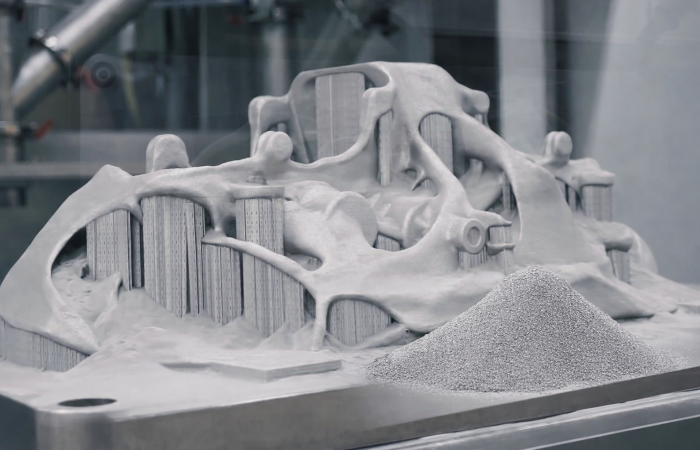
3D Printing Metal Powder: A Guide to Materials & Uses
The landscape of manufacturing is continually reshaped by advancements, and few technologies encapsulate this evolution as profoundly as additive manufacturing. At its core lies a fundamental component: 3D printing metal powder. Far from being mere industrial dust, these finely engineered, gas-atomised particles — typically ranging from 15-45 microns with spherical morphology — are the essential building blocks that enable the creation of highly complex, previously impossible geometries, revolutionising industries from aerospace to medicine.
Unlike traditional subtractive methods that remove material from a bulk solid, metal additive manufacturing builds objects layer by meticulous layer, precisely fusing these specialized powders into robust, functional components. This transformative process allows engineers and designers to transcend conventional design limitations, producing parts with optimized performance, reduced weight, and unparalleled complexity.
This article will navigate the intricate world of metal powders, exploring their critical properties, the diverse families available—including robust steels, lightweight aluminium alloys, and high-performance titanium powder like Ti64—and specialized nickel alloys such as alloy nickel copper. We’ll delve into how these materials are precisely manipulated to forge everything from critical aerospace turbine components to bespoke medical implants, ultimately unveiling the immense potential and ongoing evolution of this cutting-edge technology.
The Magical World of 3D Printing Metal Powder
The realm of additive manufacturing has revolutionized how complex components are conceived and produced, and at the heart of this transformation lies 3D printing with metal powder. This specialized material is not merely a collection of tiny metal fragments; it is a meticulously engineered medium that enables the creation of designs previously deemed impossible with traditional manufacturing methods like machining or casting. Understanding its fundamental nature is crucial to appreciating the advanced parts it helps build across various high-stakes industries.
What is 3D Printing Metal Powder?
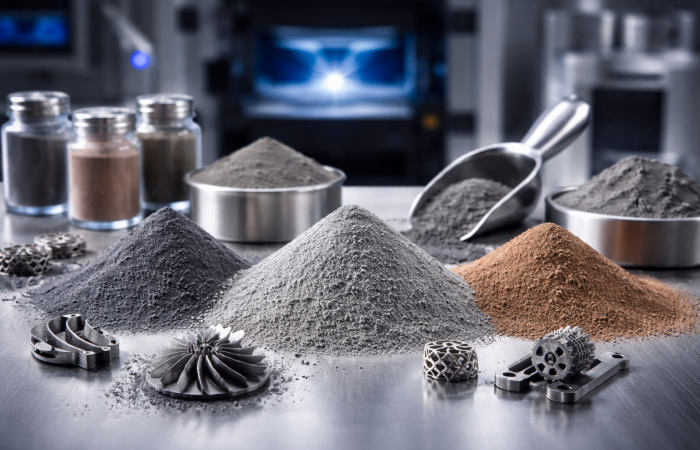
Imagine sand, but not just any sand—picture incredibly fine, perfectly spherical grains, each made of metal, smaller than a grain of sugar. This is essentially what 3D printing metal powder is. These minuscule particles, typically ranging from 15-45 microns in size and possessing a distinctly spherical morphology, serve as the foundational “ink” or building block for advanced additive manufacturing processes. These powders are often produced through gas atomization, a method that ensures their consistent shape and size, which are critical for optimal performance.
Metal powders allow for the direct fabrication of functional metal parts. They encompass a broad spectrum of materials, including various steels, lightweight aluminium alloys, robust titanium powder, and high-performance nickel alloys. Each type is selected for its unique properties, allowing engineers to tailor components for specific demands, from extreme strength to superior corrosion resistance. This foundational material is what truly unlocks the potential for intricate geometries and custom solutions that define modern metal 3D printing.
How Do You Print with Metal Powder?
The process of transforming these fine metal powders into solid, functional parts is a marvel of precision engineering. At its core, metal 3D printing operates on a layer-by-layer principle, building an object from the ground up based on a digital design.
The journey begins within a specialized 3D printer, often utilizing a powder bed fusion (PBF) technique. Inside a controlled build chamber, a recoater blade or roller precisely spreads an ultra-thin, uniform layer of 3D printing metal powder across a build platform. This layer is usually no thicker than a human hair.
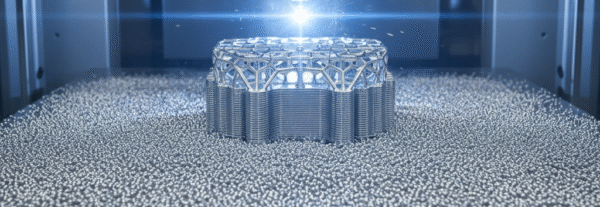
Following the deposition of the powder layer, a powerful, computer-guided laser or electron beam scans the surface. In processes like Direct Metal Laser Sintering (DMLS) or Selective Laser Melting (SLM), a high-energy laser melts or sinters specific points of the powder, tracing the exact cross-section of the part for that particular layer. The intense heat causes the metal particles to fuse together, solidifying into the desired shape. This localized fusion is incredibly precise, allowing for intricate details and complex internal structures.
Once a layer is complete, the build platform precisely lowers by the thickness of one layer, and a fresh layer of metal powder is spread on top. The laser then repeats its action, melting and fusing the new powder to the layer below it. This meticulous cycle continues hundreds or even thousands of times, with each new layer building upon the previous one, gradually constructing the three-dimensional object. The precision of this process ensures excellent resolution and surface quality, enabling the creation of lightweight aerospace components or intricate medical implants.
This controlled environment is crucial for maintaining the integrity of the metal, often requiring inert gases like argon to prevent oxidation of reactive metals such as titanium powder during the printing process. When the final layer is fused, the object is encased in unfused powder, which is later removed and often recycled for future prints, minimizing waste. This layer-by-layer fusion method distinguishes metal 3D printing from other additive technologies, offering unparalleled design freedom and functional capabilities. For a deeper dive into powder bed fusion technologies, exploring comparisons like metal binder jetting vs DMLS can provide further insight. Additionally, understanding the nuances of selective laser sintering 3D printing sheds light on a related powder-based technology.
What Makes a Good Metal Powder?
The quality and performance of a 3D-printed metal part are intrinsically linked to the characteristics of the metal powder used. Not all metal powders are suitable for additive manufacturing; they must possess a very specific set of properties to ensure printability, part integrity, and ultimately, desired performance.
Particle Characteristics for Optimal Printing
- Perfectly Round (Spherical Morphology): The tiny metal particles need to be highly spherical. This critical characteristic ensures excellent flowability, allowing the powder to spread smoothly and evenly across the build platform during each layer. A uniform, dense powder bed is essential for consistent laser interaction and to avoid defects like voids or inconsistent material properties in the final part. This also contributes to high packing density, which is crucial for achieving solid, non-porous parts.
- Just the Right Size (Particle Size Distribution): An optimal particle size distribution, typically between 15-45 microns, is vital. Particles that are too large can hinder flowability and reduce resolution, while particles that are too fine can become difficult to handle and prone to clumping. The specific range ensures precise layer uniformity, allowing for high resolution and excellent surface quality on the finished component. Tools like a Camsizer are often used to precisely measure and characterize these particle properties.
Purity and Material Integrity
- Super Pure (High Purity): The powder must exhibit exceptionally high purity, meaning it contains minimal impurities. Contaminants can act as stress concentrators or introduce undesired phases, compromising the mechanical properties of the printed part. High purity minimizes oxidation during processing, a crucial factor in achieving dense, defect-free components.
- Low Oxygen Content: Oxygen is a particular concern, especially for reactive metals like titanium powder. Even trace amounts of oxygen can lead to embrittlement, porosity, and reduced mechanical strength. Manufacturers go to great lengths to produce and handle powders in controlled, inert environments to keep oxygen levels at an absolute minimum, safeguarding the integrity of the final product.
Beyond the Basics: Mechanical and Thermal Properties
Beyond these fundamental physical characteristics, the intrinsic material properties of the 3D printing metal powder play a pivotal role in the final part’s performance. These include:
- Mechanical Properties: Essential traits like tensile strength, ductility (ability to deform without fracturing), and hardness dictate how a part will perform under stress and impact. These properties are critical for applications demanding high structural integrity.
- Thermal Properties: Factors such as the melting point and thermal conductivity are crucial for printability and process stability. A predictable melting point ensures consistent fusion, while thermal conductivity influences how quickly heat dissipates during the laser melting process, affecting residual stresses and part distortion.
- Corrosion Resistance: For parts destined for harsh environments, such as marine or chemical processing applications, inherent corrosion resistance is paramount. This is particularly relevant for materials like certain nickel alloys or alloy nickel copper.
- Density: While related to packing density of the powder, the final part’s material density is a key performance indicator. Higher density generally correlates with improved mechanical properties and reduced porosity.
Collectively, these meticulously controlled properties ensure that the 3D printing metal powder not only prints effectively but also yields parts with the desired impact toughness, resistance to creep at high temperatures, and overall reliability for demanding applications across aerospace, medical, and automotive sectors. The selection of the right powder, with the correct blend of these characteristics, is a foundational step in the successful adoption of metal additive manufacturing. In the next section, we will delve into the specific families of metal powders, highlighting their unique attributes and the roles they play in advanced manufacturing.
The Science Behind the Powder: Engineering the Foundation of Metal AM
While the initial overview touched upon the characteristics of ideal metal powder, the journey from raw metal to a finely tuned 3d printing metal powder is a sophisticated process that dictates the final part’s integrity. The most prevalent method for producing these spherical, high-purity particles is gas atomization. Here, a molten stream of metal is subjected to high-pressure inert gas jets (like argon or nitrogen), which breaks it into tiny droplets. These droplets then cool rapidly as they fall, solidifying into perfectly spherical particles before they can clump together or oxidize. This controlled environment and rapid solidification are crucial for achieving the desired spherical morphology, fine particle size distribution (typically 15-45 microns), and low oxygen content that ensures optimal flowability and minimises defects in the final printed part.
Achieving this consistent quality is paramount. Deviations in particle size, irregular shapes, or impurities can lead to poor powder bed packing density, increased porosity, and ultimately, compromised mechanical properties in the printed component. Advanced characterization techniques, including laser diffraction for particle size analysis and electron microscopy for morphology verification, are routinely employed to certify powder batches, ensuring they meet the stringent requirements of additive manufacturing. This meticulous approach to powder creation is the bedrock upon which high-performance metal 3d printing is built.
Tailoring Performance: The Deeper Impact of Material Properties
The foundational properties mentioned earlier—strength, ductility, hardness, and corrosion resistance—are not merely static attributes but dynamic considerations engineered into the 3d printing metal powder for specific end uses. For instance, the density of the powder isn’t just about weight; it directly correlates with packing density in the powder bed, influencing laser absorption and the ultimate density of the printed part. High packing density ensures uniform laser energy distribution, critical for consistent melt pool formation and minimal porosity.
Beyond the raw material, the interaction between the laser energy and the powder dictates the microstructure of the final component. The rapid heating and cooling cycles inherent to processes like Direct Metal Laser Sintering (DMLS) and Selective Laser Melting (SLM) can create unique metallurgical structures, sometimes leading to finer grain sizes than traditionally manufactured equivalents. This finer microstructure often translates into enhanced strength and fatigue resistance, yet it can also introduce residual stresses requiring careful post-processing. The thermal conductivity of the powder influences how quickly heat dissipates from the melt pool, impacting thermal gradients and potential for warping or cracking. Therefore, understanding these complex interdependencies allows engineers to select not just a metal powder, but the optimal metal powder and process parameters for specific applications, achieving intricate geometries with precise mechanical properties.
Unveiling Advanced Applications of Specialized Metal Powders
The true power of 3d printing metal powder emerges when highly specialized alloys meet the design freedom of additive manufacturing.
Titanium Powder: Pushing Boundaries in Aerospace and Biomedicine
Titanium powder, particularly the workhorse alloy Ti64 (Ti-6Al-4V), represents a pinnacle of material science in AM. Its extraordinary strength-to-weight ratio is indispensable for aerospace components, enabling lighter aircraft and spacecraft that translate directly into fuel efficiency and increased payload capacity. Think of topology-optimized brackets, intricate turbine blades, or structural components with internal lattice structures – designs impossible to produce with traditional forging or machining. The high oxygen affinity of titanium powder means processing must occur in tightly controlled inert gas environments, often in vacuum-sealed chambers, to prevent embrittlement and maintain mechanical integrity.
In the medical field, ti64 3d printing has revolutionized patient-specific solutions. Beyond generic implants, additive manufacturing allows for the creation of custom cranial plates, spinal cages, and orthopedic implants perfectly matched to a patient’s anatomy. The biocompatibility of titanium powder enables excellent osseointegration, where bone tissue grows directly onto the implant surface, promoting long-term stability and reducing rejection risk. Post-processing techniques like Hot Isostatic Pressing (HIP) are frequently employed to further reduce internal porosity in Ti64 3d printing parts, enhancing fatigue life and ensuring superior performance in critical medical applications.
Nickel Alloys: Enduring the Harshest Environments
The role of nickel alloys extends far beyond simple corrosion resistance, venturing into realms of extreme temperature and pressure. These superalloys, such as Inconel 718 or Hastelloy X, are engineered to withstand prolonged exposure to high heat without significant creep (deformation under stress) or oxidation. This makes them indispensable for hot-section components in jet engines, rocket engines, gas turbines for power generation, and specialized chemical processing equipment. The complex internal cooling channels, intricate fuel nozzles, and lightweight exhaust components produced via 3d printing metal powder from nickel alloys dramatically improve efficiency and longevity in these demanding applications.
Specific variants like alloy nickel copper (e.g., Monel K-500) provide exceptional resistance to seawater corrosion and cavitation erosion, making them invaluable for marine components like pump impellers, valve bodies, and subsea oil and gas equipment. The ability to print complex alloy nickel copper geometries with internal passages allows for novel fluid control systems that are more compact and efficient than conventionally manufactured parts. The thermal stability and resistance to corrosive media in nickel alloys ensure reliable operation where other metals would quickly fail.
Diverse Applications Transforming Industries
The versatility of 3d printing metal powder has transcended prototyping, becoming a mainstream manufacturing method for production parts. In the automotive sector, additive manufacturing enables lightweighting initiatives through complex component designs for electric vehicle battery enclosures, specialized cooling systems, and high-performance engine parts, directly contributing to improved range and performance. The energy sector benefits from customized nickel alloys components for nuclear reactors, oil and gas drilling equipment, and efficient heat exchangers – a significant advancement for sustainability and efficiency.
Imagine a specialized heat exchanger for high-temperature applications. The complex, interwoven internal structures necessary for maximum surface area and heat transfer efficiency are only achievable through 3d printing metal powder. These advancements are not just theoretical; they are delivering tangible benefits in real-world scenarios, creating parts that are lighter, stronger, and perform better than their conventionally manufactured counterparts.
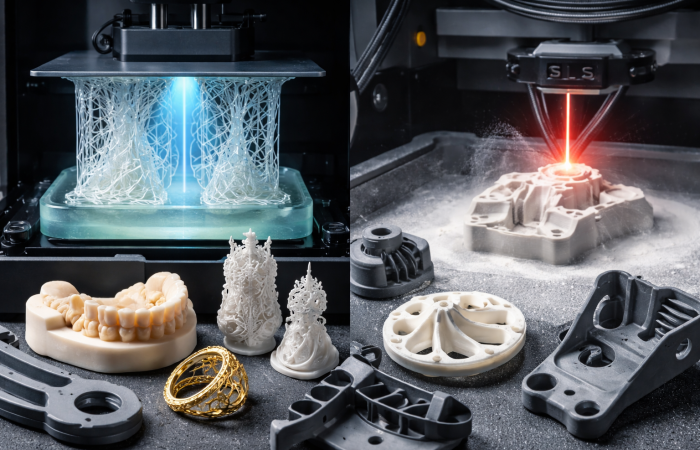
The image above vividly illustrates the precision of this process: a laser meticulously traces a design on a bed of 3d printing metal powder, fusing it layer by layer into a solid, intricate object. This visual encapsulation perfectly captures the blend of advanced technology and refined material science at the heart of metal additive manufacturing.
Navigating the Horizon: Advanced Challenges and Future Directions
While the capabilities of 3d printing metal powder are vast, ongoing innovation is critical to address persistent challenges. The cost remains a significant barrier for broader adoption, driven by expensive raw powders, specialized machinery, and energy-intensive processes. However, advancements in powder recycling and reusability, coupled with more efficient machine designs, are gradually making the technology more economically viable.
Quality control is another crucial aspect. Ensuring consistent material properties from batch to batch and part to part requires sophisticated in-situ monitoring during the print process, utilizing sensors and real-time data analysis to detect anomalies. The concept of “digital passports” for powder batches, enabling traceability from production to final part, is gaining traction, aligning with Industry 4.0 principles.
Furthermore, post-processing like Hot Isostatic Pressing (HIP), heat treatment, and surface finishing remains essential to achieve desired mechanical properties and surface quality, adding to the overall cost and lead time. Research is focused on reducing the need for extensive post-processing by optimizing build parameters and developing new alloys that are more “print-ready.”
Looking ahead, the development of custom alloys and functionally graded materials (where material properties vary across a single part) promises to unlock even more unprecedented performance capabilities. As research continues to refine powder characteristics, optimize printing parameters, and streamline post-processing, 3d printing metal powder will undoubtedly continue its trajectory as a transformative force in advanced manufacturing.
Conclusion
The journey through the world of 3D printing metal powder reveals a landscape of unparalleled innovation. From the meticulous control of particle size and purity to the advanced properties of titanium powder and nickel alloys, these materials are not merely powders; they are the bedrock of next-generation engineering. They empower industries to transcend traditional manufacturing limitations, delivering lightweight, high-strength components for aerospace, intricate medical implants, and durable parts capable of enduring extreme environments.
The precise selection of materials like Ti64 or specific alloy nickel copper variants directly dictates the performance and success of additive manufacturing projects. While challenges such as cost and post-processing complexities persist, the continuous evolution in materials science and printing technology is steadily expanding the horizon of what’s possible.
Frequently Asked Questions
What is 3D printing metal powder?
3D printing metal powder refers to fine, gas-atomized metal particles, typically 15-45 microns in size with a spherical shape. This specialized powder acts as the raw material in additive manufacturing processes, where it is melted and fused layer by layer by a laser or electron beam to create complex, high-performance metal parts. Its unique characteristics enable designs impossible with traditional manufacturing methods.
How do metal 3D printers like DMLS and SLM work with these powders?
Processes such as DMLS (Direct Metal Laser Sintering) and SLM (Selective Laser Melting), both types of powder bed fusion (PBF), involve spreading a thin layer of 3D printing metal powder onto a build platform. A powerful laser then precisely melts and fuses the powder particles according to a digital design. The platform lowers, a new layer of fresh powder is applied, and the process repeats until the part is fully formed, creating solid objects through fusion.
What key properties make a metal powder suitable for 3D printing?
For optimal performance, 3D printing metal powder requires several critical properties. These include a specific particle size distribution (e.g., 15-45 microns) for uniform layers, spherical morphology for excellent flowability, high purity to minimize defects, and low oxygen content to ensure part density and prevent oxidation during the printing process. These traits ensure consistency and strength in the final component.
Why is Titanium powder, especially Ti64, so important in metal 3D printing?
Titanium powder, particularly Ti64 (Ti-6Al-4V), is highly valued in additive manufacturing due to its exceptional strength-to-weight ratio, corrosion resistance, and biocompatibility. These properties make Ti64 3D printing ideal for demanding applications in aerospace (e.g., turbine components) and medical fields (e.g., custom implants like cranial prosthetics and orthopedic devices), where high performance and lightweight design are crucial.
Which industries primarily benefit from using 3D printed nickel alloys?
Nickel alloys excel in extreme environments, offering superb oxidation resistance, creep resistance, and thermal stability. These characteristics make them indispensable for industries like aerospace (for jet engine components), energy (for power generation parts), and chemical processing (for equipment exposed to corrosive agents). Specific variants, such as alloy nickel copper, provide enhanced corrosion resistance, suitable for marine or chemical fluid systems.
What are the main advantages of using 3D printing metal powder over traditional manufacturing?
Using 3D printing metal powder offers numerous advantages, including the ability to create complex geometries and internal structures not possible with conventional methods. It allows for part consolidation, reducing assembly steps, and enables rapid prototyping. Additionally, it minimizes material waste, provides high precision, and facilitates the creation of lightweight, customized components with superior performance characteristics for various industries.
What challenges are associated with 3D printing metal powders?
Working with 3D printing metal powder presents several challenges. These include the high cost of both the powders and the specialized equipment, the need for safe powder handling due to the fine, sometimes reactive particles, and stringent quality control to monitor properties like oxygen content and flowability. Furthermore, parts often require extensive post-processing like Hot Isostatic Pressing (HIP) or annealing to achieve desired mechanical properties and reduce porosity.
Can 3D printing metal powders be recycled and reused?
Yes, 3D printing metal powders can often be recycled and reused, contributing to more sustainable manufacturing. Unused powder from the build chamber can be sieved and re-qualified for subsequent prints. However, meticulous quality control and traceability are essential to monitor changes in powder properties (like particle size distribution or oxygen pickup) across different build cycles to ensure consistent part quality and performance.
Related Posts