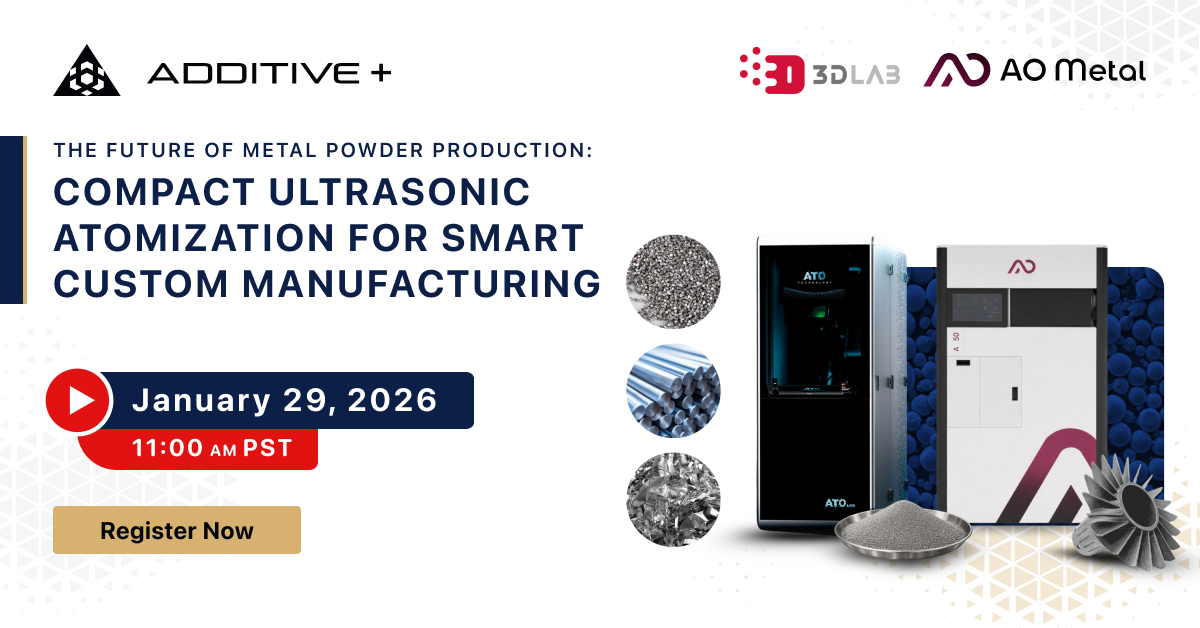
ATO
ULTRASONIC METAL POWDER ATOMIZER

How Ultrasonic Atomization Works
ATO ultrasonic atomizer systems use high-frequency vibrations to produce high-quality atomized metal powders.
Step-by-step Process:
- Source metal wire or rod melts inside an oxygen-free plasma arc chamber.
- A proprietary ultrasonic atomizer generates high-frequency vibrations, atomizing the molten metal.
- Solidified atomized metals are carried by shielding gas to the storage container.
- Process waste and fumes are filtered, leaving only high-quality metal powder for atomisation.

Why Metal Atomization Technology Matters
- High-quality powders: Extremely spherical particles with narrow size distribution.
- Low oxygen content: Preserves material properties for reactive metals and alloys.
- High Purity level: Purity is key when atomizing materials to preserve the material properties and value.
- Efficient process: Fast setup and operation, reducing downtime in research and production.
- Versatile materials: Supports reactive and non-reactive metals, including precious metals.
- Scalable & compact: Produces atomized metal powders in small footprints, ideal for labs and R&D facilities.
Materials Supported by ATO Atomizers
Our ATO Ultrasonic Atomizers are capable of processing a wide spectrum of metals, enabling high-precision atomization for research, prototyping, and full-scale production.
Materials Processed:
- Non-reactive Metals: Copper, Stainless Steel, Nickel Alloys, CoCr, and more
- Reactive Metals: Titanium, Titanium Alloys, Magnesium, Aluminum Alloys, and more
- Refractory Metals: Tungsten, Tantalum, Vanadium, Molybdenum, Niobium
- Precious Metals: Gold, Silver, Platinum
Technical Specifications:
- Supports wires (0.5–2.2 mm) and rods (up to Ø10 mm, 120 mm length, multi-rod feeding)
- Produces atomized metals with a narrow particle size distribution: 20–120 µm
Request Detailed Material Reports
We maintain a comprehensive list of successfully atomized materials, which can serve as a reference for your project planning. For more specific data, you can request a detailed report on the atomization results for your material of interest. This ensures you have full insight into particle size, distribution, and suitability for your applications.

Applications of Ultrasonic Atomization
- Aerospace: High-performance alloy components
- Automotive: Lightweight, high-strength materials
- Medical & Dental: Biocompatible metal powders for implants and devices
- Jewelry: Precious metal powders for intricate designs
- R&D Labs: Small-batch material testing and new alloy development
- Enables rapid prototyping and small-scale production with minimal material waste
Maintenance & Support for Your Atomization Machine
- Easy-to-maintain design: Minimal downtime with intuitive operation
- Material swapping: Quick cleaning and setup between batches
- Technical support: Additive Plus provides expert guidance, installation, and training
- Software updates: Ensure optimal performance and safety
- Replacement parts & service: Full USA-based support for long-term reliability
Comparison: ATO Atomizers vs. Traditional Atomization Methods
| Feature | ATO Ultrasonic Atomizer | Traditional Methods |
| Powder Quality | High sphericity, narrow PSD | Less uniform, irregular shapes |
| Oxygen Level | <150 ppm | Higher oxygen content |
| Footprint | Compact (<10 sq. ft.) | Large industrial setup |
| Batch Size | Small to medium, no minimum | Often large batch only |
| Material Versatility | Non-reactive, reactive, precious metals | Limited range |
| Operating Costs | Low | Higher energy and material costs |
Specifications & Technical Data
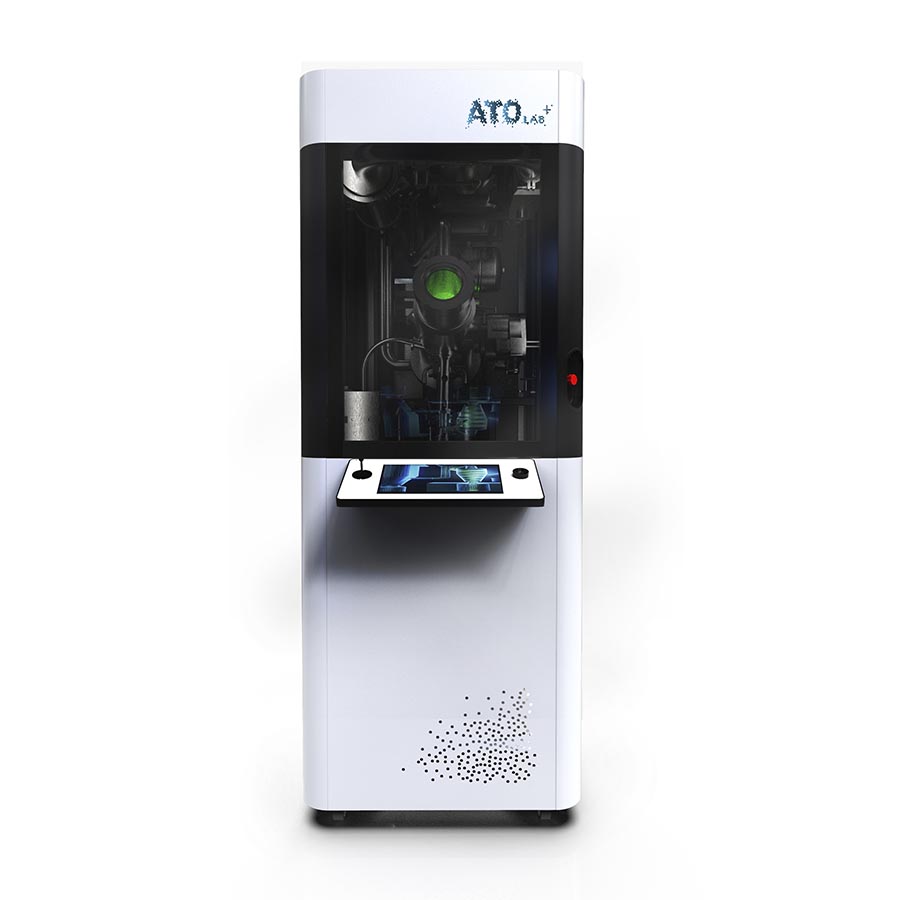
General Specification: ATO Lab Plus
| Feature | Details |
| Technology | Ultrasonic atomization |
| Protective atmosphere prep | < 10 min |
| Processable materials | Non-reactive & reactive metal alloys |
| Particle Size Distribution (PSD) | 20–120 µm |
| Input material | Wire: 0.5–2.2 mm Ø
Rod (upgrade): Ø up to 10 mm, length up to 120 mm, up to 10 rods per process |
| System throughput | Up to 0.3 L/h |
| Oxygen Level (delta) | < 150 ppm |
| Ultrasonic frequency | 35 kHz (upgradeable to 60 kHz) |
Particle Size Distribution for Common Metals
| Material | D10 | D50 | D90 |
| Inconel 718 | 46.5 µm | 54.3 µm | 63 µm |
| Stainless Steel 316L | 49.6 µm | 56.8 µm | 65.3 µm |
| Titanium Gr.5 | 45.5 µm | 50.8 µm | 57.5 µm |
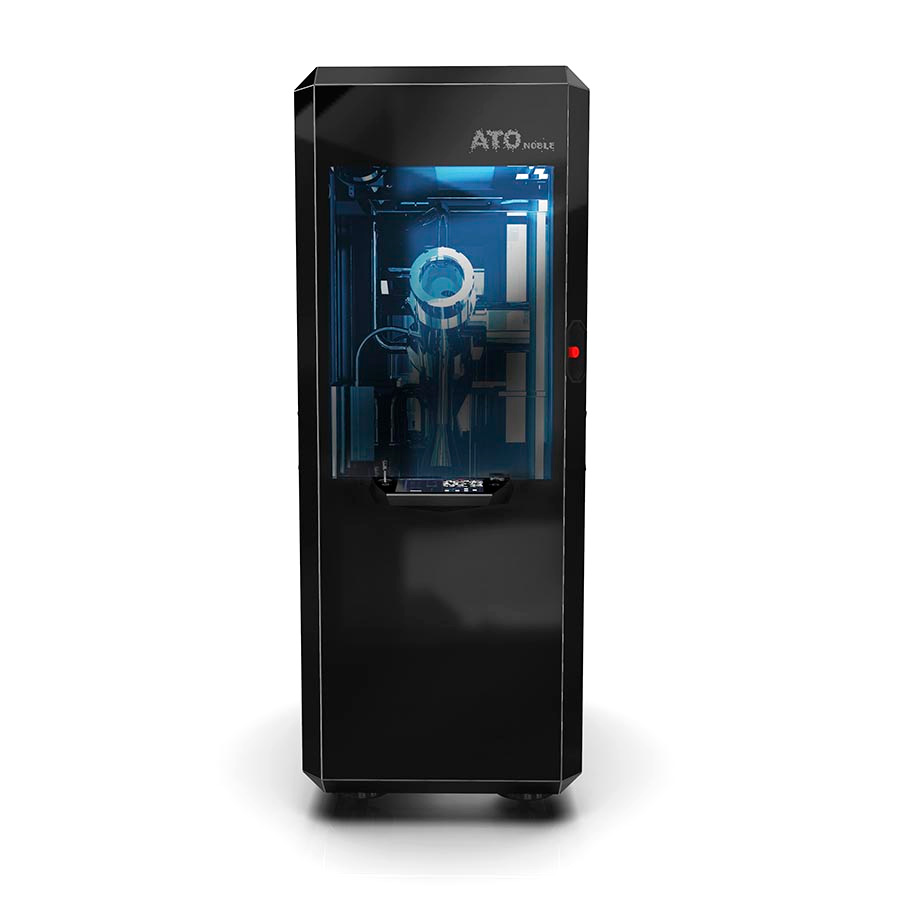
FAQ: Atomization Machine & Ultrasonic Atomizer
Q: What metals can be used in ultrasonic atomization?
A: Metals from aluminum to molybdenum, including precious metals and reactive alloys.
Q: What is the minimum powder quantity?
A: No minimum requirement, even small batches are possible.
Q: How quickly can I switch materials?
A: Swapping materials is fast and hassle-free, keeping downtime to a minimum—typically just 1 to 2 hours when using ATO Clean.
Q: How does the ATO atomizer compare to traditional atomization methods?
A: ATO atomizers provide higher powder quality, narrow particle size distribution, low oxygen content, compact footprint, and versatile material options.
Q: What industries benefit from ultrasonic atomization?
A: Aerospace, University, R&D labs, metalurgist, automotive, medical, dental, jewelry.
Q: How is maintenance handled?
A: Minimal downtime, easy cleaning, expert support, and replacement parts available in the USA.
Q: What particle size distribution can I expect?
A: Typically 20–120 µm with narrow distribution and high sphericity. The particle size distribution depends on the frequency of work; the higher the frequency, the smaller the particle size.
Ready to Transform Your Metal Powder Production?
Unlock faster R&D, higher-quality powders, and unmatched flexibility with ATO ultrasonic atomizer systems.
Take the next step:
- Request a personalized consultation with our experts
- Get a detailed quote tailored to your materials and production needs
- Explore how ATO metal powder atomizer can accelerate your innovation
Request a Consultation