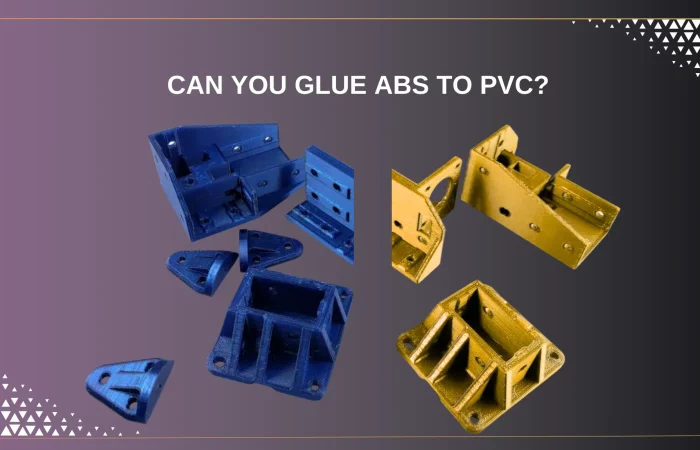
Can You Glue ABS to PVC? Tips and Best Practices for a Strong Bond
If you’re working on a 3D printing or fabrication project involving plastic components, you might wonder: Can you glue ABS to PVC? Or, more specifically, can I glue ABS to PVC safely and reliably for structural prototypes, mechanical assemblies, or custom enclosures? This comprehensive guide explores the entire process of gluing ABS to PVC, covering the characteristics of both materials, the limitations of standard adhesives, step-by-step instructions, and alternatives when gluing isn’t an option.
Whether you’re a hobbyist, engineer, or rapid prototyping specialist, understanding the differences and compatibilities between ABS and PVC is essential before reaching for that adhesive. A weak bond could compromise the strength or function of your printed component—especially when dealing with interlocking parts, enclosures, or motion-based joints in 3D-printed assemblies.
What Are ABS and PVC Plastics?
Before attempting to bond ABS to PVC, it’s essential to understand what makes these two thermoplastics different, both in their chemical structure and in how they perform in real-world and 3D printing contexts.
ABS (Acrylonitrile Butadiene Styrene)
ABS is one of the most popular thermoplastics in the 3D printing world, particularly among professionals and hobbyists using FDM (Fused Deposition Modeling) printers. It’s a petroleum-based plastic known for its excellent balance of durability, flexibility, and ease of machining.
- Used for:
- Functional prototypes requiring mechanical strength
- Automotive parts like dashboards, clips, and housing elements
- 3D-printed enclosures for electronics and sensors
- Snap-fit assemblies that require flexibility and impact resistance
- End-use parts for industrial and consumer products
- Form:
- Available as 1.75mm and 2.85mm filaments
- Typically black, but widely available in various colors
- Matte surface finish after printing
- Pros:
- Strong and impact-resistant
- Holds up well to moderate heat (glass transition temp ~105°C)
- Easy to post-process — sandable, drillable, and paintable
- Offers a good balance between rigidity and toughness
- Cons:
- Requires a heated bed (usually around 100°C) and enclosed build space to reduce warping
- Tends to warp if cooled too quickly
- Emits styrene fumes during printing, requiring proper ventilation or use of air filtration systems
- Slightly more brittle than flexible filaments like PETG or TPU
- Relevance in 3D Printing:
ABS remains a go-to material for engineers and designers needing structural integrity in their 3D-printed parts. It also serves as a base material in dual-extrusion prints where mechanical properties and chemical compatibility are needed in multi-material bonding.
PVC (Polyvinyl Chloride)
PVC, or polyvinyl chloride, is a durable plastic primarily used in construction, plumbing, and industrial design — not traditionally in filament form for 3D printing, but frequently incorporated alongside 3D-printed parts due to its mechanical properties.
- Used for:
- Plumbing systems (pipes, joints, couplings)
- Protective casings and housings for electronics
- Low-friction mechanical parts when used in sheet form
- Laboratory or mechanical testing applications
- Hybrid projects where PVC pipes or sheets are combined with custom 3D-printed adapters or connectors
- Form:
- Mostly available in sheets, rods, or pipes
- Limited availability as 3D printer filament due to toxic chlorine-based emissions during extrusion
- Can be laser cut, milled, or shaped into custom mechanical parts
- Pros:
- Highly resistant to corrosion and chemicals
- Rigid and dimensionally stable
- Excellent for structural and plumbing applications
- Cost-effective for large-scale or repeat-use components
- Cons:
- Not widely available as filament — the chlorine content makes it dangerous to print without specialized fume extraction
- Brittle compared to ABS or nylon under tensile loads
- Difficult to weld or bond with traditional adhesives unless properly prepared
- Relevance in 3D Printing:
While you won’t typically load PVC into your 3D printer, it frequently appears in hybrid fabrication setups, where off-the-shelf PVC components are bonded to custom 3D-printed ABS connectors or brackets. This is especially common in DIY enclosures, custom plumbing fixtures, robotics, and educational prototypes that use PVC tubing for structural framing.
Summary Comparison
| Feature | ABS | PVC |
| Common Form | 3D printing filament | Pipes, sheets, rods |
| Printability | Widely used in FDM printing | Rare and potentially hazardous to print |
| Mechanical Strength | Strong, flexible, and machinable | Tough, stiff, but can be brittle under strain |
| Chemical Resistance | Moderate | High (resistant to acids, bases, salts) |
| Cost | Moderate | Low to moderate |
| Use with 3D Printing | Direct printing | Usually bonded or attached post-print |
Understanding these materials’ distinct properties is critical when considering how to glue ABS to PVC. Because of their chemical differences, choosing the right bonding method and adhesive becomes key to ensuring a secure and lasting connection between these two versatile plastics.
Can You Glue ABS to PVC?
The Short Answer:
Yes, you can glue ABS to PVC, especially in non-load-bearing applications like project casings, assembly mounts, or multi-material builds. But the correct adhesive is essential for a strong bond.
In 3D printing projects, bonding dissimilar plastics is common when integrating printed parts with off-the-shelf materials. Using the right technique ensures durability and structural consistency.
Why Regular Glue Won’t Work in 3D Applications
When you’re working with 3D printed parts—especially those made of ABS—and trying to bond them with materials like PVC, it’s natural to reach for household adhesives like school glue, hot glue, or even basic super glue. However, these common glues often fail miserably in 3D printing contexts. Here’s why:
1. Mismatched Chemistry
One of the biggest reasons regular glues don’t work is that ABS and PVC have different chemical properties, and typical glues aren’t formulated to bridge these differences.
- ABS is an oil-based thermoplastic and resists bonding with most water-based adhesives or wood glues.
- PVC, being a polar plastic containing chlorine, doesn’t accept standard plastic glues designed only for acrylics or polycarbonate.
- Even PVC cement (which works for bonding PVC to PVC in plumbing) won’t form a chemical weld with ABS. The solvents in PVC cement are optimized to soften PVC, not ABS — leading to a brittle or short-lived joint.
This mismatch means that adhesives not engineered for cross-material bonding simply sit on the surface and fail to integrate the two plastics at a molecular level.
2. Weak Mechanical Grip
Most regular glues rely on surface adhesion, not chemical fusion, which is critical for bonding in 3D printed applications.
- 3D-printed parts, especially those printed in ABS, have visible layer lines and slight gaps between extrusions. These micro-gaps reduce the effective contact area.
- Standard adhesives don’t melt or soften the material — they just form a skin on the surface, which is prone to peeling or snapping under stress.
- Without a melting agent or solvent, the glue doesn’t seep into microscopic pores or layer gaps to create a strong mechanical interlock.
The result? Parts may stick at first, but under tension, vibration, or heat, the bond delaminates or shears apart.
3. Surface Roughness and Imperfections
Another common issue with 3D printed ABS parts is the surface texture. Even with high-resolution prints, there are often layer ridges, micro-bubbles, or leftover debris from support removal.
- This roughness means glue has trouble making uniform contact, leading to patchy bonding.
- Imperfect prints may have warping, curling, or uneven surfaces — further reducing contact area.
- Unless properly prepped (e.g., through sanding or acetone vapor smoothing), the bonding surface may be too inconsistent for traditional glue to perform effectively.
In addition, ABS surfaces may have traces of residual oils or print bed adhesives (like glue stick or hairspray), which can interfere with glue adhesion even more.
4. Inadequate Temperature Resistance
Many standard adhesives are not formulated for high-temperature environments — and ABS can get hot under use, especially in functional prints.
- Hot glue, for example, can re-melt and fail in environments above 60°C.
- White glue and wood glue brittle or dissolve over time with thermal cycling or moisture.
- Even some cyanoacrylate glues (super glues) can become brittle on plastics, especially when exposed to vibration or UV light.
Since ABS parts are often used in mechanical assemblies, enclosures, or outdoor settings, your adhesive must be able to endure the thermal and physical stress alongside the materials it’s bonding.
5. Structural Stress and Movement in 3D Builds
In real-world 3D printing projects, especially those involving ABS and PVC combinations, parts are rarely decorative — they’re meant to hold things together, withstand tension, or maintain alignment.
- Regular glues lack the tensile strength to support dynamic or structural applications.
- In load-bearing parts or joints with torque, household adhesives can crack, peel, or creep over time.
- For movable joints, snap fits, or press fits, the lack of flexibility in regular glue can lead to brittle failure.
That’s why engineering-grade adhesives — or plastic-specific solvent welders — are essential when bonding 3D printed parts to ensure both initial hold and long-term durability.
The Right Adhesive for ABS to PVC in 3D Projects
Use Transition Cement
Transition cement is ideal for 3D printing applications where you need to bond a 3D-printed ABS part to a PVC tube or panel. It:
- Chemically softens both materials
- Provides better adherence over mechanical fasteners for small parts
- Sets quickly for fast iteration in prototyping
Additional Options for 3D Printing Users
- Cyanoacrylate (Super Glue):
- Great for small surface areas
- Instant bond
- May become brittle over time under load
- Epoxy Resin:
- Strong mechanical bond
- Ideal for joining printed ABS to rigid PVC boards or tubes
- Requires mixing and longer cure time
- Acrylic Solvent Cement:
- Used for precision bonding of PVC and ABS flat panels
- Less suitable for round or uneven printed surfaces
Step-by-Step:
Gluing ABS to PVC in 3D Printed Assemblies
Step 1: Prepare the Surfaces
- Sand both surfaces with fine-grit sandpaper to remove print lines or residue
- Clean the area with isopropyl alcohol or acetone (for ABS)
- Ensure both parts are dry and free from oil, dust, or loose filament
Step 2: Test Fit the Components
- Dry-fit the ABS part onto the PVC base or pipe
- Align printed holes, mounts, or grooves
- Mark contact points if necessary
Step 3: Apply Adhesive
- Use a small brush or syringe for accurate application
- Apply transition cement or epoxy to both surfaces evenly
- Avoid oversaturation—this can lead to a mess and warping
Step 4: Bond and Clamp
- Press the parts together firmly
- Use rubber bands or clamps to maintain contact while curing
- Hold for 1–5 minutes, depending on glue type
Step 5: Cure and Finish
- Allow full curing (typically 12–24 hours for epoxy; 10–30 minutes for CA glue)
- Test the strength before applying mechanical stress
- Optionally, sand and paint the joint for aesthetics
Use Cases in 3D Printing
Combining 3D-printed ABS parts with PVC components opens up a wide range of applications across engineering, DIY projects, robotics, and even small-scale manufacturing. This hybrid approach allows makers to leverage the structural benefits of PVC (low cost, stiffness, availability) with the customizability and complexity of 3D-printed ABS designs.
Here are some expanded and detailed scenarios where gluing ABS to PVC is not just possible, but highly practical:
1. Mounting a 3D-printed Fan Holder onto a PVC Exhaust Tube
In ventilation or cooling systems — whether for PC cases, 3D printer enclosures, or small HVAC setups — users often design and print custom ABS fan brackets or duct adapters.
- PVC pipes are ideal for directing airflow, but need custom mounting solutions.
- A 3D-printed ABS holder can be glued directly to a PVC exhaust tube to mount fans, temperature sensors, or filtration modules.
- This is particularly useful in laser cutter fume extractors, 3D printer chambers, or grow box ventilation systems.
Benefit: Combines off-the-shelf tubing with custom-fit printed solutions for seamless airflow control.
2. Bonding Enclosure Panels Made of PVC to Printed ABS Joints or Corners
PVC sheets are commonly used for creating custom enclosures because they are cheap, durable, and easy to cut. However, connecting flat panels cleanly at specific angles often requires a custom fixture.
- ABS corner brackets, hinges, or modular joints can be 3D-printed to match exact dimensions.
- These ABS parts are then glued to the PVC sheets, allowing you to build a clean box, cabinet, or casing with no need for screws or welding.
- Ideal for electronics housings, battery cases, toolboxes, or even outdoor sensor boxes.
Benefit: Clean and professional-looking enclosures built without the need for injection molding or expensive CNC work.
3. Repairing or Prototyping Robotic Arms, Gimbals, or Control Boxes
Robotics often demands lightweight, modular designs with moving parts and embedded electronics. PVC rods or tubes are great for building arm structures, while 3D printing excels at designing custom joints, servomotor housings, or gearboxes.
- ABS parts like servo mounts, sensor brackets, or motor couplings can be designed to perfectly integrate with PVC tubes or frames.
- Gluing these components together reduces assembly time and avoids the need for mechanical fasteners in early prototypes.
- Excellent for educational robotics, competition bots, or automated camera gimbals.
Benefit: Combines strength and precision without the bulk of full-metal fabrication.
4. Joining Printed ABS Gears or Supports with PVC Rods in Mechanical Builds
For mechanical designs — such as motion systems, crank mechanisms, or structural frames — the combination of ABS 3D-printed parts and PVC rods offers a practical and inexpensive solution.
- ABS gears, bushings, or linkages can be printed with high precision.
- PVC rods act as the axles or structural supports, glued into place for a firm hold.
- Often used in automated tools, kinetic art, DIY CNC machines, or home automation prototypes.
Benefit: Easily replaceable and customizable system parts at a fraction of the cost of metal hardware.
5. Creating Modular Fixtures or Jigs
In manufacturing or maker spaces, there’s often a need for custom jigs, alignment tools, or test fixtures. PVC can form the frame, while 3D-printed ABS components offer tailored mechanical interfaces.
- Examples include drill guides, clamping rigs, or PCB holders where one-off geometry is needed.
- Gluing ABS printed adapters to PVC frames allows you to create purpose-built tools without machining.
Benefit: Fast, affordable customization for workshop or production use.
6. Building Furniture or Structural Models
For educational or architectural models, PVC tubing can act as a lightweight framework, while 3D-printed ABS connectors make it easy to assemble structures.
- Use cases include model bridges, shelving systems, or prototype stands.
- ABS corner joints, couplings, or T-connectors can be glued directly onto PVC to form robust frames.
Benefit: Easy-to-assemble systems for testing, presentation, or temporary setups.
7. Prototyping Product Concepts with Mixed Materials
In product development, combining 3D-printed ABS parts with real-world materials like PVC helps simulate end-use environments.
- You can prototype consumer products, industrial fixtures, or tooling accessories using a mix of printed and off-the-shelf materials.
- This hybrid construction method speeds up iterations without sacrificing realism or function.
Benefit: Prototypes that closely reflect real-world use, at a much lower cost and faster turnaround.
Challenges of Bonding ABS and PVC
At first glance, ABS (Acrylonitrile Butadiene Styrene) and PVC (Polyvinyl Chloride) might seem like they should bond easily. After all, they are both thermoplastics, widely used in engineering and manufacturing, and they can often be found together in mechanical or structural builds. However, their underlying chemistry and physical properties are quite different, and these differences pose several challenges when it comes to achieving a strong, long-lasting bond between them.
Let’s explore these challenges in more detail:
1. Different Chemical Compositions and Surface Energies
The most fundamental hurdle is that ABS and PVC have different chemical structures, which affects how well adhesives can interact with each surface.
- ABS is a non-polar, petroleum-derived plastic. Its surface energy is relatively low, which can make it somewhat resistant to bonding unless the adhesive is designed to chemically “melt” or etch the surface. Fortunately, ABS responds well to solvent-based adhesives, especially those containing acetone, MEK, or other ketones, which soften the surface for fusion.
- PVC, on the other hand, is a polar plastic with a chlorine backbone. It tends to resist non-polar adhesives and requires different solvents for proper surface activation. PVC cements are designed to dissolve and chemically fuse PVC-to-PVC — but they often lack the power to interact meaningfully with ABS.
Because of this polarity mismatch, universal adhesives or multi-purpose glues often fail — they simply don’t form enough molecular contact with both surfaces to create a dependable bond.
2. Thermal Expansion Mismatch
Thermal behavior is another key issue when gluing dissimilar plastics.
- ABS has a higher coefficient of thermal expansion (CTE) than PVC, meaning it expands and contracts more significantly with temperature changes.
- PVC is more dimensionally stable, but it still moves slightly depending on ambient conditions.
This difference can create stress at the bonding interface as temperatures fluctuate — especially in outdoor applications, heated enclosures, or devices that experience operational heat (like electronics housings or robotics). Over time, this thermal mismatch may cause the bond to:
- Crack internally
- Delaminate at the joint
- Weaken around edges where tension builds
This issue is magnified in load-bearing applications, or where glues without elastic tolerance are used. The glue needs to flex or accommodate movement — something that rigid adhesives like brittle epoxies might not handle well.
3. Adhesive Compatibility Issues
Even when surface preparation is adequate, not all adhesives will work on both materials:
- PVC cement, commonly used in plumbing, may not effectively bond ABS because it’s not chemically aggressive enough to soften the ABS surface.
- ABS cement usually contains acetone or MEK, which can dissolve ABS but won’t react with PVC effectively.
- Epoxies can form a surface bond to both plastics but may not penetrate micro-layers or offer long-term durability unless the surfaces are finely sanded and pre-treated.
- Cyanoacrylates (super glue) may provide a quick bond but tend to be brittle and prone to fracture under vibration or impact.
Bond failure often occurs not immediately but over time, as mechanical loads, vibrations, or environmental exposure challenge the structural integrity of the joint.
4. Differences in Surface Texture and Porosity
When 3D printing with ABS, the surface isn’t perfectly smooth — it often contains layer lines, micro-pores, or uneven geometry from FDM printing.
- These microscopic ridges and gaps can prevent adhesives from making consistent contact, reducing the effective bond area.
- PVC surfaces, particularly in pipe or sheet form, may have a glossy finish or manufacturing residue that hinders adhesion.
- Poor surface preparation (e.g., skipping sanding, acetone wiping, or cleaning) compounds the problem by introducing dust, oil, or contaminants that block the adhesive from working.
Without the right prep, even the best adhesives won’t function well — they’ll peel, delaminate, or degrade prematurely.
5. Environmental Resistance Factors
ABS and PVC also behave differently when exposed to environmental stressors:
- UV Light: ABS tends to yellow and degrade more quickly than PVC when exposed to direct sunlight. If the glue joint is under UV stress, material degradation can occur unevenly.
- Moisture and Chemicals: PVC is very resistant to moisture and chemicals, which makes it ideal for plumbing. ABS is less so, and adhesives used must account for both exposure types if the application involves water, oils, or solvents.
- Mechanical Stress: ABS is tough but somewhat brittle, while PVC can deform under stress. This mismatch can cause joint failure when parts flex or vibrate during operation.
An adhesive must not only bond the two materials initially but remain stable and flexible over time — despite environmental and mechanical stresses.
Best Practices for Gluing ABS to PVC in 3D Printing Projects
Successfully bonding 3D-printed ABS parts to PVC components requires more than just a dab of glue. Because these materials differ chemically and physically, you’ll need to take a systematic and well-informed approach to ensure strength, durability, and long-term performance. Whether you’re building a functional prototype, an enclosure, or a mechanical assembly, the following best practices will help you achieve the most secure and professional results.
1. Surface Preparation Is Key
Surface preparation is arguably the most critical step in ensuring a strong bond between ABS and PVC. Both materials can be resistant to adhesion if the bonding surface is not clean, roughened, and chemically active.
- Clean both surfaces thoroughly:
- Use isopropyl alcohol (90–99%) or acetone to wipe away oils, grease, fingerprints, and any dust or debris from printing or machining.
- This is especially important with 3D-printed ABS, which can retain residue from support materials, bed adhesives, or moisture.
- Lightly sand the bonding area:
- Use fine-grit sandpaper (220–400 grit) to scuff both surfaces. This increases surface area and provides microscopic grooves for the adhesive to anchor.
- Sand in a circular or crosshatch pattern to ensure even abrasion.
- Wipe the dust off again using a lint-free cloth and isopropyl alcohol.
- Etch ABS surface for better adhesion:
- A quick wipe with acetone on ABS softens the surface slightly, improving chemical fusion when adhesives are applied.
- Don’t overdo it — acetone is aggressive and can distort fine 3D-printed features if applied too liberally. Use a light touch with a cloth or cotton swab.
- Optional: Heat treat ABS part for layer bonding (optional)
- For improved interlayer strength before bonding, you can apply brief heat gun treatment to the ABS part — this reduces microcracks between layers and improves overall adhesion integrity.
2. Choose the Right Adhesive
Not all adhesives are compatible with both ABS and PVC, so selecting the right product for your specific application is crucial. The choice will depend on the load, environment, cure time, and permanence you require.
Here are the most effective options:
- Two-Part Epoxy Adhesives (e.g., JB Weld, Gorilla Epoxy):
- Create strong mechanical bonds that can withstand moderate load-bearing.
- Great for structural parts, mounts, or mechanical connections.
- Ensure both surfaces are clamped and left undisturbed while curing.
- Some epoxy types can yellow or become brittle over time with UV exposure — consider UV-resistant variants for outdoor use.
- Solvent Cements (PVC or ABS-PVC transition cement):
- These contain solvents that partially dissolve the plastic, allowing for chemical welding.
- Transition cements are specifically formulated for bonding dissimilar plastics like ABS and PVC — widely used in plumbing systems.
- Apply with caution: solvent cements can be messy and require proper ventilation.
- Cyanoacrylate (Super Glue):
- Ideal for quick fixes or light-duty applications, like gluing mounts, guides, or alignment pegs.
- Not recommended for high-impact or high-flex applications.
- Some CA glues can whiten the plastic surface (a phenomenon called blooming), so use sparingly if aesthetics matter.
- Plastic-Specific Adhesives (e.g., Weld-On 794, Devcon Plastic Welder):
- Specifically engineered to bond chemically dissimilar plastics.
- Often used in industrial prototyping and custom fabrication shops.
- Provides a combination of solvent and filler action, often yielding a tougher bond than standard cements or epoxies.
- Optional Primer Use:
- Some adhesives (like PVC cement) work better when preceded by a primer that prepares both surfaces for bonding.
- Primers are often purple or clear and should be applied before adhesive for optimal fusion.
3. Clamping and Curing for Stronger Bonds
Once the adhesive has been applied, the clamping and curing stage is just as important as prep and selection. A poor cure can result in a weak or incomplete bond — even if the materials were compatible and clean.
- Clamping:
- Use spring clamps, rubber bands, or small vices to hold the parts together while the adhesive cures.
- Ensure the parts are properly aligned, as many adhesives begin to set quickly.
- Maintain even pressure across the bonding surface to avoid uneven gaps or stress points.
- Curing Time:
- Most adhesives require a few hours to 24 hours to reach full strength.
- Solvent cements usually set in minutes but require several hours to cure fully.
- Epoxies may vary — quick-set formulas harden in 5–15 minutes, but full curing often takes 24 hours or more.
- Avoid Mechanical Stress During Cure:
- Do not attempt to load, flex, or test the bonded part until the curing process is complete.
- Premature movement can cause internal cracks or microfractures that may not be visible but significantly weaken the bond.
- Environmental Conditions:
- Ideal curing temperature is between 20°C–30°C (68°F–86°F).
- Avoid high humidity and dust, which can interfere with curing, especially for CA glues and solvent cements.
- If working outdoors or in a workshop, consider curing under a box or enclosure to protect from dust and drafts.
4. Optional Reinforcement for Added Strength
If your application involves frequent movement, vibration, or weight-bearing functions, consider reinforcing the bond:
- Add mechanical fasteners like screws or bolts through the ABS and PVC.
- Design printed parts with overlapping flanges, dovetail slots, or snap-fit features that increase mechanical grip.
- Use reinforcing ribs or alignment pins in your 3D design to distribute stress across a wider area.
These reinforcements reduce reliance on the adhesive alone, significantly boosting the lifespan and reliability of your project.
Strength & Durability Considerations
While gluing ABS to PVC is totally acceptable for many non-load-bearing and moderately stressed applications, you should avoid using bonded joints in high-vibration or high-impact environments unless:
- The adhesive is structural-grade, and
- The parts are mechanically reinforced (e.g., screws, brackets, or overlapping designs)
If you’re building a 3D-printed jig, enclosure, drone frame, or a structural prototype, consider supplementing glue with mechanical fasteners or dovetail joints in your 3D design to improve strength.
When NOT to Glue ABS to PVC
- When water-tightness is critical (e.g., plumbing systems), as glues may eventually fail.
- In high-temperature or chemically aggressive environments — consider using heat welding or co-extrusion techniques instead.
- For high-stress functional parts, use multi-material printing with dual extruders or redesign using compatible materials only.
Alternatives to Gluing in 3D Printing Projects
If you’re avoiding adhesives altogether, consider these:
Threaded Inserts
- Embed brass inserts into ABS parts to allow for screwing into PVC brackets
- Adds mechanical strength for detachable components
Heat-Set Bonding
- Carefully apply heat to ABS for slight deformation and grip on PVC
- Useful for snap-fit prototypes or curved surfaces
Mechanical Coupling
- Design slots, notches, or latches in your print that interlock with PVC features
- Requires careful tolerancing in CAD
Conclusion
So, can you glue ABS to PVC in 3D printing? Yes—and often with great success. Whether you’re building a prototype enclosure, integrating tubing systems, or assembling mechanical components, knowing how to bond ABS to PVC securely will expand your design possibilities.
Key Takeaways:
- Use transition cement or epoxy for best results
- Always prep and clean surfaces
- Consider mechanical alternatives for high-stress parts
This knowledge will help you bring more hybrid and functional 3D-printed designs to life.
Ready to experiment with ABS-PVC assemblies? Start with a test print, grab the right glue, and iterate confidently.
Frequently Asked Questions (FAQs)
Can you glue ABS to PVC?
Yes, you can glue ABS to PVC successfully, especially for non-load-bearing or semi-structural projects like enclosures, adapters, or mounts. However, the key to success is choosing an adhesive that works well with both materials, such as epoxy or transition cement.
What is the best glue for bonding ABS to PVC?
The most effective adhesives for bonding ABS to PVC include two-part epoxy, ABS-to-PVC transition cement, and plastic-specific welders like Weld-On 794. These products are designed to handle the chemical differences between the two materials and offer long-lasting adhesion.
Can I glue 3D-printed ABS parts to PVC pipes?
Yes, gluing 3D-printed ABS parts to PVC pipes is a common practice in DIY and prototyping applications. With proper surface preparation and the use of a strong adhesive like epoxy or transition cement, the bond can be reliable and functional.
Will super glue (cyanoacrylate) work for ABS to PVC bonding?
Super glue can provide a quick and temporary bond between ABS and PVC, but it is not suitable for parts that will experience stress, movement, or temperature changes. It’s best reserved for small, low-impact fixes.
Can I use PVC cement to glue ABS plastic?
No, standard PVC cement is designed to work only with PVC and will not bond effectively with ABS. For projects involving both materials, it’s best to use a transition cement specifically formulated to connect ABS and PVC.
Do I need to sand ABS and PVC before gluing them together?
Yes, lightly sanding both the ABS and PVC surfaces helps create a better grip for the adhesive. It increases the bonding area and improves adhesion, especially when followed by cleaning with isopropyl alcohol or acetone.
How long should I clamp glued ABS and PVC parts?
After applying the adhesive, the parts should be clamped for at least 5 to 15 minutes, depending on the product instructions. For a strong and durable bond, allow the adhesive to cure fully for up to 24 hours before applying any stress.
Can glued ABS to PVC joints handle heat and motion?
Glued joints between ABS and PVC can handle some heat and movement if bonded with high-strength adhesive and reinforced properly. For parts subject to frequent motion or mechanical load, additional support such as screws or an interlocking design is recommended.
Why doesn’t regular glue work when gluing ABS to PVC?
Regular glue doesn’t work well because ABS and PVC have different chemical properties and surface energies. Common adhesives like school glue or hot glue do not chemically bond with either material, resulting in weak or temporary adhesion.
Are there alternatives to gluing ABS to PVC in 3D printing?
Yes, there are several alternatives, including using mechanical fasteners like screws, designing snap-fit or interlocking parts in CAD, or using heat-set inserts for detachable joints. These methods are often better suited for parts that require frequent handling or structural strength.
Related Posts
1. Introduction Additive manufacturing, commonly known as 3D printing, has fundamentally transformed modern product development,…
Metal additive manufacturing has fundamentally transformed the way industries approach design and production, enabling the…
Imagine a manufacturing process capable of producing parts measured in meters, not millimeters—components so vast…
If you're working on a 3D printing or fabrication project involving plastic components, you might…