Skip to content

Types of Springs and Their Applications: A Complete Engineering Guide

Springs are everywhere—hidden inside machines, vehicles, electronics, and even everyday tools. They may look simple, but their role in design and engineering is anything but minor.

Whether you’re building industrial machinery, fine-tuning a suspension system, or designing a 3D-printed prototype, understanding how springs work is essential. These mechanical components store and release energy, absorb shock, maintain force, and keep systems moving with control and precision.

This guide breaks down the different types of springs, how they function, and where they’re used. We’ll also cover practical tips on spring selection, materials, and fabrication methods—including for those working with 3D printing.

If you’re an engineer, designer, or just someone working with mechanical parts, this article is built to help you make informed, practical decisions about spring use in your projects.

Let’s start with the basics. What exactly is a spring, and why is it so important?

How Do Springs Work? – Understanding Spring Physics

Before diving into the different types of springs, it’s important to understand what makes a spring function. At the core of every spring mechanism is a simple idea: storing and releasing energy through elastic deformation.

The Basics of Spring Mechanisms

A spring works by resisting force and then returning to its original shape when that force is removed. This property is known as elasticity. Whether it’s a coil spring in a car’s suspension or a spiral spring inside a watch, the concept is the same—the spring compresses, extends, or twists under load and rebounds afterward.

This basic mechanical behavior makes springs incredibly useful across industries, from heavy machinery to everyday consumer products.

Hooke’s Law and Examples of Spring Force

Source: Phys.org


The performance of most springs is explained by Hooke’s Law, which states that the force (F) applied to a spring is proportional to the distance (X) it stretches or compresses:

F = -kX

  • F is the spring force

  • k is the spring constant (a measure of stiffness)

  • X is the displacement from its neutral position

For example, in a spiral spring inside a tape measure, pulling the tape applies a force that winds the spring. When released, the spring uses that stored force to retract the tape.

Other examples of spring force include:

  • The return motion in a spring clothespin

  • The pressure applied by flat springs in electrical contacts

  • Tension in extension springs holding up a garage door

These examples of spring mechanisms show just how integral springs are to mechanical motion.

What Is Spring Rate and Why Does It Matter? 

Another key concept is the spring rate—how much force is needed to compress or extend a spring by a certain distance. A high spring rate means a stiffer spring. A lower spring rate makes for a softer, more flexible spring.

Source: BDW Creative


Understanding spring rate is crucial when selecting the right type of spring for a product or system. In automotive suspension, for instance, springs with the correct spring rate improve comfort and stability. In contrast, industrial applications may require high spring rates for heavy load-bearing.

Whether you’re designing for consumer goods, machines, or even 3D-printed parts, knowing how spring physics works helps ensure that your spring system performs safely and efficiently.


Exploring Different Types Of Springs


Springs may look simple, but the variety of designs and uses behind them is massive. From mechanical systems to consumer products, different spring types serve different engineering functions. Let’s break down the most common types of springs, their design features, and where you’ll find them in real-world applications.

a) Coil Springs

Compression Springs

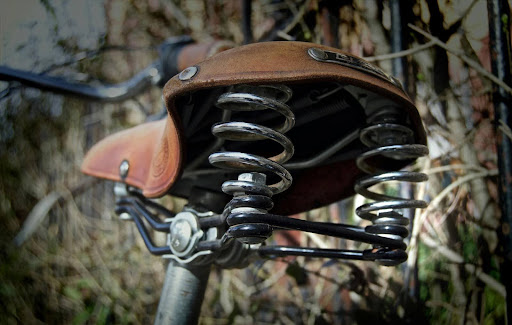
These are among the most recognizable types of springs. Compression springs are designed to resist being compressed—meaning they push back when you apply a load. They’re open-coiled and usually cylindrical in shape. You’ll find them in car suspensions, ballpoint pens, and medical devices. They’re useful in absorbing impact, maintaining spacing, and applying consistent force.

unnamed (38)

Extension Springs

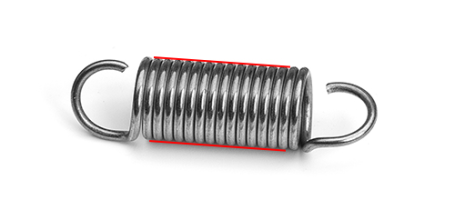
Also known as tension springs, these stretch under load and return to their original shape when the force is removed. They’re typically found with hooks or loops at the ends to attach to other components. Garage doors, trampolines, and screen doors commonly use extension springs.

unnamed (39)

Torsion Springs
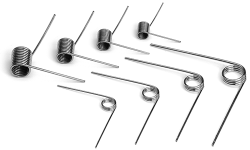
Torsion springs store and release rotational energy rather than linear force. They work by twisting their ends along their axis, and the force is proportional to the angle of twist. You’ll see them in applications like clothespins, mouse traps, and even automotive trunk lids.

Source: Lee Springs

unnamed (40)

Barrel Springs – Structure and Applications
Barrel springs are a type of compression spring with a tapered shape, meaning one end is wider than the other. This structure helps prevent buckling under load, making them suitable for high-compression applications. They’re used in electrical contacts, mechanical seals, and industrial equipment where space is limited but high force is required.

b) Flat Springs


Leaf Springs

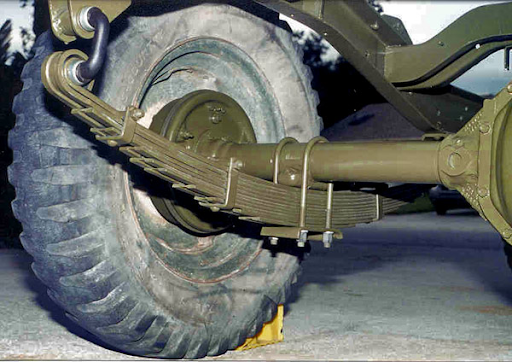
Leaf springs are flat, elongated pieces of metal layered together, often used in vehicle suspension systems. They can absorb shocks and distribute loads efficiently. You’ll still find them in trucks and trailers because of their strength and durability under heavy loads.

Spring Clothespins and Their Engineering Role
A spring clothespin typically uses a small torsion spring to apply clamping force. While the concept seems basic, it’s a great example of engineering using simple spring mechanisms. The spring stores energy when you pinch the clothespin open and releases it to hold items firmly when you let go.

Clothespin Butterfly – How It Works

This refers to a more refined variant of a clothespin mechanism, often found in lightweight clamping systems or packaging components. The butterfly-like shape enhances grip and flexibility, especially in delicate or narrow clamping applications. It’s a spring-based mechanism used where moderate, even pressure is needed.


c) Spiral Springs


Spiral Spring Design and Mechanism

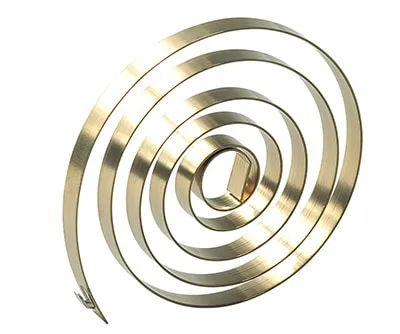
Spiral springs, also called flat spiral or clock springs, are made by coiling a strip of flat metal into a spiral shape. They generate torque and are especially efficient in compact spaces. Unlike cylindrical coil springs, spiral springs offer constant rotational force over multiple turns.

Source: Flat Coil Springs


Uses of Spiral Springs in Machinery: Common in watches, timers, seat recliners, and cable retractors, spiral springs are preferred in devices requiring precise torque control and reliable rotational movement. They’re also found in some 3D printing equipment where consistent rotational feedback is needed for moving parts.

d) Other Different Kinds of Springs


Belleville Springs

Belleville springs, also called disc springs, are cone-shaped washers that produce high force in a small space. Stacked together in various ways, they can be customized for different loads and deflections. They’re often used in clutches, valves, and bolted joints that need pre-loading under high pressure.

Source: Science Direct

Gas Springs

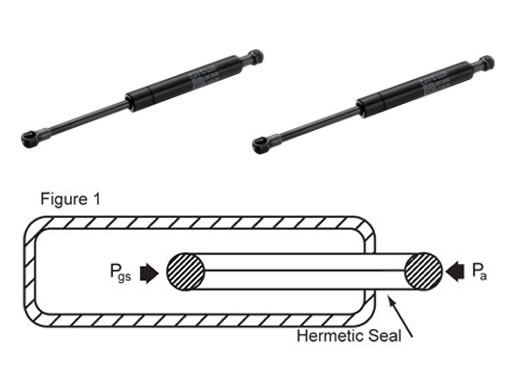
Gas springs use compressed gas sealed inside a cylinder with a piston to exert force. You see them in car hoods, office chairs, and hospital beds. They offer smooth motion and control without mechanical noise, and they’re especially useful when soft damping or controlled lifting is needed.

Source: Monroe Engineering


Constant Force Springs

These springs are wound on a drum and exert a nearly uniform force across their range of motion. They’re widely used in applications like window shades, cable retractors, and even seat belt tensioners. Their ability to maintain steady force is ideal for systems requiring uniform tension over long distances.

Source: Lee Spring

The Role Of Metal Springs In Engineering Applications

Metal springs are everywhere—from large industrial machinery to everyday tools. Their versatility, strength, and reliability make them a top choice across various engineering applications. But not all metal springs are created equal, and understanding the differences can help in selecting the right one for your needs.

Choosing the Right Spring Metal

The performance of a spring depends heavily on the material it’s made from. Some common spring metals include:

  • Spring steel – Known for its high yield strength and durability, it’s often used in automotive and industrial equipment.
  • Stainless steel – Offers corrosion resistance, making it ideal for marine or medical applications.
  • Phosphor bronze and beryllium copper – Used in electronics for their conductivity and resistance to fatigue.

The choice of spring metal affects everything from spring rate and fatigue resistance to cost and corrosion tolerance. In environments exposed to moisture, chemicals, or heat, choosing the wrong material could lead to failure.

How Metal Springs Are Used in Industrial Applications?

In engineering, metal springs serve not only to provide movement, they also play critical safety and functional roles. Here are some common uses:

  • In automotive suspensions, coil and leaf springs support weight and absorb shocks from road surfaces.
  • In aerospace, metal springs are used in control surfaces and engine assemblies, where precision and resilience are critical.
  • In consumer electronics, tiny springs are embedded in buttons, switches, and battery holders to ensure functionality.

Many 3D printing enthusiasts and engineers also use metal springs in functional prototypes. These allow testing mechanical performance in real-world conditions before scaling production.

When working with CAD and 3D printing, it is also possible to model parts that will house or work with springs, simulating their behavior using built-in physics tools. This makes springs an integral part of both virtual design and physical prototyping.

Spring Systems And Mechanisms In Engineering

Springs are rarely used in isolation. In most real-world products, they’re part of a larger spring system that plays a crucial role in motion control, energy storage, or force management. Whether you’re designing consumer goods or industrial equipment, understanding these systems helps you build more reliable products.

Understanding the Spring System in Machines

A spring system is simply a combination of springs and mechanical components working together to perform a specific function—such as absorbing shocks, maintaining pressure, or enabling movement. These systems are found in:

  • Car suspensions, where coil or leaf springs work with shock absorbers.
  • Mechanical linkages, where torsion or spiral springs return components to a default position.
  • Precision tools and medical devices, where spring tension needs to be finely controlled.

Engineers often design these systems using CAD tools, testing spring rate, material performance, and motion through simulation before ever cutting material. This is particularly helpful for 3D printing applications where tolerances are tight.

Mechanism Spring vs. Traditional Springs

A mechanism spring is any spring designed to work within a mechanical system. These might look like traditional coil springs, but they’re often customized in size, material, and performance characteristics to fit the exact needs of the application.

Key differences include:

  • Integration: Mechanism springs are designed specifically for integration with other components, often requiring tight tolerances and specific load profiles.
  • Consistency: Because they’re critical to the system’s function, their performance must be highly repeatable.
  • Size and shape: In many cases, non-standard spring types—like wave springs or torsion bar springs—are used to save space or fine-tune force output.

For product developers, especially those using 3D printing or small-batch manufacturing, it’s important to model the full spring mechanism early in the design phase. This ensures that once physical prototyping begins, parts behave as expected under load.

Need functional metal spring prototypes quickly? Our LPBF 3D printing services deliver precision parts ready for testing and assembly.

How to Make Springs – Manufacturing and Fabrication

Understanding how springs are made can help you choose the right spring types for your projects, especially when you’re working with custom components or using 3D printing for prototyping. The manufacturing process depends on the type of springs, materials used, and performance requirements.

Spring Metal Selection for Different Applications

The spring metal you choose affects everything—from durability and corrosion resistance to how much force the spring can handle. Here are some common materials:

  • High-carbon steel: Used for its strength and fatigue resistance. Great for compression and extension springs.

  • Stainless steel: Offers corrosion resistance, making it ideal for outdoor and medical applications.

  • Phosphor bronze or beryllium copper: Used when non-magnetic or conductive properties are needed.

  • Rubber or urethane: Used in vibration-damping or low-load applications, especially in industrial and automotive settings.

Each material has its own spring rate, and understanding that is key to ensuring the spring performs consistently.

The Process of Making Different Types of Spring

Here’s how most springs are made, depending on their design and use:

1. Coiling

For coil springs like compression or torsion springs, metal wire is wound around a mandrel or formed using a CNC coiling machine. The coil pitch and diameter are carefully controlled based on the spring mechanism requirements.

2. Forming and Bending

Flat springs, like those used in spring clothespins or leaf springs, are cut and bent into shape using stamping presses or wire forming machines. Complex shapes may require multi-slide forming.

3. Heat Treatment

After forming, most metal springs are heat-treated to relieve internal stress and improve elasticity. This ensures they keep their shape and resist permanent deformation.

4. Surface Finishing

Springs are often treated with coatings or finishes to improve durability:

  • Shot peening adds surface strength.

  • Zinc or nickel plating prevents corrosion.

  • Powder coating can offer color and protection.

Can Springs Be 3D Printed?

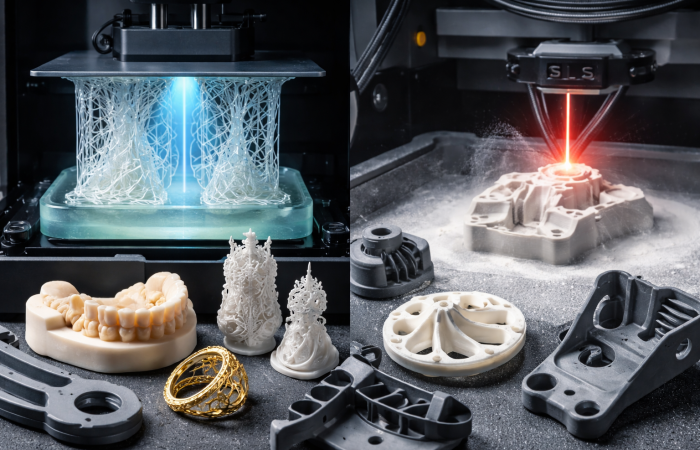
Technically, yes—but with limits. 3D printed springs are best for prototyping or light-duty applications. Most are made from polymer or resin, though metal 3D printing is growing in popularity. However, 3D printed springs usually lack the elasticity and fatigue resistance of traditional metal spring types.

Still, 3D printing can be a useful tool when testing spring systems, form factors, or creating low-load spiral spring or mechanism spring components.

See Printers To Print Springs With

For durable metal prototypes or functional spring components, explore our precision LPBF 3D printing services.

Applications Of Springs In Various Industries

Springs are everywhere—from the suspension in your car to the tiny mechanisms in your watch. Each type of spring plays a specific role depending on the product’s function, force requirements, and environment. Let’s look at how different spring types are used across key industries.

Automotive Industry – Suspension and Braking Systems

Source: Britannica


Coil springs and leaf springs are essential in vehicles. They absorb shocks from the road, support the weight of the vehicle, and ensure a smooth ride. Torsion springs are often used in trunk lids and doors for controlled opening and closing.

  • Barrel springs are sometimes used in clutch assemblies to manage force distribution.

  • Gas springs provide controlled lift in hoods and tailgates.

In braking systems, disc springs like Belleville washers help maintain constant pressure and absorb vibration, increasing reliability and safety.

Aerospace and Mechanical Engineering

In aerospace, space constraints and performance demands require lightweight but strong springs. Spiral springs, Belleville springs, and torsion springs are used in:

  • Actuation systems

  • Landing gear components

  • Control surfaces

Precision and durability are key, which is why spring metal choice is so important. Materials like titanium or beryllium copper may be used for their strength-to-weight ratio and corrosion resistance.

Consumer Products – Spring Clothespins and More

Everyday items like spring clothespins and butterfly clips use simple torsion or flat springs to provide clamping force. In appliances and electronics, compression springs and constant force springs play roles in buttons, doors, and battery compartments.

Clothespin butterfly designs are a perfect example of low-cost, effective spring mechanisms. They’re used not just in laundry but in packaging, stationery, and even lighting fixtures.

Industrial and Manufacturing Equipment

Springs in machinery reduce vibration, manage loads, and aid in precision movement. You’ll find them in:

  • Press tools

  • Conveyor systems

  • Assembly lines

Belleville springs, wave washers, and coil springs are chosen based on the application’s force and space requirements. Custom spring systems are also used for motion control, counterbalancing, and shock absorption.

Medical Devices

Miniature spiral springs and extension springs are used in medical devices such as:

  • Infusion pumps

  • Surgical tools

  • Diagnostic equipment

Non-magnetic, biocompatible materials like titanium or stainless steel are often required for safety and precision.

3D Printing and Prototyping

3D printed springs allow designers to test form and function before investing in tooling. While not ideal for high-stress applications, they’re valuable for testing:

  • Spring rate

  • Fit and alignment in mechanical assemblies

  • New spring mechanism ideas for consumer or industrial use

Many types of spring designs—especially spiral springs or simple tension springs—can be modeled and printed during early design phases.

Choosing The Right Type Of Springs For Your Needs

Springs play a vital role in engineering and everyday products. From compression springs in pens to spiral springs in watches, choosing the right type affects how well a product functions.

When selecting a spring, consider:

  • The type of spring needed for your application
  • The spring rate and how much force it must handle
  • The right spring metal for strength and durability
  • Space constraints and movement requirements

Whether you’re designing a car part, consumer product, or prototype with 3D printing or searching for 3D printing services, understanding different spring types ensures better results and fewer failures.

As materials and manufacturing methods advance, springs evolve, making building smarter, more reliable products easier.

Additive manufacturing expert and tech business leader, focused on global strategy, innovation, and advancing women in 3D printing.

Request a quote

Scan My Object

Please describe your part and scanning needs. Include details like size, material, and how you plan to use the 3D model. Let us know if you require additional services like digital sculpting. Upload images of your part(s) if you have them.

Ask for details

Partner with us

Get instant quote

Engineer-reviewed · Confidential · Fast response

Talk to Material Expert

Select the unit of measurement for your file
No 3D file? We’ve got you. We can design it for you or scan your existing part.
Upload a photo or drawing if you have one — we’ll get in touch soon.
Select the unit of measurement for your file
No 3D file? We’ve got you. We can design it for you or scan your existing part.
Upload a photo or drawing if you have one — we’ll get in touch soon.
Select the unit of measurement for your file
No 3D file? We’ve got you. We can design it for you or scan your existing part.
Upload a photo or drawing if you have one — we’ll get in touch soon.
Select the unit of measurement for your file
No 3D file? We’ve got you. We can design it for you or scan your existing part.
Upload a photo or drawing if you have one — we’ll get in touch soon.

Request a 3D Printing Quote

Upload your CAD file or describe your project — our engineers will follow up shortly.

We can create one for you.

Engineer-reviewed · Confidential · Fast response