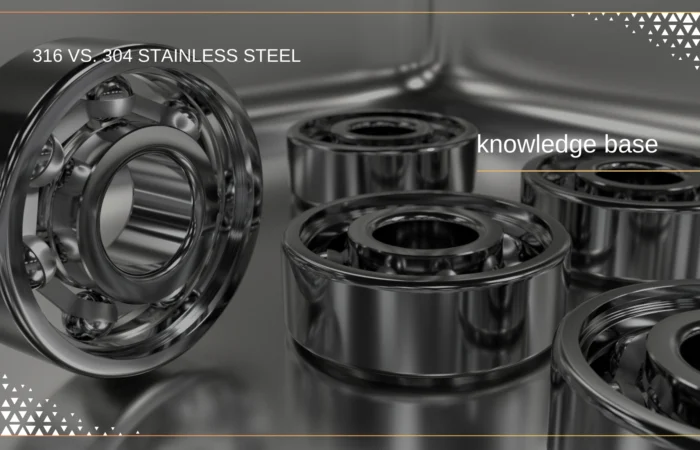
316 vs. 304 Stainless Steel: Which One is Best for Your Project?
Stainless steel is a versatile and durable material widely used across various industries, including construction, manufacturing, automotive, and medical fields. Its exceptional corrosion resistance, strength, and aesthetic appeal make it a preferred choice for many projects. However, not all stainless steel is created equal. Two of the most common grades used today are 304 and 316 stainless steel. The decision between these two can significantly impact your project’s performance, cost, and longevity. In this article, we’ll dive deep into the differences between 304 and 316 stainless steel to help you make an informed choice.
What is 304 Stainless Steel?
304 stainless steel is one of the most commonly used austenitic stainless steels. It is composed of approximately 18% chromium and 8% nickel, making it highly resistant to corrosion and oxidation. Additionally, it is known for its excellent formability, weldability, and cost-effectiveness, making it a popular choice for various applications.
Common uses of 304 stainless steel include kitchen equipment, chemical containers, architectural paneling, and automotive parts. Its affordability and general-purpose nature make it a preferred option for many industries. When it comes to welding stainless steel, 304-grade stainless steel welds easily with a stainless steel welding rod, particularly when using the stainless steel TIG welding rod for precision and cleanliness. However, it may not be the best option for projects that involve exposure to chlorides or harsh chemicals.
What is 316 Stainless Steel?
316 stainless steel is another popular austenitic grade, distinguished by its enhanced corrosion resistance due to the addition of molybdenum (2-3%). This addition makes 316 stainless steel particularly well-suited for harsh environments, including those with high exposure to saltwater, acids, and chemicals. Its composition includes approximately 16% chromium, 10% nickel, and 2% molybdenum.
Typical applications of 316 stainless steel include medical equipment, marine hardware, chemical processing, and food processing environments. The welding of stainless steel 316 is often performed with specialized welding rods like the stainless steel welding rod or ss welding rod to achieve high-quality stainless steel welds that maintain their integrity in corrosive conditions.
Key Differences Between 316 and 304 Stainless Steel
Corrosion Resistance: 316 stainless steel offers superior corrosion resistance compared to 304 stainless steel, particularly in environments exposed to chlorides or harsh chemicals. For instance, projects near the coast or those involving frequent exposure to saltwater are better suited for 316 stainless steel.
Strength and Durability: While both grades offer high strength and durability, 316 stainless steel tends to be more durable under extreme conditions due to its enhanced corrosion resistance. However, 304 stainless steel is still a highly durable material for general-purpose applications.
Cost Comparison: When comparing 304 vs. 316 stainless cost, 316 is typically more expensive due to its molybdenum content. For projects that don’t require superior corrosion resistance, opting for 304 stainless steel can be a more economical choice.
Weldability and Formability: Both 304 and 316 stainless steel exhibit good weldability and formability. However, welding of stainless steel, particularly 316, requires specialized welding rods such as the stainless welding rod or ss welding rod to ensure high-quality joints.
When to Choose 304 Stainless Steel
If your project involves standard manufacturing environments with low to moderate exposure to corrosive elements, 304 stainless steel is likely your best choice. Its cost-effectiveness, ease of fabrication, and high-quality stainless steel welds make it a go-to option for many industries. Ideal projects include indoor applications, food processing equipment, automotive parts, and architectural uses.
For welding stainless steel, the use of a reliable stainless steel welding rod or stainless steel TIG welding rod ensures strong and durable connections. When you compare 304 ss vs. 316 ss, the 304 grade is often the most budget-friendly option without sacrificing significant performance.
When to Choose 316 Stainless Steel
Projects that demand exceptional corrosion resistance, especially in marine, medical, or chemical environments, are best suited for 316 stainless steel. Its enhanced durability under harsh conditions makes it the material of choice for heavy-duty applications. The welding of stainless steel in these scenarios often requires high-quality stainless steel welding rods to maintain structural integrity.
If you need a welder for stainless steel projects that involve severe environments, 316 stainless steel is the best option. From stainless steel welded pipes to highly durable industrial components, 316 stainless steel provides a long-lasting solution.
Which Grade to Choose: 304 SS vs. 316 SS
Choosing between 304 and 316 stainless steel can be challenging, especially when considering factors like cost, durability, and performance. Your decision should be based on the specific requirements of your project.
When to Choose 304 Stainless Steel
For general-purpose applications with minimal exposure to corrosive environments, 304 stainless steel offers excellent performance at a more affordable price. Its high formability and weldability make it a popular choice for various industries, including food processing, architecture, and automotive manufacturing. When welding stainless steel of this grade, using a stainless steel welding rod or stainless steel TIG welding rod ensures strong, clean, and durable connections.
304 stainless steel is particularly suitable for indoor applications, chemical containers, kitchen equipment, and architectural paneling where corrosion risk is low. Its cost-effectiveness makes it the preferred choice for budget-conscious projects that do not require enhanced corrosion resistance.
When to Choose 316 Stainless Steel
On the other hand, if your project involves harsh or corrosive conditions, such as exposure to saltwater, acids, or other chemicals, 316 stainless steel is the superior choice. Its molybdenum content provides increased corrosion resistance, making it ideal for applications like marine equipment, medical instruments, and chemical processing components.
The welding of stainless steel 316 requires specialized welding rods like the ss welding rod to ensure high-quality, durable stainless steel welds. For projects where structural integrity is critical, investing in 316 stainless steel will result in long-lasting performance and reliability.
Welding Techniques for 304 and 316 Stainless Steel
Proper welding techniques are essential when working with both 304 and 316 stainless steel. The correct selection of welding rods and welding methods directly impacts the quality and longevity of the welds.
Welding 304 Stainless Steel
304 stainless steel is renowned for its excellent weldability. It can be welded using various techniques, including TIG (Tungsten Inert Gas) welding, MIG (Metal Inert Gas) welding, and stick welding. When welding stainless steel of this grade, stainless steel welding rods and stainless steel TIG welding rods are highly recommended to achieve precise, clean, and durable welds.
The choice of welding technique depends on the specific application. For example, TIG welding is preferred when high precision and cleanliness are required, particularly in food processing equipment and architectural projects.
Welding 316 Stainless Steel
316 stainless steel, while also weldable, requires greater care due to its increased corrosion resistance. To ensure reliable stainless steel welds, ss welding rods are commonly used. These rods are designed to maintain structural integrity even when exposed to harsh environments. Additionally, the use of stainless welding rods in conjunction with proper welding techniques ensures the longevity and robustness of the welds. Whether working with stainless steel welded pipes or complex industrial components, employing the correct welding process is essential for achieving optimal results.Cost Considerations: 304 vs. 316 Stainless Steel
The cost difference between 304 and 316 stainless steel is a crucial factor to consider when selecting the appropriate grade for your project. This difference primarily arises from the inclusion of molybdenum in 316 stainless steel, which provides enhanced corrosion resistance but also increases the material’s cost.
Cost of 304 Stainless Steel
304 stainless steel is generally more affordable than 316 due to its simpler composition. It is an excellent choice for projects where cost-effectiveness is a priority, and enhanced corrosion resistance is not essential. Additionally, the availability of stainless steel welding rods and stainless steel TIG welding rods for 304 stainless steel welding makes it a practical option for various industries.
Cost of 316 Stainless Steel
The higher cost of 316 stainless steel reflects its superior corrosion resistance and durability. Projects that demand longevity and structural integrity under harsh conditions often justify the additional expense. When welding stainless steel 316, using appropriate ss welding rods ensures high-quality results that stand up to demanding environments.
Balancing Cost and Performance
Ultimately, the choice between 304 and 316 stainless steel depends on whether the project’s environment requires extra corrosion resistance. If not, opting for 304 stainless steel can be a more economical choice without compromising performance. However, if the application involves exposure to saltwater, chemicals, or high temperatures, investing in 316 stainless steel is the wiser decision.
Conclusion
Both 304 and 316 stainless steel have their unique strengths and weaknesses. While 304 stainless steel is cost-effective and suitable for general-purpose applications, 316 stainless steel offers superior corrosion resistance and durability in more demanding environments. By understanding the specific needs of your project, you can select the most appropriate material to achieve the best performance and longevity.
FAQ
Can I weld stainless steel 304 and 316 together?
Yes, it is possible to weld stainless steel 304 and 316 together, but special considerations must be made to avoid galvanic corrosion. Using a compatible stainless welding rod is essential
Is 316 stainless steel worth the extra cost?
If your project involves exposure to harsh environments, particularly those with high levels of salt or chemicals, the extra cost of 316 stainless steel is justified.
What type of welder for stainless steel should I use?
A stainless steel TIG welder is often preferred for precision welding, while MIG welding can also be used effectively.
How does 304 vs. 316 stainless cost compare?
304 stainless steel is generally less expensive than 316 due to the absence of molybdenum, making it a budget-friendly option for many applications.
Explore What’s New in 3D Printing
3D Printing Troubleshooting: Common 3D Printing Issues and How to Fix Them
Shining 3D Scanners: Revolutionizing Measurement and Inspection Across Industries
Step-by-Step Guide: How to Smooth the Top Layer of Your 3D Prints
3D Printing: How to Make Supports Easy to Remove for Flawless Prints
Related Posts

1. Introduction Additive manufacturing, commonly known as 3D printing, has fundamentally transformed modern product development,…

Metal additive manufacturing has fundamentally transformed the way industries approach design and production, enabling the…
Imagine a manufacturing process capable of producing parts measured in meters, not millimeters—components so vast…
Stainless steel is a versatile and durable material widely used across various industries, including construction,…

Ashkhen Ovsepyan
Additive manufacturing expert and tech business leader, focused on global strategy, innovation, and advancing women in 3D printing.