Nylon 3D Printer Filament: Durable & Flexible Prints Made Easy
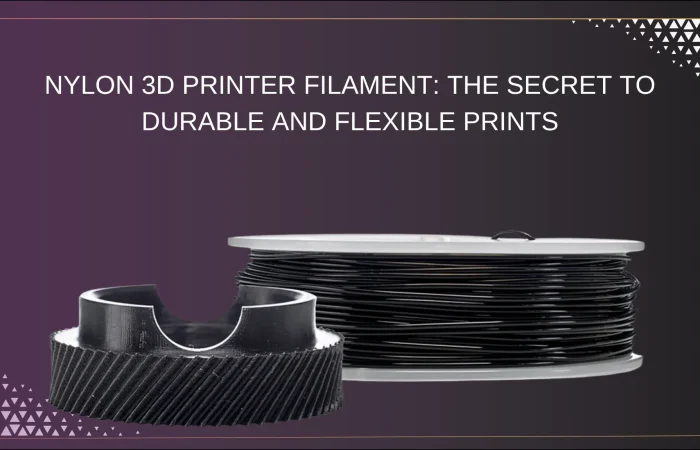
When engineers need parts that perform under real-world stress, nylon 3D printer filament is the answer. This material has transformed additive manufacturing from a prototyping tool into a production-grade solution. Unlike brittle PLA or temperature-sensitive ABS, nylon filament delivers strength, flexibility, and wear resistance that make it essential across industries.
Whether you’re fabricating living hinges that flex thousands of times, gears that resist constant friction, or brackets that support significant loads, nylon 3D print filament offers mechanical properties that rival traditionally manufactured components. As manufacturers discover these capabilities, nylon has evolved from a specialty material into a mainstream choice for functional parts.
What Is Nylon 3D Printer Filament?
Nylon filament belongs to the polyamide family of thermoplastics. These synthetic polymers feature repeating amide groups that give nylon its distinctive properties: high tensile strength, excellent abrasion resistance, and remarkable flexibility. According to ASTM International standards, additive manufacturing materials like polyamides must meet specific classification requirements for injection and extrusion applications.
Most 3D printing applications use these nylon variants:
- Nylon 6 and Nylon 6/6: Standard formulations offering balanced properties
- Nylon 12: Lower moisture absorption with excellent dimensional stability
- Nylon 11: Bio-based option with superior impact resistance
Types of Nylon Filaments
The material landscape extends beyond basic nylon formulations:
Nylon Carbon Fiber Filament. This composite incorporates chopped carbon fiber strands throughout the polymer matrix. The result? Dramatically increased stiffness and strength while reducing weight. Perfect for:
- Structural components and aerospace applications
- Drone frames requiring high strength-to-weight ratios
- Automotive brackets and fixtures
- High-performance tooling
Glass-Filled Nylon Filament Glass fiber reinforcement boosts thermal stability and dimensional accuracy. This makes it ideal for:
- Parts exposed to elevated temperatures
- Industrial fixtures requiring tight tolerances
- Automotive under-hood components
- Semiconductor manufacturing equipment
Standard Nylon 3D Filament Pure polyamide maintains maximum flexibility and impact resistance for:
- Living hinges and snap-fit assemblies
- Flexible couplings requiring repeated flexing
- Consumer product prototypes
- Applications where elasticity matters most
How Nylon Compares to Other Filaments
Property | Nylon | PLA | ABS | PETG | |
Strength | High | Low | Medium | Medium | |
Flexibility | Excellent | Poor | Poor | Good | |
Durability | Excellent | Poor | Good | Good | |
Heat Resistance | Good | Poor | Good | Medium | |
Ease of Printing | Moderate | Easy | Moderate | Easy |
Also, read: Polyamide vs. Nylon: Key Differences, Strengths, and Best Uses
Why Choose Nylon For 3D Printing?
Superior Mechanical Properties
Nylon’s tensile strength typically ranges from 60-85 MPa, depending on formulation and print orientation. This allows designers to create load-bearing components with confidence. Automotive engineers use nylon for under-hood components and manufacturing fixtures. Industrial applications benefit from replacing machined parts without sacrificing performance.
Exceptional Flexibility and Impact Resistance
What sets nylon apart is its flexibility. The material exhibits elongation at break often exceeding 100%. This means significant stretching before fracturing. Benefits include:
- Living hinges that survive thousands of flex cycles
- Snap-fit assemblies that engage reliably
- Vibration damping in mechanical assemblies
- Impact absorption that prevents brittle failure
Drop a nylon part and it bounces rather than shatters. This resilience translates to longer service life in real-world applications.
Heat and Chemical Resistance
Standard nylon maintains structural integrity at temperatures that would deform PLA or PETG. Chemical resistance to oils, greases, and many solvents makes nylon suitable for:
- Automotive fluid handling components
- Industrial equipment exposed to lubricants
- Medical devices requiring chemical sterilization
- Parts in harsh environmental conditions
Ready to upgrade your prototypes to production-quality parts? Explore our selection of premium nylon filaments, including carbon fiber and glass-filled variants.
Contact our technical team for material recommendations tailored to your specific application.
Understanding Nylon 3D Printer Filament Temperature
Temperature control determines print quality, layer adhesion, and dimensional accuracy. Get it wrong, and you’ll face weak parts, poor surface finish, or warping.
Optimal Temperature Settings
Nylon Filament 3D Printer Extrusion Temperature:
- Standard nylon: 240-260°C
- Glass-filled nylon filament: 245-260°C
- Nylon carbon fiber filament: 255-270°C
Heated Bed Temperature:
- Recommended range: 70-90°C
- Optimal for most applications: 80-85°C
- Large prints may benefit from heated enclosures (40-60°C ambient)
Why Temperature Matters
NIST research on polymer additive manufacturing emphasizes that consistent thermal management directly affects mechanical properties and part quality. Proper temperature ensures:
- Complete melting of crystalline polymer structure
- Strong fusion between layers
- Reduced warping and dimensional distortion
- Optimal flow through the nozzle
Pro Tips for Temperature Management:
- Start with manufacturer recommendations then adjust based on your specific printer
- Print a temperature tower to find the sweet spot for your setup
- Monitor first-layer adhesion as an indicator of proper bed temperature
- Use an infrared thermometer to verify actual temperatures vs. settings
Best Practices for 3D Printing with Nylon Filament
Achieving Reliable Bed Adhesion
Nylon’s semi-crystalline structure creates adhesion challenges. Follow these proven strategies:
Surface Preparation:
- Glass beds with glue stick (polyvinyl acetate) work excellently
- PEI sheets offer strong chemical bonding
- Textured powder-coated steel provides mechanical grip
- Garolite (G-10) material for specialized applications
Additional Tips:
- Add a brim for large parts (increases surface area)
- Use rafts for complex geometries
- Clean the bed with isopropyl alcohol before each print
- Ensure the bed is perfectly level
Managing Moisture Absorption
Nylon aggressively absorbs atmospheric moisture. Even a few hours of exposure compromises print quality. According to ISO/ASTM 52900 standards for additive manufacturing, material storage and handling significantly impact final part properties.
Signs of Moisture Contamination:
- Excessive stringing between features
- Surface bubbling or pockmarks
- Inconsistent extrusion
- Weakened layer adhesion
- Popping sounds during printing
Storage Solutions:
- Keep filament in sealed containers with desiccant
- Use dry boxes that feed directly to the printer
- Monitor desiccant color indicators regularly
- Store unused spools in vacuum-sealed bags
Drying Protocol:
- Temperature: 70-80°C
- Duration: 4-6 hours
- Use food dehydrators or dedicated filament dryers
- Dry before important prints
Troubleshooting Common Issues
Problem | Likely Cause | Solution |
Poor bed adhesion | Insufficient bed temperature or contaminated surface | Increase bed temp by 5°C, clean with isopropyl alcohol |
Excessive stringing | Moisture or high temperature | Dry filament, reduce nozzle temp by 5°C |
Layer delamination | Low extrusion temperature | Increase nozzle temp, disable cooling fans |
Corner warping | Thermal gradients | Add brim, increase bed temp, use enclosure |
Inconsistent extrusion | Moisture contamination | Dry filament thoroughly before printing |
Advantages And Disadvantages Of Nylon Filament
Key Advantages
Mechanical Excellence:
- Exceptional wear resistance for gears and bushings
- High fatigue resistance for repeated loading
- Superior impact absorption
- Excellent coefficient of friction for sliding components
Processing Benefits:
- Accepts dyeing for custom colors
- Chemical smoothing creates finished surfaces
- Mechanical finishing achieves tight tolerances
- Post-processing flexibility for both function and aesthetics
Application Versatility:
- Replaces metal parts in many applications
- Suitable for functional prototypes and end-use parts
- Wide temperature operating range
- Chemical compatibility with industrial fluids
Considerations and Challenges
Material Management:
- Requires moisture control infrastructure
- Needs proper storage and drying equipment
- More sensitive than PLA or PETG
- Hygroscopic nature demands vigilance
Printing Requirements:
- Higher temperature requirements increase energy costs
- Not suitable for basic 3D printers
- Requires hardened nozzles for reinforced variants
- Longer setup time compared to beginner materials
Design Factors:
- Flexibility can complicate dimensional stability
- Thin, tall features may deflect during printing
- Warping requires careful bed adhesion strategies
- Print orientation significantly affects properties
Strategic Material Selection
Choose the right nylon variant for your application:
Nylon Carbon Fiber Filament When:
- Maximum strength and stiffness are critical
- Weight reduction matters
- Structural performance drives design
- Applications include aerospace, drones, and high-performance tools
Glass Filled Nylon Filament When:
- Elevated temperatures are expected
- Tight tolerances are required
- Continuous wear is anticipated
- Applications include automotive, industrial, and semiconductor
Standard Nylon 3D Filament When:
- Flexibility is paramount
- Impact resistance matters most
- Repeated flexing cycles are expected
- Applications include hinges, snap-fits, and consumer products
Top Brands and Recommendations for Nylon 3D Printer Filament
Premium Performance Brands
Taulman3D Pioneer in nylon 3D printing with specialized formulations:
- Alloy 910: High-performance variant with enhanced properties
- PCTPE: Unique property combinations
- Consistent quality and extensive documentation
MatterHackers NylonX Carbon fiber reinforced nylon at competitive pricing:
- Accessible composite printing
- Good strength-to-cost ratio
- Well-documented printing guidelines
ColorFabb PA-CF Low Warp Specifically addresses dimensional stability:
- Reduced shrinkage formulation
- Excellent for precision parts
- Premium pricing justified by performance
Industrial-Grade Options
For applications requiring certified materials:
Stratasys (Polymaker)
- Complete technical data sheets
- Processing guidelines included
- Application-specific recommendations
- Higher cost with quality assurance
Ultimaker Nylon
- Documented performance characteristics
- Batch consistency for production
- Engineering department approved
- Traceability for quality control
Budget-Friendly Choices
eSUN, SUNLU, and Similar Manufacturers
- Solid performance at accessible prices
- Good for prototyping and testing
- Variable batch-to-batch consistency
- Requires validation for critical applications
Selection Criteria
When choosing nylon filament, evaluate:
- Mechanical requirements: Stiffness vs. flexibility balance
- Thermal environment: Service temperature expectations
- Dimensional criticality: Tolerance requirements
- Printer capabilities: Hotend temperature range and nozzle type
- Budget constraints: Balance performance with cost
Take Your Designs Further With Professional Nylon Materials
Nylon 3D printing represents a fundamental shift in additive manufacturing. The material’s unique combination of strength, flexibility, and wear resistance opens applications that remain inaccessible to common printing materials. While nylon demands more attention to processing parameters and moisture management than beginner-friendly materials, this investment returns dividends in part performance and application versatility.
Success with nylon starts with experimentation. Try different formulations to understand how the flexibility of standard nylon compares to the rigidity of carbon fiber. Test various bed adhesion techniques to discover reliable methods for your printer.
Develop recognition for moisture-related defects. Each print builds knowledge that informs the next, transforming challenging material into your preferred choice for functional components.
Transform your 3D printing capabilities with professional-grade nylon materials. At
Additive Plus, we offer comprehensive nylon 3D printer filament options, from standard polyamide formulations perfect for flexible components to advanced carbon fiber and glass-filled variants engineered for maximum performance.
Our technical team provides expert guidance on material selection and processing parameters to ensure first-time success.
Explore our nylon filament collection or contact our specialists today to discuss your project requirements and discover how the right nylon filament transforms your designs from concepts into a durable, reliable reality.
FAQ
Can you use a nylon filament 3D printer for large prints?
Yes, but large nylon prints require careful warping prevention. Key strategies include heated enclosures to maintain consistent thermal conditions, brims or rafts for maximum bed adhesion, and part orientation to minimize cross-sectional area changes. Glass-filled nylon filament often performs better for large prints due to reduced warping tendency.
Is nylon filament flexible enough for 3D printing parts like hinges?
Absolutely. Standard nylon 3D filament excels for living hinge applications, offering flexibility to endure thousands of flex cycles. Design hinges with 0.5-0.8mm thickness for standard applications. Orient the print so layers run perpendicular to the bending axis for optimal strength and durability.
How do you store nylon 3D printer filament to prevent moisture issues?
Store in sealed containers with active desiccant. Vacuum-sealed bags with desiccant packets work for long-term storage. Dry boxes with rechargeable desiccant serve better for active rotation. Monitor desiccant indicators and replace when saturated. For compromised material, dry at 70-80°C for 4-6 hours.
Can nylon carbon fiber filament be used on all 3D printers?
No. The abrasive carbon fibers require hardened steel, stainless steel, or ruby-tipped nozzles. Additionally, printing temperatures of 260-270°C exceed many budget printer capabilities. Verify your hotend maintains stable high temperatures before attempting carbon fiber materials.
What's the best nylon 3D print filament for beginners?
Start with standard nylon formulations before moving to reinforced variants. They’re less abrasive (longer nozzle life), more forgiving temperature-wise, and teach fundamental moisture management skills. Once comfortable, graduate to glass filled or carbon fiber variants.
How does nylon 3D printing compare to injection molding?
3D printed nylon offers design freedom and rapid iteration without tooling costs. Injection molding provides superior mechanical properties and lower per-part costs at high volumes. For low volumes, complex geometries, or rapid prototyping, 3D printing excels. For mass production, injection molding typically wins.
Related Posts
1. Introduction Additive manufacturing, commonly known as 3D printing, has fundamentally transformed modern product development,…
Metal additive manufacturing has fundamentally transformed the way industries approach design and production, enabling the…
Imagine a manufacturing process capable of producing parts measured in meters, not millimeters—components so vast…
When engineers need parts that perform under real-world stress, nylon 3D printer filament is the…

Ashkhen Ovsepyan
Additive manufacturing expert and tech business leader, focused on global strategy, innovation, and advancing women in 3D printing.