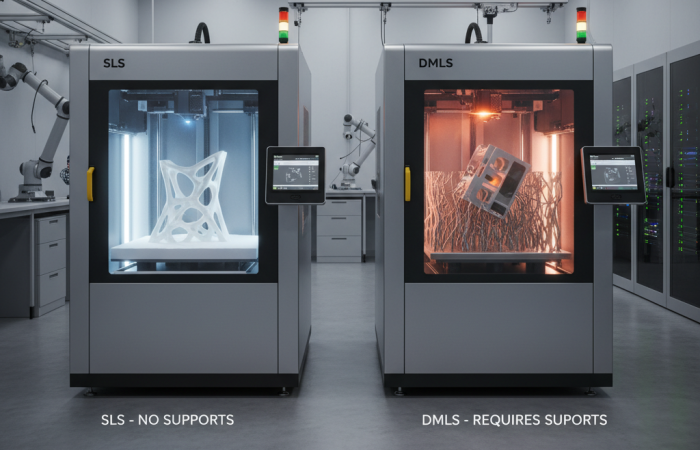
SLS vs DMLS 3D Printing: Unveiling Plastic & Metal Powers
The landscape of additive manufacturing has revolutionized how industries approach design, prototyping, and production. From intricate medical devices to robust aerospace components, 3D printing technologies empower engineers and designers to create complex geometries with unprecedented speed and precision. As adoption grows across industries, comparisons such as SLS vs DMLS 3D printing have become central to selecting the right manufacturing approach.
Understanding the fundamental distinctions in processes, materials, and resulting part properties is crucial for making informed decisions when evaluating SLS vs DMLS 3D printing technologies. This guide offers a deep dive into SLS vs DMLS 3D printing, elucidating their core mechanisms, comparing their advantages and limitations, and outlining their ideal use cases across industrial applications. We will explore how SLS 3D printing—often associated with versatile polymer materials such as nylon powder 3D printing and increasingly accessible through desktop SLS printers—excels in applications ranging from SLS prototyping to functional end-use parts. In contrast, this SLS vs DMLS 3D printing comparison also examines DMLS, the powerhouse technology behind high-performance metal components used in demanding environments.
By the end of this comprehensive SLS vs DMLS 3D printing comparison, you’ll be equipped to select the optimal additive manufacturing solution for your specific project requirements, ensuring efficiency, reliability, and superior part performance. To truly understand the distinction between Selective Laser Sintering (SLS) and Direct Metal Laser Sintering (DMLS), it is essential to delve into the core mechanics, materials, and resulting properties that define SLS vs DMLS 3D printing. While both are advanced additive manufacturing methods that utilize lasers and powdered materials, their fundamental approaches lead to significantly different outcomes, making SLS vs DMLS 3D printing suitable for distinct industrial use cases.
Understanding Selective Laser Sintering (SLS) 3D Printing
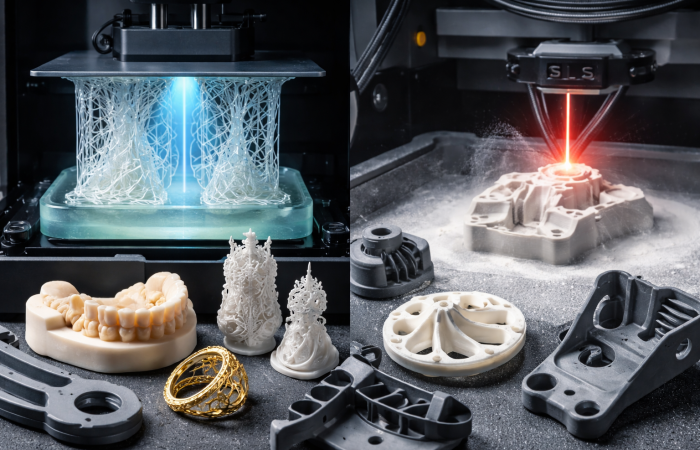
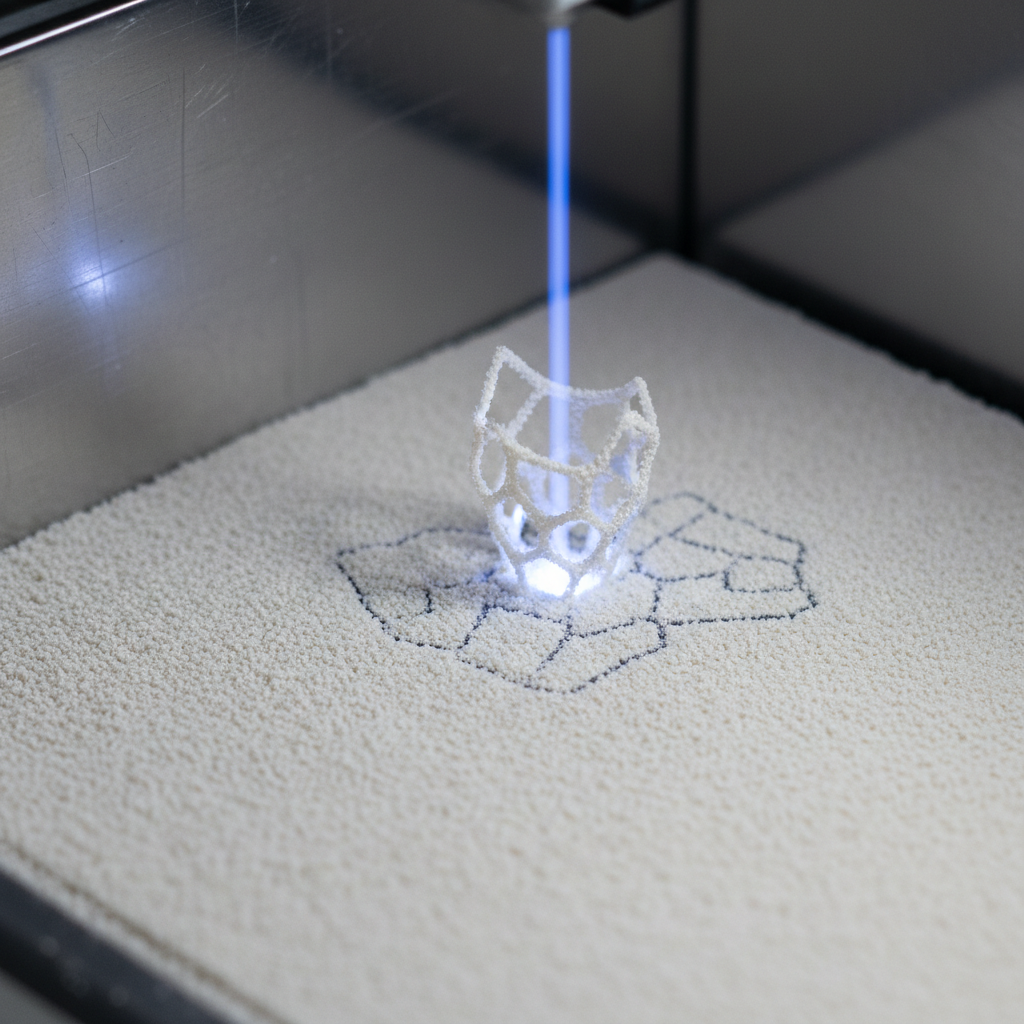
Selective Laser Sintering (SLS) is a pioneering additive manufacturing process renowned for its ability to produce complex, functional polymer parts without requiring dedicated support structures. The process begins with a thin layer of powdered material—most commonly polyamides like nylon powder 3D printing—being spread across a build platform. A CO2 laser then selectively scans the cross-section of the part, heating the powder particles just below their melting point, causing them to sinter or fuse together. After a layer is sintered, the build platform drops slightly, a new layer of powder is applied, and the process repeats until the part is complete.
The magic of SLS lies in the unsintered powder that surrounds the printed part. This loose powder acts as a natural support, cradling intricate geometries and overhangs, thus eliminating the need for costly and time-consuming support removal in post-processing. Parts produced through nylon powder 3D printing exhibit excellent isotropic mechanical properties, meaning their strength is consistent in all directions. They also offer a degree of flexibility and good chemical resistance, making them ideal for functional prototypes, jigs, fixtures, and even end-use consumer goods.
The accessibility of SLS 3D printing has significantly expanded with the advent of desktop SLS printers, allowing more businesses and research institutions to bring this powerful technology in-house. These systems facilitate rapid SLS prototyping by enabling engineers to quickly iterate on designs, test functionality, and achieve complex geometries efficiently. Furthermore, modern SLS systems can accommodate larger build volumes, often exceeding two feet in their largest dimension, providing greater flexibility for creating sizable components or batch-producing multiple smaller parts in a single run. For more insights into this versatile technology, explore our in-depth guide on selective laser sintering 3D printing and understand the capabilities of an SLS 3D printer.
Understanding Direct Metal Laser Sintering (DMLS) Technology
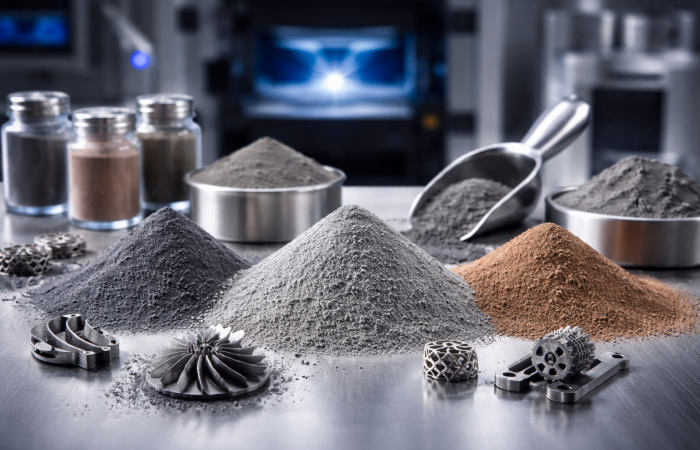
Direct Metal Laser Sintering (DMLS) stands as a cornerstone of metal additive manufacturing, engineered to produce fully dense, high-strength metal components directly from digital designs. Unlike SLS, which sinters polymer particles, DMLS employs a high-power fiber laser to fully melt and fuse fine metallic powder particles. This process occurs within an inert gas environment, typically nitrogen or argon, to prevent oxidation and ensure the purity and integrity of the metal. Common materials include a variety of metal alloys such as stainless steel, titanium, aluminum, cobalt chrome, and inconel.
The DMLS process, as examined in any SLS vs DMLS 3D printing comparison, involves spreading a thin layer of metal powder onto a build plate, similar to SLS. In the context of SLS vs DMLS 3D printing, the key difference lies in how the laser interacts with the material. In DMLS, the laser traces the cross-section of the part and instantaneously melts the metal powder to form a solid metallic layer. As the build platform descends, a new layer of powder is applied, and the laser continues to fuse each subsequent layer to the one below, creating a dense, monolithic metal component. This full melting and fusion process—central to the SLS vs DMLS 3D printing distinction—results in parts with excellent mechanical properties, often comparable to or exceeding those of conventionally manufactured metal parts, making DMLS ideal for critical applications.
Within the broader discussion of SLS vs DMLS 3D printing, DMLS technology is particularly lauded for its ability to produce components with exceptional resolution and intricate detail. Layer heights in DMLS typically range from 30 to 40 microns, significantly finer than the 100 to 120 microns commonly seen in SLS, a key technical difference highlighted in SLS vs DMLS 3D printing evaluations. This finer layering capability directly translates to superior surface finish quality and tighter dimensional tolerances, which are crucial for high-precision engineering and complex internal geometries. While DMLS requires support structures to manage thermal stresses and prevent warping during the intense melting process—another important factor when assessing SLS vs DMLS 3D printing—the resulting parts retain the robust mechanical properties of their parent metals, making them indispensable for demanding industrial and end-use applications.
SLS vs DMLS 3D Printing: A Head-to-Head Comparison of Key Differences
The choice between SLS and DMLS hinges on a thorough understanding of their core differences, as each technology presents a unique set of advantages and limitations tailored to specific project requirements. Below is a comprehensive comparison of key parameters defining SLS vs DMLS 3D printing.
| Parameter | Selective Laser Sintering (SLS) | Direct Metal Laser Sintering (DMLS) |
|---|---|---|
| Materials | Primarily polymers (e.g., nylons, TPUs), some ceramics, limited metals. | Exclusively metals/alloys (e.g., aluminum, stainless steel, titanium, inconel). |
| Process Mechanics | Sintering: Laser heats powder particles to fuse them without full melting. | Full Melting/Fusion: Laser fully melts powder, creating a liquid pool that solidifies. |
| Part Properties | Porous, flexible, isotropic strength; lower density and strength; rough surface. | Dense (98–99.9%), high strength, homogeneous; matte/rough surface finish. |
| Resolution/Tolerance | 100–120μm layer heights; typical tolerances of ±0.015” or ±0.002”/inch. | 30–40μm layer heights; finer tolerances, typically ±0.005” for first inch + ±0.002”/inch thereafter. |
| Support Structures | Not required; unsintered powder provides self-support. | Required; integral for managing thermal stress and structural integrity, necessitates removal. |
| Post-Processing | Minimal, primarily depowdering, tumbling, dyeing, or vapor smoothing. | Extensive, including stress relief, removal of supports, machining, polishing, and surface treatments. |
| Print Volume | Generally larger build volumes, up to 2 feet in some industrial systems. | Typically smaller build volumes (e.g., 10-inch cube), scaling becomes exponentially expensive. |
| Powder Recycling | Up to 80% of unused powder can be recycled; some fresh powder often required. | Up to 100% of unused powder can be recycled, contributing to material efficiency. |
Materials: The most fundamental divergence lies in material capability. SLS is predominantly a polymer-based process, excelling with materials like nylon powder for robust plastic parts. DMLS, on the other hand, is dedicated to metal alloys, offering the robust mechanical properties inherent to metals. This distinction immediately guides the initial selection based on material requirements.
Process Mechanics: SLS employs sintering, a solid-state bonding process where powder particles are heated to just below their melting point, fusing them together without fully liquefying. DMLS, conversely, involves complete melting and fusion, creating a molten pool that solidifies into a dense, metallurgical bond. This difference in thermal input significantly impacts the resulting part properties.
Part Properties: Due to sintering, SLS parts tend to be inherently porous, contributing to their lighter weight and certain flexibility. While strong, their density and ultimate strength are lower than those of fully dense materials. DMLS parts, by fully melting the metal, achieve very high density (typically 98-99.9%) and strength, making them comparable to wrought metals. While some older sources might suggest DMLS parts can be porous, the consensus among modern industrial applications confirms their superior density and mechanical integrity compared to SLS.
Resolution and Tolerance: The finer layer heights achievable with DMLS (30-40 microns) allow for greater detail and tighter dimensional tolerances than SLS (100-120 microns). This precision is critical for highly functional metal components where exact specifications are paramount.
Support Structures: A significant advantage of SLS is its self-supporting nature. The surrounding unsintered powder eliminates the need for geometric supports, which simplifies design, increases build density, and reduces post-processing. DMLS, however, requires robust support structures to dissipate heat, prevent warping, and anchor parts to the build plate during the high-temperature melting process. These supports must be carefully designed and subsequently removed, adding complexity and cost to the overall workflow.
Post-Processing: Consequently, post-processing is generally more straightforward for SLS parts, often involving simple depowdering, surface finishing, and optional dyeing for aesthetic purposes. DMLS parts demand far more extensive post-processing, including stress relief heat treatments, cutting away supports, machining critical surfaces, and various polishing techniques to achieve desired finishes and tolerances.
Print Volume and Powder Recycling: SLS machines generally offer larger build volumes at a more accessible cost, enabling bigger polymer parts or greater batch production. DMLS systems, due to the extreme conditions and specialized equipment required for metal printing, typically have smaller build volumes, and scaling them up is significantly more expensive. Regarding material efficiency, while SLS powder can be largely recycled, some fresh powder is usually required due to degradation. DMLS boasts a higher powder recyclability rate, often approaching 100%, contributing to material cost-effectiveness for expensive metal powders.
In summary, SLS offers unparalleled design freedom and cost-effectiveness for polymer applications, especially for iterative design and functional prototyping, while DMLS provides the robust, high-performance characteristics of metal for demanding end-use components.
Deep Dive into Material Science and Performance
Understanding the core distinction between SLS’s sintering and DMLS’s full melting unlocks deeper insights into the performance characteristics of the parts they produce. For SLS 3D printing, the use of polymer powders, primarily various grades of nylon, defines its niche. When discussing nylon powder 3D printing, we’re often looking at materials like PA11 and PA12. PA12 is known for its balanced mechanical properties, offering good strength and stiffness, while PA11 provides superior ductility and impact resistance. Further advancements include fiber-filled nylons (glass or carbon fiber), which significantly boost stiffness and temperature resistance, expanding SLS’s application range beyond basic SLS prototyping to demanding functional components and jigs and fixtures. The resulting parts from SLS are inherently porous to some degree, even if microscopic, contributing to their relatively lower density compared to DMLS, but also allowing for post-process dyeing.
In contrast, DMLS operates at temperatures high enough to fully melt metal powders, creating a completely dense, metallic microstructure. This process, occurring in an inert gas atmosphere, is crucial for preventing oxidation and maintaining the material’s integrity. The choice of metal alloys—such as surgical-grade stainless steel (e.g., 316L for corrosion resistance), titanium alloys (e.g., Ti64 for exceptional strength-to-weight ratio and biocompatibility in medical implants), or aluminum alloys (e.g., AlSi10Mg for lightweight automotive components)—directly dictates the final part’s mechanical, thermal, and chemical properties.
Geometric Freedom, Design Optimization, and Structural Integrity
The fundamental difference in support structure requirements profoundly impacts design freedom and potential for optimization in SLS vs DMLS 3D printing.
For SLS, the unsintered powder acts as a natural support, cradling the part during the build process—one of the most important advantages highlighted in any SLS vs DMLS 3D printing comparison. This inherent feature of SLS within SLS vs DMLS 3D printing provides unparalleled geometric freedom, enabling engineers to design highly complex internal channels, intricate lattice structures, and nested components without the need for support removal. Such design flexibility plays a critical role in SLS vs DMLS 3D printing, particularly for SLS prototyping, where rapid iteration is essential. Engineers can create lighter, more consolidated designs or parts with optimized fluid dynamics. In practical SLS vs DMLS 3D printing scenarios, this means consolidating multiple assembled parts into a single complex SLS 3D printing component, reducing assembly time and minimizing potential failure points. This natural design freedom makes SLS a preferred choice in SLS vs DMLS 3D printing evaluations for custom fixtures, ergonomic tool handles, and consumer products with complex internal features.
DMLS, while also offering significant design freedom when compared in SLS vs DMLS 3D printing, requires more deliberate consideration of support structures. Because metal powder is fully melted during DMLS, internal thermal stresses can accumulate, and overhangs typically require supports to prevent warping or collapse—an important trade-off discussed in SLS vs DMLS 3D printing analyses. Despite this constraint, DMLS still enables geometries that are impossible with traditional subtractive manufacturing, such as highly efficient internal cooling channels in molds or topology-optimized aerospace brackets. In the context of SLS vs DMLS 3D printing, designers must rely on advanced CAD tools to strategically place supports that reduce material usage and simplify post-processing. This careful balance allows DMLS to deliver optimized strength-to-weight ratios for critical applications where every gram matters. Additionally, the precision associated with DMLS—particularly its finer layer heights, a key distinction in SLS vs DMLS 3D printing—makes it ideal for intricate metal tooling and detailed medical devices.
The Critical Role of Post-Processing
The “rough” surface finish mentioned in the initial comparison table is just the starting point for post-processing considerations.
For SLS parts, post-processing is generally less intensive, primarily involving the removal of excess powder, often with bead blasting. The porous nature of nylon powder 3D printing parts allows for easy dyeing, offering a wide palette of color options for aesthetic or identification purposes, a significant advantage for consumer goods or medical devices requiring color coding. Surface smoothing via vibratory tumbling or chemical vapor smoothing can further enhance the finish, improving haptics and reducing friction. This streamlined post-processing contributes to the faster overall production times and lower per-part costs associated with SLS. Even accessible desktop SLS printers can produce high-quality parts with minimal fuss, making them ideal for rapid functional SLS prototyping.
DMLS, on the other hand, demands a far more rigorous and often costly post-processing regimen. After the print, parts are still attached to the build plate and encased in supports. Initial steps involve cutting the parts from the plate and manually or machine removing support structures. Given the high temperatures involved in melting metal, residual stresses are inherent. Therefore, stress-relief heat treatments are almost always necessary to prevent warping and improve mechanical properties. For applications requiring ultimate density and fatigue strength (e.g., aerospace, medical implants), Hot Isostatic Pressing (HIP) may be used to eliminate internal microporosity. Finally, precision machining is often required to achieve tight dimensional tolerances and desired surface finishes on critical interfaces. The extensive nature of DMLS post-processing adds significantly to the overall lead time, cost, and complexity of producing a final metal part, but it is indispensable for achieving the required performance for end-use applications.
Economic and Scalability Considerations
Moving beyond the simple “cost-effective” vs. “high costs,” a deeper look at the economic landscape reveals critical strategic choices. The initial investment for industrial DMLS systems is substantial, encompassing not only the printer itself but also the inert gas management system, post-processing equipment, and specialized safety protocols for handling reactive metal powders. Operating costs are also higher, factoring in significant power consumption, expensive metal powders, and the need for highly skilled technicians for both operation and complex post-processing. However, when DMLS parts replace traditionally manufactured components that require extensive machining or assembly, the cost savings can become significant, especially for low-volume, high-value parts where performance is paramount.
SLS technology, with its generally lower machine costs and less expensive polymer powders, offers a more accessible entry point into additive manufacturing. The emergence of desktop SLS printers has democratized the technology, allowing smaller businesses and design firms to bring capabilities in-house for faster iteration and reduced external manufacturing reliance. The ability to nest multiple parts efficiently within a single build volume, coupled with minimal post-processing, contributes to a lower overall per-part cost for batches of polymer components. This makes SLS a highly scalable solution for mass customization and efficient SLS prototyping.
The strategic decision between SLS and DMLS, therefore, goes beyond a simple material or cost comparison. It involves a holistic assessment of part criticality, performance requirements, geometric complexity, desired throughput, and the total cost of ownership across the entire production lifecycle. As additive manufacturing continues to evolve, understanding these nuances becomes crucial for leveraging the full potential of these transformative technologies. In the next section, we’ll help you synthesize this information to make the most informed choice for your specific industrial application.
Conclusion
The choice between SLS vs DMLS 3D printing is not about identifying a superior technology, but rather selecting the right tool for a specific engineering mission. Each additive manufacturing process offers distinct advantages tailored to different project demands, underscoring the versatility of modern production.
For applications prioritizing design freedom, cost-effectiveness, and rapid iteration of functional polymer parts, SLS 3D printing stands out. Its ability to create complex, support-free geometries from materials like nylon powder 3D printing makes it ideal for SLS prototyping, jigs, fixtures, and consumer goods. The increasing accessibility of desktop SLS printers further empowers innovation, offering a balance of performance and affordability.
Conversely, when the absolute highest strength, precision, and material performance in metals are paramount, DMLS technology is the definitive choice. Capable of producing fully dense, robust metal components for demanding industries like aerospace and medical, DMLS delivers parts engineered for endurance, albeit with higher costs and more intensive post-processing.
Ultimately, aligning your project’s specific requirements—be it material, mechanical properties, volume, budget, or desired resolution—with the inherent strengths of SLS or DMLS is key to unlocking optimal results. As additive manufacturing continues to evolve, understanding these fundamental distinctions empowers engineers and designers to make informed decisions that drive innovation forward across all sectors.
Frequently Asked Questions
What is the core difference between SLS and DMLS 3D printing?
The main difference lies in the materials they process and how they bond them. SLS (Selective Laser Sintering) uses a laser to sinter (fuse without fully melting) polymer powders, like nylon, creating plastic parts. DMLS (Direct Metal Laser Sintering) uses a high-power laser to fully melt and fuse fine metal powders, such as stainless steel or titanium, to create dense metal components.
What types of materials are commonly used in SLS 3D printing?
SLS 3D printing primarily uses polymer powders, with nylon powder 3D printing being the most prevalent. Materials like PA 11 and PA 12 (polyamides) are popular due to their excellent mechanical properties, flexibility, and isotropic strength, making them ideal for SLS prototyping and functional parts.
Why are DMLS parts generally stronger and denser than SLS parts?
DMLS parts are stronger and denser because the process involves full melting and fusion of metal particles in a controlled inert gas environment. This creates a homogeneous, almost 100% dense metal part. In contrast, SLS only sintered (partially fuses) polymer powders, resulting in parts that are typically more porous, flexible, and less dense than their DMLS counterparts.
Do SLS or DMLS 3D printing processes require support structures?
This is a key differentiator! SLS 3D printing does not require support structures. The unsintered powder surrounding the part acts as a self-supporting bed, allowing for highly complex geometries without additional post-processing for support removal. DMLS, however, requires support structures to anchor the part to the build plate and dissipate heat, preventing warping during the melting and solidification of metal. These supports must be manually removed during post-processing.
What are the ideal applications for SLS 3D printing?
SLS 3D printing excels in applications requiring functional prototyping, jigs and fixtures, medical prosthetics, and various consumer goods. Its ability to create complex, support-free designs, coupled with multi-part batching capabilities and ease of dyeing, makes it a versatile choice for cost-effective polymer part production. Many users can even utilize a desktop SLS printer for accessibility.
When is DMLS the better choice over SLS for an industrial application?
DMLS is the superior choice when you need parts with high strength, superior density, and excellent heat resistance, made from metals like titanium or stainless steel. It’s ideal for demanding industrial applications such as aerospace components, medical implants and tools, high-performance automotive parts, and specialized tooling where metal properties are critical and the higher cost and extensive post-processing are acceptable for end-use functional parts.
How does the post-processing effort compare between SLS and DMLS?
SLS requires minimal post-processing. Typically, it involves simply removing the excess powder and sometimes tumbling or dyeing the parts. The porous nature of SLS parts makes them easy to color. DMLS, conversely, requires extensive post-processing. This often includes stress relief heat treatments, cutting away support structures, surface finishing (like polishing or machining), and sometimes additional heat treatments to achieve desired material properties.
Is SLS 3D printing generally more cost-effective than DMLS?
Yes, SLS 3D printing is typically more cost-effective than DMLS. SLS printers and polymer materials are generally less expensive. The lack of required support structures and minimal post-processing also contribute to faster overall production times and lower labor costs compared to DMLS, which involves high-cost equipment, energy, metal powders, and significant post-processing efforts.
Related Posts