1. Introduction Additive manufacturing, commonly known as 3D printing, has fundamentally transformed modern product development,…
Top 5 Heat-Resistant Plastics for High-Temperature Applications
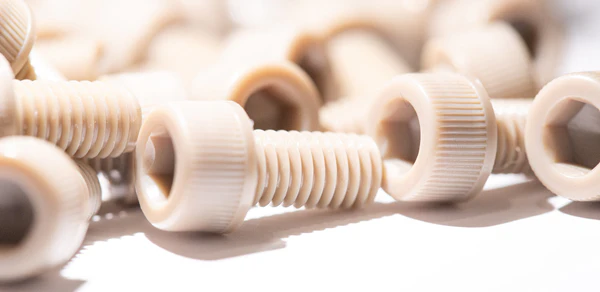
In the world of 3D printing, especially for industries where extreme temperatures are a concern, selecting the right material is crucial. Heat-resistant plastics have emerged as the go-to solution for creating durable, reliable, and high-performance 3D-printed components capable of withstanding harsh conditions. From aerospace to automotive, electronics, and even medical devices, high-quality heat-resistant plastics play a pivotal role in ensuring performance and safety.
In this article, we will delve into the top five heat-resistant plastics commonly used in 3D printing. These advanced materials offer superior thermal stability, chemical resistance, and mechanical strength, making them ideal for demanding applications where reliability and longevity are paramount. Whether you’re developing functional prototypes, end-use parts, or custom tools, understanding the benefits of these high-temperature plastics will help you make the right material choice.
PEEK (Polyether Ether Ketone)
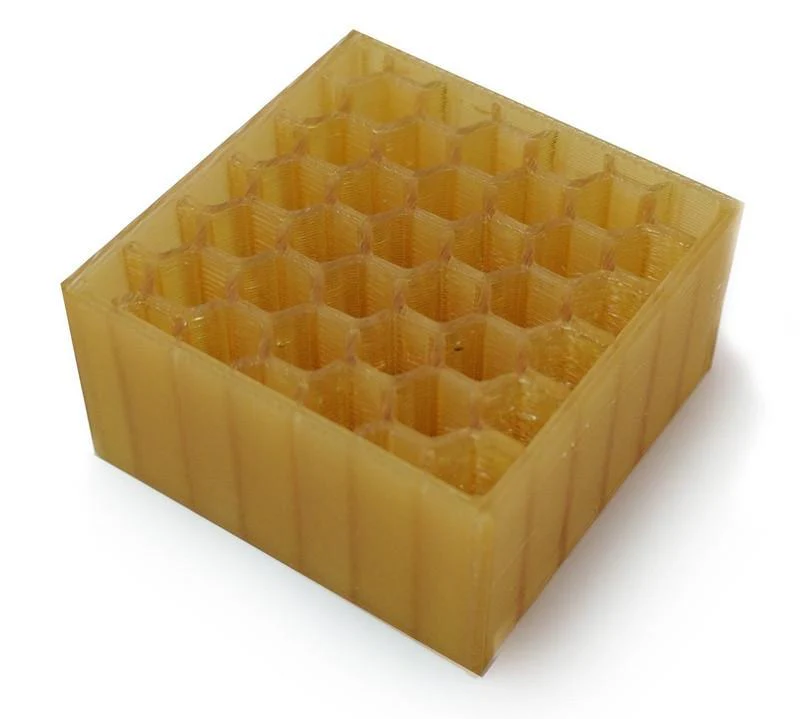
PEEK (Polyether Ether Ketone) is a high-performance thermoplastic material highly regarded in the 3D printing industry for its exceptional thermal stability and chemical resistance. Its unique structure allows 3D-printed parts to maintain their mechanical properties even under extreme conditions, making it a preferred choice for critical applications that demand both durability and precision.
When it comes to high-temperature 3D printing, PEEK stands out due to its impressive dimensional stability and mechanical strength. This material is highly sought after for producing functional prototypes, end-use parts, and custom tools designed to withstand high-pressure and high-temperature environments.
Properties
- High Thermal Stability: PEEK retains its mechanical integrity and dimensional stability even at temperatures reaching up to 250°C (482°F), making it suitable for demanding 3D printing applications.
- Exceptional Chemical Resistance: Resistant to a wide range of chemicals, including acids, bases, and organic solvents, allowing for use in harsh environments without degradation.
- Low Wear and Tear: Excellent abrasion resistance ensures durability and longevity, even under continuous mechanical stress.
- High Strength-to-Weight Ratio: Ideal for weight-sensitive applications, especially when 3D printing complex parts where performance and weight balance are critical.
Applications in 3D Printing

Aerospace
Used for producing lightweight structural components, insulation parts, and customized jigs and fixtures that require high strength and thermal resistance.

Automotive
Ideal for 3D-printed engine components, transmission parts, and functional prototypes that undergo rigorous thermal stress.

Medical Devices
Suitable for sterilizable surgical instruments, dental implants, and patient-specific medical devices where biocompatibility and heat resistance are essential.

Electronics
Provides excellent dielectric properties, making it an optimal choice for 3D-printed insulating parts and housings for electronic devices.
Advantages
- Exceptional strength and stiffness, even when 3D printed.
- Outstanding thermal and chemical resistance.
- Precise dimensional accuracy, allowing for the creation of highly detailed and functional parts.
Limitations
- High Cost: PEEK is significantly more expensive than other 3D printing materials, making it ideal only for high-performance applications where its benefits outweigh the cost.
- Processing Challenges: Requires specialized high-temperature 3D printers capable of achieving and maintaining elevated temperatures during printing.
PEI (Polyetherimide)
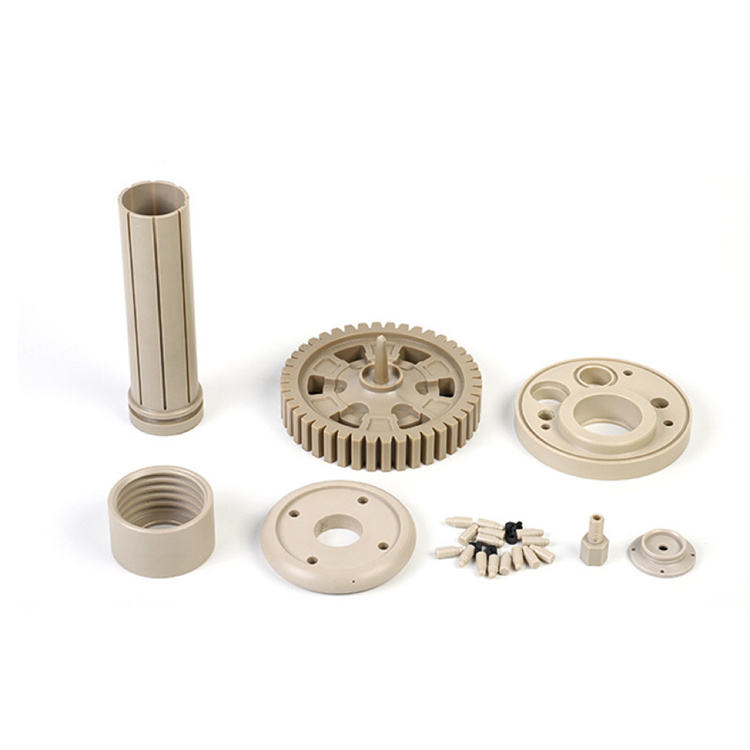
PEI (Polyetherimide) is a premium thermoplastic material that has become increasingly popular in the 3D printing industry due to its outstanding heat resistance and impressive mechanical properties. As a high-temperature material, PEI is commonly used in creating functional prototypes and end-use parts where reliability, durability, and precision are critical. Its excellent electrical insulation properties make it a versatile choice for producing 3D-printed components that require safe and efficient power management.
Properties
- Exceptional Thermal Resistance: PEI can withstand temperatures up to 170°C (338°F) without compromising its structural integrity or mechanical performance, making it ideal for demanding 3D printing applications.
- Impressive Mechanical Properties: High tensile strength and rigidity provide durability even under mechanical stress, ensuring reliable performance of 3D-printed parts.
- Reliable Electrical Insulation: Its dielectric properties are highly sought after for 3D-printed electronic components, connectors, and insulation systems.
- Excellent Chemical Resistance: Resistant to various solvents, acids, and bases, enhancing its versatility for specialized applications.
Applications in 3D Printing

Prototyping & Tooling
Ideal for creating robust, dimensionally stable prototypes, jigs, and fixtures that need to perform well under thermal stress.

Automotive
Custom 3D-printed engine components, transmission parts, and high-performance lighting systems that demand heat resistance and mechanical strength.

Equipment
Its heat resistance and chemical resilience make PEI suitable for 3D printing food-safe components designed to withstand high temperatures and sterilization.

Electronics
3D-printed connectors, insulators, housings, and other electronic parts that require high thermal stability and precise dielectric properties.
Advantages
- Retains strength and dimensional stability even when exposed to high temperatures for extended periods.
- Provides excellent chemical resistance, ensuring durability in harsh environments.
- Highly suitable for precision 3D printing, offering detailed and functional parts.
Limitations
- Processing Requirements: PEI requires precise processing conditions during 3D printing, including high nozzle and build plate temperatures to achieve optimal performance.
- Relatively High Cost: More expensive than standard 3D printing plastics, but the performance benefits make it worthwhile for critical applications.
PPS (Polyphenylene Sulfide)
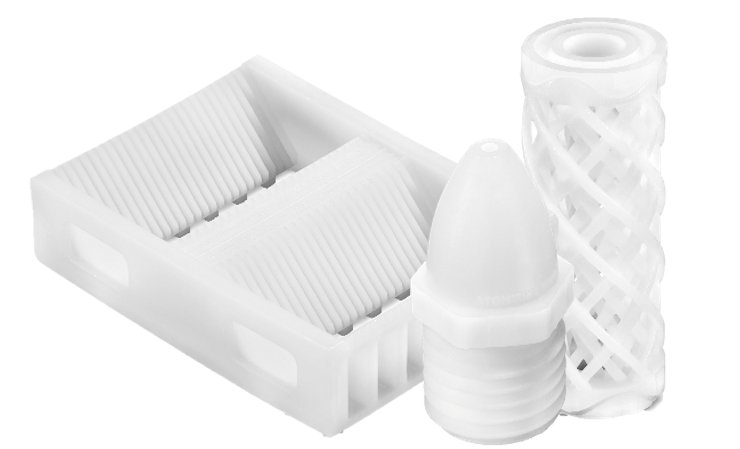
PPS (Polyphenylene Sulfide) is a high-performance, heat-resistant thermoplastic that has become a valuable material in the 3D printing industry for producing robust, precision parts designed to endure extreme conditions. Its remarkable chemical stability, low moisture absorption, and superior heat resistance make it ideal for 3D printing applications where reliability and mechanical integrity are paramount.
Properties:
- Excellent Heat Resistance: Capable of withstanding continuous exposure to temperatures up to 200°C (392°F) without degradation, making it highly suitable for high-temperature 3D printing applications.
- High Chemical Stability: Offers outstanding resistance to corrosive chemicals, acids, bases, and organic solvents, making it a preferred choice for 3D-printed parts used in harsh environments.
- Low Moisture Absorption: Retains mechanical strength and dimensional accuracy even in high-humidity or wet conditions, ensuring long-term durability of 3D-printed components.
Applications in 3D Printing

Prototyping & Tooling
Perfect for 3D-printed valves, pump components, filtration systems, and custom tooling where chemical resistance and mechanical strength are essential.

Automotive
Ideal for 3D-printed fuel system components, electrical connectors, and under-the-hood parts exposed to high heat and harsh conditions.

Aerospace
Suitable for producing lightweight, heat-resistant components where precision and durability are crucial.

Electronics
Used for printing switches, connectors, housings, and other parts requiring high-temperature performance and chemical stability.
Advantages
- High-dimensional stability ensures consistent performance and accuracy of 3D-printed parts under thermal stress.
- Excellent chemical resistance allows for reliable use in corrosive and demanding environments.
- Outstanding electrical insulation properties make it an ideal choice for 3D-printed electronics.
Limitations
- Brittleness: PPS tends to be less flexible and more brittle compared to other high-temperature 3D printing plastics, limiting its use in impact-prone applications.
- Processing Challenges: Specialized high-temperature 3D printers are required to print PPS effectively, ensuring optimal part quality.
PTFE (Polytetrafluoroethylene)
PTFE (Polytetrafluoroethylene), commonly known as Teflon, is one of the most heat-resistant plastics available for 3D printing applications. Its extraordinary thermal stability, chemical resistance, and non-stick properties make it a valuable material for producing functional prototypes, high-performance parts, and industrial components through 3D printing. While not as commonly 3D-printed as other materials, specialized high-temperature 3D printers can effectively process PTFE for demanding use cases.
Properties:
- Superior Thermal Stability: PTFE maintains structural integrity even at temperatures exceeding 260°C (500°F), making it highly suitable for high-temperature 3D printing applications.
- Non-Stick Properties: Its ultra-low friction surface makes it ideal for 3D-printed parts requiring smooth, slippery surfaces, such as bearings and seals.
- High Chemical Resistance: PTFE is virtually unaffected by most chemicals, making it an excellent choice for 3D-printed components exposed to aggressive environments.
- Excellent Dielectric Properties: Its insulating capabilities make it useful for 3D-printed electronic components requiring reliable electrical insulation.
Advantages
- Performs exceptionally well under high temperatures and aggressive chemical environments.
- Provides low friction, ensuring smooth operation for mechanical parts.
- Offers excellent dielectric properties, making it suitable for electronic applications.
Limitations
- Lower Mechanical Strength: Compared to other high-temperature 3D printing plastics, PTFE has reduced mechanical strength, limiting its use in load-bearing applications.
- Deformation Under Stress: Its softer nature makes it prone to deformation under mechanical stress, which may require additional reinforcement in certain designs.
- Processing Challenges: Printing PTFE requires specialized equipment capable of handling its unique properties effectively.
Applications in 3D Printing

Laboratory Equipment
3D-printed parts used in chemical handling systems and laboratory apparatuses where chemical resistance is critical.

Seals & Gaskets
3D-printed gaskets, O-rings, and sealing components that must endure high temperatures and corrosive conditions, commonly used in chemical processing, oil & gas, and food processing industries.

Aerospace
Ideal for insulation, sealing parts, and various components exposed to extreme thermal conditions and requiring precise performance.

Bearings & Bushings
Custom 3D-printed bearings that provide excellent lubrication and wear resistance, even under high-temperature and high-friction environments.
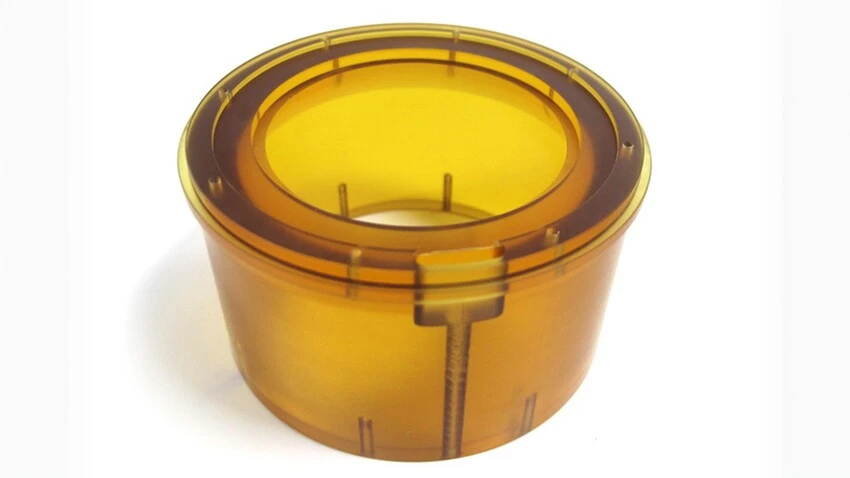
Ultem (Polyetherimide)
Ultem (Polyetherimide, PEI) is a high-performance, heat-resistant thermoplastic that has gained popularity in the 3D printing industry for its exceptional thermal stability, electrical insulation, and chemical resistance. Known for its versatile properties, Ultem is commonly used to produce functional prototypes, end-use parts, and specialized components for demanding industrial environments where both mechanical integrity and heat resistance are crucial.
Properties:
- High-Temperature Resistance: Ultem can withstand continuous exposure to temperatures up to 217°C (422°F), making it highly suitable for high-heat 3D printing applications.
- Electrical Insulation: With excellent dielectric properties, Ultem is ideal for 3D-printed electronic and electrical components that require reliable performance under extreme temperatures.
- Chemical Stability: Resistant to various chemicals, including acids, bases, hydrocarbons, and solvents, making it effective for printing parts used in harsh environments.
- Mechanical Integrity: Provides good strength and dimensional stability, ensuring consistent performance in 3D-printed parts even under thermal stress.
Advantages
- Provides reliable mechanical properties and structural integrity under high-temperature conditions.
- Excellent chemical resistance and dielectric properties.
- High-performance capabilities suitable for a broad range of demanding 3D printing applications.
Limitations
- Higher Cost: Ultem is more expensive than standard 3D printing plastics, limiting its use to specialized, high-performance applications.
- Limited Impact Resistance: Less suitable for applications requiring high mechanical toughness, although reinforcing with other materials can enhance performance.
- Processing Requirements: Requires high-temperature 3D printers capable of handling Ultem’s demanding printing conditions.
Applications in 3D Printing

Automotive
Suitable for 3D printing under-the-hood components, lighting systems, and parts that require thermal and chemical resilience.

Medical Devices
Ideal for printing sterilizable surgical instruments, dental devices, and high-temperature-resistant components used in medical environments.

Electronics
3D-printed connectors, insulators, housings, and other high-performance components designed to endure high temperatures and provide reliable electrical insulation.

Industrial Tooling
Used to create robust, heat-resistant tools, molds, and fixtures for demanding manufacturing processes.

Aerospace
Utilized in 3D-printed jigs, fixtures, and lightweight parts where strength, precision, and heat resistance are critical.
What is the Most Heat-Resistant Material for 3D Printing?
When it comes to finding the most heat-resistant material for 3D printing, it’s essential to focus on high-performance thermoplastics designed to withstand extreme temperatures without compromising structural integrity. In the realm of 3D printing, materials like PEEK (Polyether Ether Ketone) and PTFE (Polytetrafluoroethylene) are considered top choices for producing heat-resistant components. These materials are preferred for creating functional prototypes, end-use parts, and specialized tools where performance and durability are paramount.
Among the various heat-resistant plastics for 3D printing, PEEK is highly valued for its impressive thermal stability, maintaining mechanical properties and dimensional stability even at temperatures reaching 250°C (482°F). Its excellent chemical resistance, durability, and strength make it a popular choice for high-temperature 3D printing applications in industries like aerospace, automotive, and medical devices. PEEK’s ability to provide reliable heat-resistant performance makes it one of the most sought-after materials for 3D printing functional parts that require precision and longevity.
On the other hand, PTFE (Teflon) offers even higher thermal resistance, remaining stable at temperatures exceeding 260°C (500°F). Its exceptional non-stick properties, chemical resistance, and dielectric qualities make it ideal for producing 3D-printed parts intended for aggressive chemical environments or high-friction applications. Despite its lower mechanical strength compared to other high-temperature materials, PTFE remains a preferred choice for creating seals, bearings, and insulation components where heat and chemical resistance are critical.
In addition to PEEK and PTFE, other high-temperature plastics commonly used in 3D printing include:
- Ultem (PEI): Known for its excellent dielectric properties, chemical stability, and heat resistance (up to 217°C / 422°F). Often used for 3D-printed electronic components, medical devices, and aerospace parts.
- PPS (Polyphenylene Sulfide): Offers remarkable chemical resistance, heat stability, and low moisture absorption, making it suitable for industrial components, electronic connectors, and automotive parts. It remains stable at temperatures up to 200°C (392°F).
Comparing Heat-Resistant Materials for 3D Printing
While ceramics, tungsten, and tantalum can withstand temperatures beyond 3000°C (5432°F), they are not practical for most 3D printing applications. Instead, high-performance thermoplastics like PEEK, PTFE, Ultem, and PPS offer exceptional heat resistance and mechanical strength, making them ideal for creating functional parts with precision and durability.
Selecting the Right 3D Printing Material
Choosing the right heat-resistant plastic for 3D printing depends on your application’s specific requirements. Factors to consider include:
- Temperature Resistance: Maximum operating temperature of the material.
- Chemical Resistance: Compatibility with the intended environment.
- Mechanical Strength: Ability to maintain structural integrity under stress.
- Cost and Availability: Balancing performance with budget and accessibility.
For high-temperature 3D printing, PEEK and PTFE are among the most reliable materials, offering exceptional thermal stability and chemical resistance. However, for applications requiring additional mechanical strength or dielectric properties, materials like Ultem and PPS may be better suited.
Conclusion
Choosing the right heat-resistant plastic for your 3D printing application is essential to ensure performance, durability, and structural integrity under high-temperature conditions. The top five high-temperature plastics covered—PEEK, Ultem (PEI), PPS, PTFE, and Ultem—each offer unique properties suited to a variety of 3D printing applications.
For those seeking the most heat-resistant 3D printing material, PEEK and PTFE are standout choices. However, selecting the best material ultimately depends on your specific requirements, such as thermal resistance, chemical stability, mechanical strength, and cost considerations.
As 3D printing technology continues to evolve, innovative heat-resistant materials will shape future developments, making high-performance additive manufacturing more accessible and efficient. Staying updated with the latest advancements in high-temperature 3D printing materials will help you make informed decisions and achieve optimal results.
FAQ
What is the most heat-resistant 3D printing material?
The most heat-resistant 3D printing material is PTFE (Polytetrafluoroethylene), which remains stable beyond 260°C (500°F). PEEK (Polyether Ether Ketone) is another excellent option, offering thermal stability up to 250°C (482°F). Both are ideal for producing parts intended for high-temperature environments.
What defines high-quality heat resistance in 3D printing materials?
High-quality heat resistance refers to a material’s ability to maintain structural integrity, mechanical performance, and dimensional accuracy when exposed to high temperatures. PEEK, PTFE, Ultem, and PPS are all known for their exceptional heat-resistant capabilities in 3D printing applications.
Are there heat-resistant plastic sheets available for 3D printing?
Yes, high-temp plastic sheets made from materials like PEEK and PTFE are commonly used in 3D printing for manufacturing processes that require thermal stability and chemical resistance. These sheets can be processed into 3D printing filaments or used as build surfaces.
The best heat-resistant 3D printing materials for automotive applications?
PEEK, PPS, and Ultem (PEI) are popular choices for 3D printing automotive components such as engine parts, transmission components, and electrical connectors due to their impressive heat resistance and mechanical strength.
Can heatable plastics be used for 3D printing manufacturing?
Yes, heatable plastics like PEEK and PTFE are frequently used in 3D printing manufacturing processes where thermal stability, chemical resistance, and durability are essential. They are ideal for producing functional prototypes, end-use parts, and industrial components.
Difference between heat-resistant plastic and heat-proof plastic in 3D printing?
Heat-resistant plastics are materials that can withstand high temperatures without degrading or losing mechanical properties. Heat-proof plastics, such as PTFE and PEEK, offer the highest level of resistance to extreme heat, making them ideal for high-performance 3D printing applications.
Are there affordable heat-resistant 3D printing materials?
While high-performance materials like PEEK and PTFE are expensive, alternatives like PPS and Ultem (PEI) offer reliable heat resistance at a relatively lower cost, making them suitable for a wide range of industrial 3D printing applications.
Explore What’s New in 3D Printing
Polyamide vs Nylon: Key Differences, Strengths, and Best Uses
Join Additive Plus at RAPID + TCT 2025 for the Launch of AO Metal 3D Printers
TPR vs TPE: Understanding the Differences and Choosing the Right Material
Additive Plus Joins Axtra3D as Official Professional Reseller
316 vs 304 Stainless Steel: Which One Is Best for Your Project?
3D Printing Troubleshooting: Common 3D Printing Issues and How to Fix Them
Shining 3D Scanners: Revolutionizing Measurement and Inspection Across Industries
Related Posts
Ashkhen Ovsepyan
Additive manufacturing expert and tech business leader, focused on global strategy, innovation, and advancing women in 3D printing.