What Is SLA 3D Printing? A Guide to Stereolithography
As industries worldwide race to adopt cutting-edge technologies, Stereolithography (SLA) 3D Printing has emerged as a frontrunner in the quest for efficiency and creativity.
The market for 3D printing using stereolithography (SLA) is expected to grow quickly, increasing from $1.964 billion in 2021 to about $6.746 billion by 2028, with an annual growth rate of 19.27%.
This advanced manufacturing process offers unparalleled precision and flexibility, enabling businesses to bring complex designs to life quickly and accurately.
In this guide, we’ll examine what is SLA 3D printing, and understand its mechanics, applications, and transformative impact on projects.
Whether you’re searching for 3d printing services SLA or just beginning to explore 3D Printing, understanding SLA will empower you to harness its full innovation potential.
What Is SLA 3D Printing?
Stereolithography (SLA) is a revolutionary additive manufacturing process that transforms digital designs into tangible objects. Utilizing a UV laser, SLA printers cure liquid resin layer by layer, building parts with remarkable precision.
This technique stands out for its ability to produce intricate and high-resolution components. It is a favored choice in industries requiring detailed prototypes and parts, such as aerospace and medical devices.
What is SLA 3D printing’s role in rapid prototyping?
One of SLA’s significant advantages is its efficiency in material use. Unlike traditional manufacturing methods, which often involve cutting away excess material, SLA minimizes waste by using only the required resin. This enhances sustainability and reduces overall production costs.
SLA’s versatility also allows the creation of complex geometries that would be challenging or impossible to achieve with other manufacturing methods.
Moreover, SLA’s rapid prototyping capabilities enable businesses to iterate designs quickly, facilitating faster product development cycles. This adaptability is crucial for companies striving to stay competitive in fast-paced markets.
What Is SLA 3D Printing Used For?
SLA 3D printing has made significant inroads across various industries, including aerospace, automotive, and healthcare.
Its applications include but are not limited to:
- Aerospace
Producing lightweight, complex parts that meet strict regulatory standards, enabling faster prototyping and testing of components.
- Automotive
Rapid prototyping of intricate parts, allowing manufacturers to iterate designs efficiently and reduce time-to-market.
- Healthcare
Creating precise dental molds, custom prosthetics, and intricate surgical models tailored to individual patients.
This ability to produce highly detailed and specific applications showcases SLA’s versatility and precision, making it a preferred choice for businesses seeking innovative solutions in design and production.
How SLA 3D Printing Works?

Now you know what SLA 3D printing is, but how does it work?
The process begins with a CAD design that is sliced into thin layers. Then, a vat of liquid resin is placed in a printer, and a laser is used to trace the shape of each layer onto the resin.
The resin that is exposed to the laser is cured, and the build platform is lowered to create the next layer.
This process is repeated until the entire object is created. After the object is printed, it must be cleaned and cured to remove any remaining resin.
Here are the key components of an SLA 3D printer:
- Resin tank: Holds the photopolymer resin.
- Ultraviolet (UV) laser: Cures the resin to form solid layers.
- Galvanometers: Control the laser’s movement for precise detail.
- Build platform: Where the object is constructed, lowered with each new layer.
Here is a step-by-step breakdown of the SLA process:
- Design & Pre-Processing: The design is created using CAD software and then sliced into thin layers.
- Printing Phase: The laser cures the resin layer-by-layer to create the object.
- Post-Processing: The object is cleaned and cured, and any final adjustments are made.
SLA 3D printing is a versatile process that can be used to create a wide variety of objects, including prototypes, models, and even final products.
What Is SLA 3D Printing Compared To Other Additive Manufacturing Techniques?
When considering 3D printing technologies, it’s essential to understand how SLA stacks up against its competitors, notably Fused Deposition Modeling (FDM) and Selective Laser Sintering (SLS).
FDM is often regarded as more accessible due to its lower cost and widespread availability; however, it typically falls short in precision and surface finish. While FDM can produce functional parts, the details may need more refinement than industries often require.
Here’s a comparative table based on the differences between SLA, FDM, and SLS:
3D Printing Technology | SLA (Stereolithography) | FDM (Fused Deposition Modeling) | SLS (Selective Laser Sintering) |
Precision | High | Moderate | High |
Surface Quality | Smooth | Rougher finishes | Good |
Cost | Moderate to high | Low to moderate | High |
Complexity | Moderate | Low | High |
Material Use | Photopolymer resin | Thermoplastic filament | Powdered materials |
Ideal Applications | Intricate prototypes, dental models, custom designs | Functional parts, basic prototypes | Strong, functional parts |
Accessibility | Moderate | High | Low |
Material Selection For SLA
The choice of resin plays a pivotal role in the SLA 3D printing process, influencing not only the properties of the final product but also its suitability for various applications. Here’s an overview of the different types of resins commonly used in SLA printing:
- Standard Resins: Ideal for general prototyping, these resins provide good detail and surface finish, making them suitable for a wide range of applications.
- Durable Resins: Engineered for enhanced toughness, durable resins are perfect for creating parts that need to withstand mechanical stress and impact.
- Flexible Resins: These resins offer rubber-like properties, allowing for the production of soft, pliable parts that can be used in applications like gaskets and seals.
- Castable Resins: Designed for investment casting, these resins burn out cleanly and are often used in jewelry and dental applications.
- High-Temperature Resins: Capable of withstanding elevated temperatures, these materials are suited for applications requiring thermal resistance, such as automotive parts.
The material choice affects the physical characteristics—such as strength, flexibility, and temperature resistance. It also determines the final part’s aesthetic and functional performance. By understanding the properties of different resins, businesses can make informed decisions that align with their specific needs.
At Additive Plus, we recognize the importance of 3d printing materials selection in achieving optimal results. Our curated portfolio features top-tier SLA materials tailored to various applications, ensuring that our clients have access to the best options available.
Best Practices For Successful SLA 3D Printing
To achieve the best results in your SLA 3D printing journey, consider these friendly tips that can make a world of difference:
Design Optimization:
- Thicker Supports: Think of supports as safety nets for your designs. Using thicker supports can boost stability and help prevent failures during the printing process.
- Smart Orientation: Take a moment to orient your models thoughtfully. This small step can reduce tricky overhangs and simplify the printing process, making everything smoother.
Printer Calibration:
- Keep your laser and build platform in check. Regular calibration is like tuning a musical instrument—it ensures that everything plays harmoniously, leading to high-quality prints every time.
Post-Processing Tips:
- Washing: After your models come to life, give them a good wash with isopropyl alcohol (IPA). This step removes any uncured resin, leaving your creations clean and polished.
- Curing: Once washed, let your models soak up some UV light. Curing them properly enhances their strength and durability, ensuring they stand the test of time.
Maintenance:
- Make it a habit to check your resin levels and keep the resin tank clean. A clean tank helps avoid contamination and ensures consistent quality.
- Regularly check and align the laser for optimal performance. Think of it as giving your printer a little TLC to keep it running smoothly.
By following these best practices, you’ll set yourself up for success in your SLA 3D printing projects, achieving impressive results that you can be proud of!
FDM vs SLA 3D Printers: Key Differences, Pros, and Cons
When choosing between FDM (Fused Deposition Modeling) and SLA (Stereolithography) 3D printers, it’s important to understand how each technology works and what they’re best suited for. Below is a breakdown to help you decide which fits your needs.
How They Work
FDM: Uses thermoplastic filament, which is heated and extruded layer by layer to build parts. It’s one of the most common and affordable 3D printing methods.
SLA: Uses a liquid resin that is cured layer by layer with a laser or UV light. This process achieves very high resolution and smooth surface finishes.
Print Quality
FDM: Good for functional prototypes and larger parts where fine detail is less critical. Layer lines are more visible.
SLA: Excellent for detailed, high-resolution prints with smooth surfaces — ideal for models, jewelry, dental applications, and intricate prototypes.
Material Options
FDM: Wide range of filaments, including PLA, ABS, PETG, and flexible or composite materials.
SLA: Photopolymer resins with properties tailored for rigidity, flexibility, castability, or biocompatibility.
Print Speed
FDM: Generally faster for large, less detailed parts.
SLA: Slower due to higher precision, but newer models offer faster curing times.
Cost
FDM: Lower upfront costs and cheaper materials.
SLA: Higher printer and material costs, plus additional expenses for post-processing equipment.
Post-Processing
FDM: Requires support removal and surface smoothing if needed.
SLA: Needs washing in solvent and UV curing; parts often require extra care during handling.
Best For
FDM: Functional parts, quick prototypes, hobby projects, and cost-effective large models.
SLA: Detailed prototypes, small batch production, dental models, jewelry, and applications demanding fine surface quality.
In summary, FDM is ideal for budget-friendly, durable, and larger prints, while SLA excels when precision and smooth finishes are critical. The right choice depends on your project’s requirements and budget.
To Conclude
In this guide, we’ve uncovered the essentials of Stereolithography (SLA) 3D Printing, highlighting its precision, versatility, and efficiency.
We’ve examined its mechanics, compared it to other printing methods, and explored its applications in industries like aerospace, automotive, and healthcare. We’ve also discussed the importance of material selection and best practices.
As you consider embracing SLA technology, Additive Plus will tackle your specific challenges. We understand that integrating new technologies can be daunting.
With over 10 of experience, we specialize in helping clients like you smoothly transition to 3D solutions tailored to your operational needs.
Our curated 3d printing portfolio features top-tier brands and a diverse range of materials—from ceramics and carbon fiber to metals and polymers—allowing us to meet your project demands head-on.
With our 3D Printing Laboratory in Los Angeles and offices in California and Indiana, we offer comprehensive services, including equipment supply and facility design, to empower your innovation and streamline production.
Explore our selection and services at Additive Plus to leverage the advantages of SLA 3D printing for your projects and elevate your efficiency!
Go explore our 3d printing services SLA, products, and available materials now!
FAQs
What is SLA in 3D printing?
SLA, or Stereolithography, is a 3D printing technology that uses a laser to cure liquid resin into solid layers, creating precise and detailed objects from a digital model.
What does SLA stand for in 3D printing?
SLA stands for Stereolithography, a term that refers to the process of using a laser to solidify liquid resin layer by layer.
What is stereolithography in 3D printing?
Stereolithography (SLA) is an additive manufacturing technique that converts a 3D digital model into a physical object by curing liquid resin with a UV laser, allowing for high-resolution and intricate designs.
What is the meaning of SLA 3D printer?
An SLA 3D printer is a device that employs stereolithography technology to create objects. It uses a UV laser to cure liquid resin, building parts layer by layer with remarkable precision and detail.
What is SLA 3D Printing material?
SLA 3D printing material refers to the liquid photopolymer resin used in the Stereolithography process. When exposed to UV light from the printer’s laser, this resin cures layer by layer to create solid objects. There are various types of resins available, including standard resins for general printing, durable resins that are strong and impact-resistant for functional prototypes, flexible resins that mimic rubber for bending applications, castable resins ideal for investment casting, and high-temperature resins suited for extreme conditions.
Related Posts
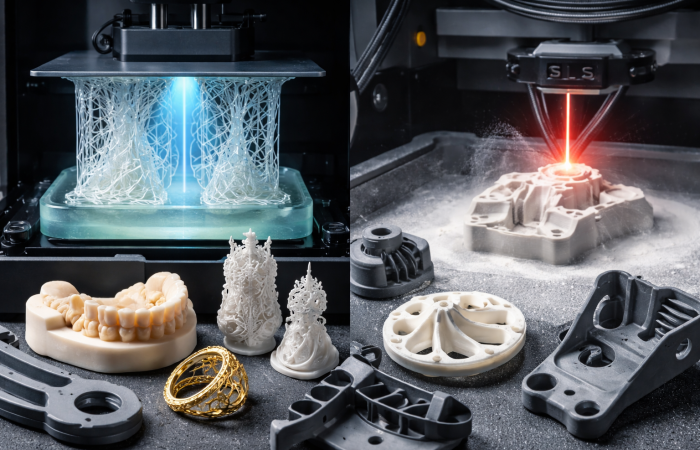
1. Introduction Additive manufacturing, commonly known as 3D printing, has fundamentally transformed modern product development,…
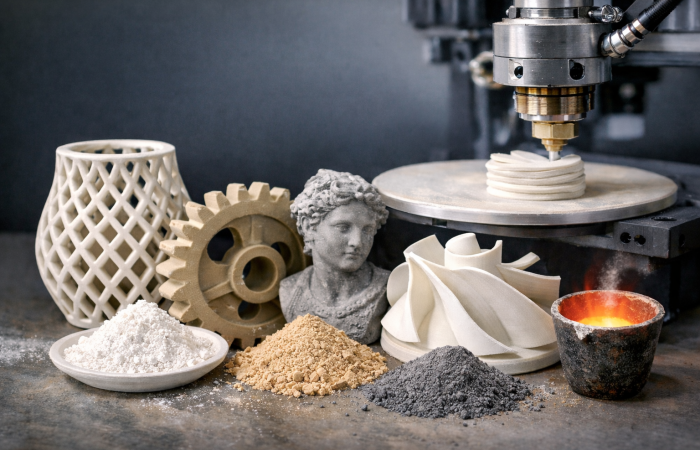
Introduction Ceramic 3D printing is rapidly transforming the landscape of modern manufacturing, enabling designers, engineers,…
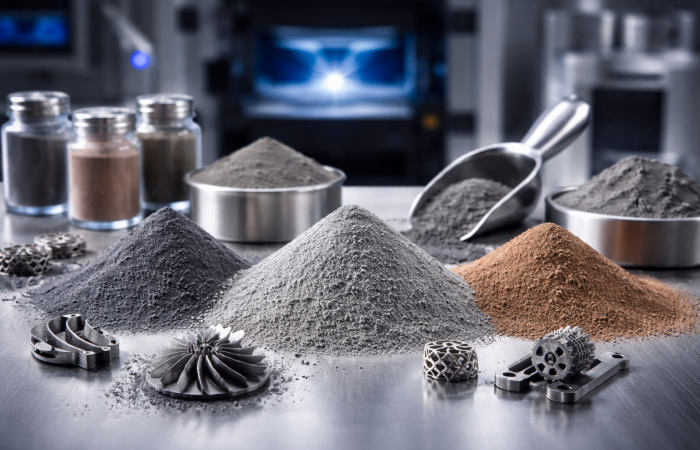
Metal additive manufacturing has fundamentally transformed the way industries approach design and production, enabling the…
As industries worldwide race to adopt cutting-edge technologies, Stereolithography (SLA) 3D Printing has emerged as…

Ashkhen Ovsepyan
Additive manufacturing expert and tech business leader, focused on global strategy, innovation, and advancing women in 3D printing.