
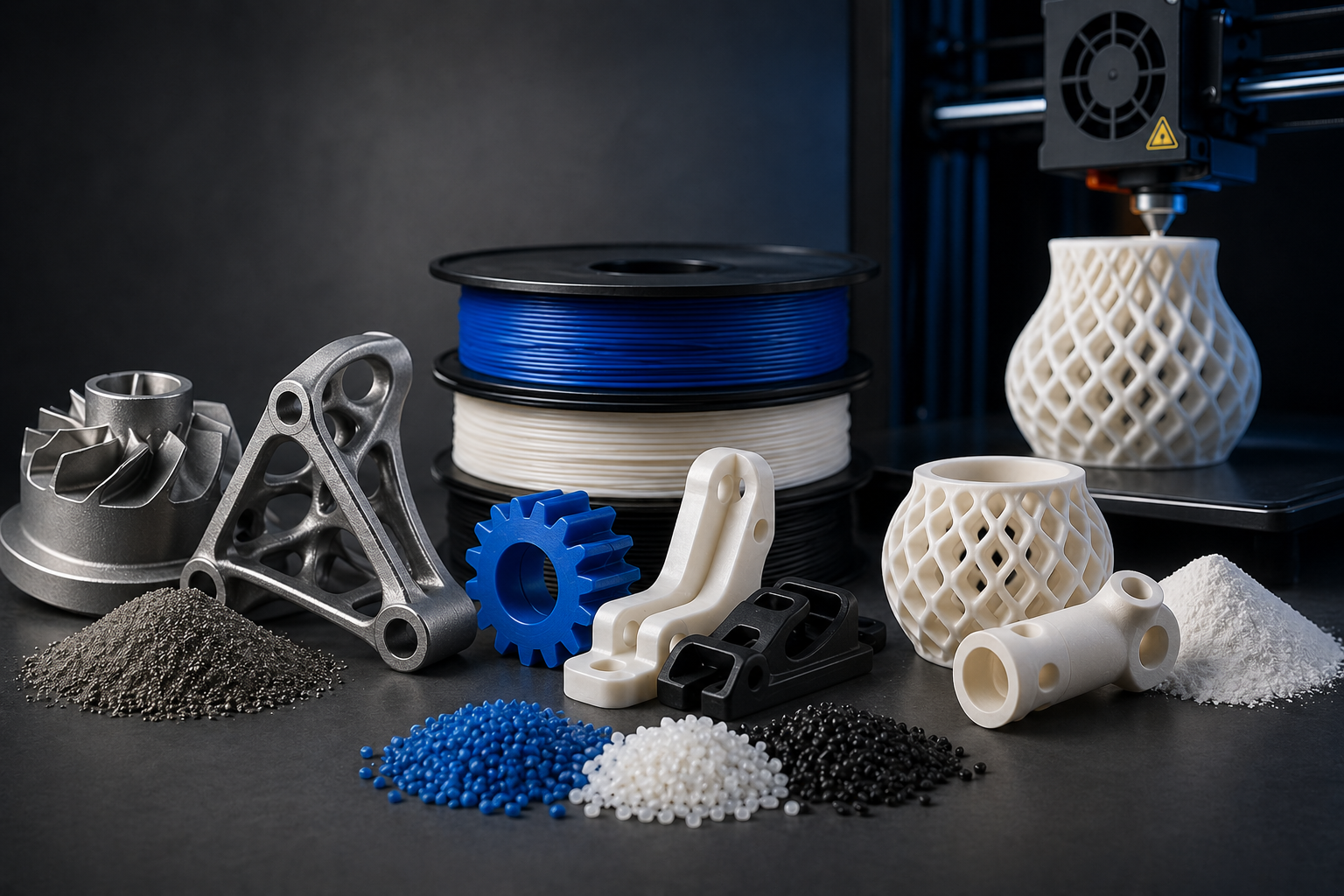
3D printing has undergone a major transformation over the past decade, moving far beyond its original role as a rapid prototyping technology into a fully integrated industrial manufacturing solution. What was once used primarily to visualize concepts and test design ideas is now capable of producing functional, end-use parts, production tooling, spare components, and mission-critical systems across some of the world’s most demanding industries.
Today, additive manufacturing is actively reshaping production workflows in sectors such as aerospace, healthcare, automotive, energy, robotics, and consumer goods, where precision, customization, and performance are essential. In aerospace, it enables lightweight structural components that reduce fuel consumption. In healthcare, it supports patient-specific implants and surgical tools. In automotive and industrial manufacturing, it accelerates prototyping cycles while also enabling low-volume production of complex parts that would be difficult or impossible to produce using traditional methods.
At the core of this evolution is one defining factor: material innovation. The true power of 3D printing does not come only from the machines themselves, but from the expanding range of materials that can be processed with them. As material science advances, so does the capability of additive manufacturing systems to meet increasingly strict mechanical, thermal, and chemical requirements.
Today, engineers and manufacturers have access to a diverse and highly specialized material ecosystem designed to match specific application needs. This includes everything from lightweight and flexible polymers, to high-strength and heat-resistant metals, and even advanced ceramics engineered for extreme environments. Each material class offers its own set of performance characteristics—such as tensile strength, impact resistance, thermal stability, biocompatibility, and surface finish quality—allowing users to precisely align material selection with functional requirements.
Polymers, for example, are widely used for prototyping, tooling, and functional parts due to their versatility and cost efficiency. Metals enable the production of structurally critical components that must withstand high stress, elevated temperatures, or corrosive environments. Ceramics, on the other hand, are essential for applications where extreme hardness, thermal resistance, or electrical insulation is required.
As additive manufacturing continues to mature, material development is becoming just as important as printer hardware or software. The ability to fine-tune powders, resins, filaments, and composite formulations is unlocking new levels of performance and expanding the boundaries of what can be manufactured.
Understanding these material categories—and how they behave under different printing technologies—is essential for selecting the right solution for any application. Material choice directly impacts part performance, production efficiency, post-processing requirements, and overall cost-effectiveness.
Polymers in 3D Printing: Flexibility, Speed, and Versatility
Polymers are the most accessible and widely used materials in additive manufacturing. They form the backbone of modern 3D printing because they combine low cost, easy processing, and a wide range of mechanical properties, making them suitable for everything from early-stage prototypes to functional end-use parts.
In industrial applications, polymers are often the first choice due to their ability to support rapid iteration, lightweight design, and scalable production workflows without requiring the complexity or cost associated with metal or ceramic systems.
Types of Polymer Materials
Thermoplastics (FFF, SLS, Pellet Printing)
Thermoplastics are the most common class of polymers used in 3D printing. These materials soften when heated and solidify when cooled, allowing them to be reshaped multiple times without significant degradation. This makes them highly suitable for both prototyping and manufacturing applications.
Common thermoplastics include:
- PLA (Polylactic Acid) – Easy to print, biodegradable, and widely used for visual prototypes and concept models
- ABS (Acrylonitrile Butadiene Styrene) – Strong, impact-resistant, and commonly used for functional parts and enclosures
- Nylon (PA12, PA6) – Offers excellent durability, flexibility, and wear resistance for mechanical applications
- Polycarbonate (PC) – High strength and excellent heat resistance for engineering-grade parts
- PEEK / PEI (ULTEM) – High-performance polymers used in aerospace, automotive, and medical industries for extreme environments
Thermoplastics are widely used in industrial prototyping, tooling, and functional part production, where performance and repeatability are essential.
Photopolymers (SLA, DLP, Material Jetting)
Photopolymers are liquid resin materials that solidify when exposed to UV light. They are known for producing parts with exceptional surface quality, fine detail resolution, and high dimensional accuracy.
These materials are especially important in industries where precision and aesthetics are critical.
Typical categories include:
- Standard resins for visual models and concept validation
- Tough resins for functional prototypes requiring higher durability
- Flexible resins for elastomer-like components
- Dental and medical-grade resins for biocompatible applications
Browse high-performance resin materials for 3D printing.
Photopolymers are widely used in dental, jewelry, product design, and engineering visualization, where surface finish and accuracy are key requirements.
Filaments for FFF Printing
Filaments are one of the most widely used polymer formats in additive manufacturing due to their ease of use, affordability, and material variety. They are commonly used in both desktop and industrial FFF systems.
Filament materials include:
- Standard PLA and ABS for general-purpose printing
- Nylon-based filaments for mechanical durability
- Carbon-fiber reinforced composites for added stiffness and strength
- High-temperature engineering filaments for advanced applications
Discover engineering-grade 3D printing filaments.
Filaments are ideal for rapid prototyping, functional testing, and low-volume production, where speed and accessibility are essential.
Pellet-Based Materials for Large-Scale Printing
Pellet-based additive manufacturing systems use raw polymer pellets instead of filament, enabling higher material efficiency and significantly lower production costs.
This approach is especially beneficial for:
- Large-format industrial parts
- Automotive tooling and fixtures
- Architectural components
- High-volume manufacturing applications
Explore plastic pellets for additive manufacturing:
Pellet-based systems are increasingly used in industrial-scale production environments, where throughput and cost efficiency are key priorities.
Silicone Materials
Silicone materials enable the production of flexible, elastic, and biocompatible parts that cannot be achieved with traditional rigid polymers. They are widely used in applications requiring soft-touch properties and high durability under repeated deformation.
Common applications include:
- Medical devices and prosthetics
- Wearable technologies
- Seals, gaskets, and flexible joints
- Industrial damping and vibration control components
Explore advanced silicone materials for 3D printing:
Silicone 3D printing is particularly valuable in healthcare and industrial engineering, where flexibility and biocompatibility are essential.
Key Advantages of Polymers
Polymers remain one of the most important material categories in additive manufacturing due to their unique combination of benefits:
- Low cost and high material availability making them accessible for all production scales
- Fast production cycles, enabling rapid prototyping and design iteration
- Lightweight structures, ideal for aerospace, automotive, and consumer products
- Wide mechanical property range, from soft elastomers to rigid engineering plastics
- Excellent design flexibility, allowing complex geometries and internal structures
These advantages make polymers the most versatile and widely adopted material group in 3D printing.
Limitations of Polymers
While highly versatile, polymers also have certain limitations that must be considered during material selection:
- Lower mechanical strength compared to metals, limiting use in high-load structural applications
- Limited high-temperature resistance, except for advanced engineering polymers such as PEEK and PEI
- UV and chemical sensitivity, which may lead to degradation in harsh environments
- Anisotropic mechanical behavior in some printing processes, affecting strength depending on build orientation
Despite these limitations, continuous advancements in polymer engineering are significantly expanding their performance capabilities in industrial applications.
Metal 3D Printing Materials: Industrial Strength and Performance
Metal additive manufacturing represents one of the most advanced and high-value segments of 3D printing. It enables the production of fully functional, load-bearing, and high-precision components that can meet—or even exceed—the performance of traditionally manufactured metal parts.
Unlike subtractive processes, metal 3D printing builds components layer by layer, allowing engineers to create complex internal geometries, lightweight structures, and optimized designs that would be impossible or extremely expensive to produce using conventional machining or casting methods.
As a result, metal additive manufacturing is widely adopted in aerospace, automotive, medical, energy, and industrial tooling applications, where performance, reliability, and precision are critical.
Common Metal Materials
Metal 3D printing supports a wide range of engineering alloys, each designed for specific performance requirements such as strength, thermal resistance, corrosion protection, and biocompatibility.
Stainless Steel
Stainless steel is one of the most commonly used metals in additive manufacturing due to its balanced mechanical properties and cost efficiency.
Key characteristics:
- Excellent corrosion resistance
- High strength and durability
- Good machinability and post-processing compatibility
It is widely used in:
- Industrial tooling and fixtures
- Medical instruments and surgical tools
- Functional prototypes and end-use parts
Aluminum Alloys (AlSi10Mg)
Aluminum alloys are valued for their lightweight structure combined with good mechanical strength, making them ideal for weight-sensitive applications.
Key characteristics:
- Low density and high strength-to-weight ratio
- Good thermal conductivity
- Excellent fatigue resistance
Typical applications include:
- Aerospace structural components
- Automotive lightweight parts
- Heat exchangers and housings
Titanium (Ti6Al4V)
Titanium alloys are among the most advanced materials used in metal 3D printing, offering exceptional performance in demanding environments.
Key characteristics:
- Outstanding strength-to-weight ratio
- High corrosion resistance
- Excellent biocompatibility
Applications include:
- Medical implants (orthopedic and dental)
- Aerospace structural components
- High-performance engineering systems
Nickel Superalloys (IN718, IN625)
Nickel-based superalloys are designed for extreme operating conditions, particularly high temperatures and mechanical stress environments.
Key characteristics:
- High-temperature strength and stability
- Excellent creep and fatigue resistance
- Strong corrosion and oxidation resistance
They are commonly used in:
- Aerospace turbine components
- Gas turbines and jet engines
- Energy and power generation systems
Cobalt Chrome (CoCrMo)
Cobalt chrome alloys are known for their exceptional hardness and wear resistance, making them ideal for long-term mechanical and biomedical applications.
Key characteristics:
- High wear and abrasion resistance
- Excellent corrosion resistance
- Biocompatible performance
Applications include:
- Dental prosthetics and crowns
- Orthopedic implants
- High-wear industrial components
Browse premium metal powders for 3D printing:
Powder Bed Fusion (PBF) Materials
Powder Bed Fusion technologies such as LPBF (Laser Powder Bed Fusion) and EBM (Electron Beam Melting) require highly controlled metal powders with strict specifications.
These powders must have:
- Narrow particle size distribution
- High sphericity for flowability
- Low oxygen content for material integrity
- Consistent chemical composition
These characteristics ensure stable layer deposition, high-density parts, and repeatable production quality.
Explore high-quality PBF materials:
PBF processes are widely used for high-performance industrial parts where precision and material integrity are critical.
Metal Build Plates
Metal build plates are a critical but often overlooked component of the metal 3D printing process. They provide the foundation on which parts are built and directly influence adhesion, thermal stability, and overall print success.
Key functions include:
- Ensuring strong part adhesion during printing
- Managing thermal expansion and heat distribution
- Supporting dimensional accuracy and build reliability
- Reducing warping and deformation risks
Shop high-performance metal build plates:
Proper build plate selection is essential for consistent results in industrial metal printing environments.
Advantages of Metal 3D Printing
Metal additive manufacturing offers several significant advantages over traditional manufacturing methods:
- High strength and structural integrity, suitable for load-bearing applications
- Excellent heat and corrosion resistance, enabling use in extreme environments
- Design freedom for complex geometries, including internal channels and lattice structures
- Material efficiency with reduced waste, compared to subtractive machining
- Part consolidation, reducing assembly requirements and improving performance
These advantages make metal 3D printing a key technology for next-generation industrial manufacturing.
Challenges of Metal Additive Manufacturing
Despite its advantages, metal 3D printing also presents several challenges:
- High material and machine costs, especially for industrial-grade systems
- Post-processing requirements, including heat treatment, machining, and surface finishing
- Strict process control, requiring precise calibration and monitoring
- Material handling complexity, particularly for fine metal powders
However, ongoing advancements in process automation and material engineering are steadily improving cost efficiency, reliability, and scalability in metal additive manufacturing.
Ceramic 3D Printing Materials: Extreme Performance
Ceramic materials represent one of the most advanced and specialized categories in additive manufacturing. Unlike polymers or metals, ceramics are engineered for extreme operating conditions, where conventional materials would fail due to heat, wear, corrosion, or electrical stress.
In modern 3D printing applications, ceramics are increasingly used in industries such as aerospace, energy, electronics, medical technology, and industrial tooling, where components must maintain stability and performance under highly demanding environments.
What makes ceramic additive manufacturing especially powerful is its ability to produce highly complex geometries combined with exceptional material properties, including thermal resistance, chemical stability, and electrical insulation.
Types of Ceramic Materials
Ceramic materials used in 3D printing are generally divided into two major categories: oxide ceramics and non-oxide ceramics. Each category offers unique performance characteristics depending on the application requirements.
Oxide Ceramics
Oxide ceramics are widely used due to their excellent stability and resistance to heat and chemical exposure. They are often chosen for applications requiring durability, hardness, and electrical insulation.
Alumina (Al₂O₃)
Alumina is one of the most commonly used technical ceramics in additive manufacturing.
Key properties:
- Extremely high hardness and wear resistance
- Excellent electrical insulation
- Strong chemical stability
- Good thermal resistance
It is widely used in:
- Electrical and electronic components
- Wear-resistant industrial parts
- Medical and dental applications
- Precision engineering systems
Zirconia (ZrO₂)
Zirconia is known for its superior mechanical performance compared to most ceramics.
Key properties:
- High fracture toughness
- Excellent resistance to crack propagation
- Strong thermal insulation
- Biocompatibility
It is commonly used in:
- Dental crowns and implants
- Surgical tools
- High-performance mechanical components
- Thermal barrier applications
Non-Oxide Ceramics
Non-oxide ceramics are designed for extreme performance environments, particularly where thermal conductivity, strength, and resistance to thermal shock are critical.
Silicon Carbide (SiC)
Silicon carbide is one of the most advanced engineering ceramics available.
Key properties:
- Extremely high thermal conductivity
- Excellent oxidation resistance
- High hardness and wear resistance
- Ability to perform in extreme temperatures
Applications include:
- Aerospace thermal systems
- High-temperature industrial components
- Semiconductor processing equipment
- Mechanical seals and bearings
Silicon Nitride (Si₃N₄)
Silicon nitride is valued for its unique combination of strength and thermal stability.
Key properties:
- High mechanical strength
- Outstanding thermal shock resistance
- Low density
- Excellent wear resistance
It is commonly used in:
- Automotive engine components
- Bearings and cutting tools
- Aerospace structural parts
Browse high-performance ceramic materials for 3D printing.
Sand Materials for Casting
Sand-based additive manufacturing is a specialized application used primarily in foundry and metal casting industries. It enables the production of complex molds and cores without the need for traditional tooling.
This technology significantly reduces lead times and allows for rapid production of complex casting geometries, which would be difficult or impossible to achieve using conventional sand casting methods.
Sand 3D printing is widely used for:
- Engine blocks and automotive components
- Aerospace casting molds
- Industrial machinery parts
- Large-scale metal casting applications
Explore advanced sand materials for casting applications.
Sand materials play a crucial role in enabling tool-free, digital foundry workflows, improving both flexibility and production speed.
Advantages of Ceramic Materials in 3D Printing
Ceramics offer a unique set of properties that make them indispensable for extreme engineering applications:
- Extremely high temperature resistance, suitable for harsh thermal environments
- Excellent chemical and corrosion resistance, even in aggressive conditions
- Outstanding wear resistance, ideal for long-life components
- Electrical insulation properties are essential for electronics and energy systems
- High-dimensional stability, maintaining performance under stress
These properties make ceramics essential in applications where metals and polymers cannot perform reliably.
Limitations of Ceramic Additive Manufacturing
Despite their exceptional properties, ceramic materials also present several challenges:
- Brittleness makes them susceptible to fracture under impact or tensile stress
- Complex post-processing requirements, including sintering and thermal treatment
- Higher manufacturing complexity, requiring precise process control and handling
- Longer production cycles compared to polymers and some metal processes
However, ongoing advancements in ceramic 3D printing technologies are steadily improving material toughness, process reliability, and production efficiency, expanding their industrial adoption.
Specialty Materials Expanding 3D Printing Capabilities
As additive manufacturing continues to evolve, it is moving far beyond traditional polymers, metals, and ceramics into a new generation of specialty and functional materials. These advanced materials are not only used to create physical parts, but also to introduce new functionality directly into printed components.
This shift is transforming 3D printing from a purely structural manufacturing technology into a platform for smart systems, integrated electronics, and performance-driven engineering solutions.
Specialty materials are especially important in industries such as energy, biomedical engineering, electronics, filtration, and advanced research and development, where standard materials are no longer sufficient to meet complex functional requirements.
Advanced Material Categories
Membranes
Membrane materials play a critical role in applications that require selective filtration, controlled separation, and molecular-level processing. In additive manufacturing, membranes can be engineered with highly precise microstructures, allowing for performance tuning at a level that is difficult to achieve with conventional production methods.
These materials are widely used in:
- Filtration systems for industrial and environmental applications
- Gas and liquid separation processes
- Energy systems such as fuel cells and batteries
- Biomedical filtration and purification devices
The ability to 3D print membrane structures enables engineers to design highly customized porosity, flow behavior, and surface properties, improving efficiency and performance in advanced systems.
Explore advanced membrane materials for additive manufacturing:
https://additiveplus.com/product-category/materials/membranes/
Membrane-based additive manufacturing is increasingly important in clean energy technologies and high-precision filtration systems, where performance depends on microscopic structural control.
Functional Inks
Functional inks represent one of the most innovative material categories in additive manufacturing. These materials are designed for material jetting, printed electronics, and surface functionalization, enabling the creation of components that go beyond structural performance.
Unlike traditional inks, functional inks can contain conductive, dielectric, or reactive properties, allowing them to form active electronic or functional layers when deposited and cured.
They are commonly used in:
- Printed electronics and circuit formation
- Sensor development and embedded sensing systems
- Conductive pathways and interconnects
- Smart coatings and responsive surfaces
- Research and prototyping of electronic devices
Browse advanced functional inks for 3D printing applications.
Functional inks are a key enabler for next-generation smart devices, where electronics can be directly integrated into printed structures rather than assembled separately.
Enabling the Next Generation of Additive Manufacturing
The introduction of specialty materials such as membranes and functional inks is pushing 3D printing into entirely new application domains. These materials allow engineers to move beyond static parts and into dynamic, functional, and interactive systems.
Key capabilities enabled by these materials include:
Multi-Material Printing
Specialty materials allow multiple material types to be combined within a single build, enabling parts with graded properties, hybrid functionality, and localized performance optimization.
Embedded Electronics
Functional inks make it possible to integrate electronic circuits, sensors, and conductive pathways directly into printed parts, eliminating the need for traditional assembly processes.
Functional Coatings
Advanced material deposition techniques enable the creation of protective, conductive, or reactive coatings, enhancing surface performance without altering the base structure.
Smart and Responsive Components
Specialty materials enable the development of intelligent systems that respond to environmental changes, such as temperature, pressure, or electrical signals.
The Future of Specialty Materials in 3D Printing
As material science continues to advance, specialty materials will play an increasingly important role in bridging the gap between mechanical engineering and functional electronics. This convergence is expected to drive innovation in areas such as:
- Smart manufacturing systems
- Wearable electronics
- Biomedical devices with integrated sensing
- Energy-efficient filtration and separation systems
- Adaptive and responsive structural components
These developments are positioning additive manufacturing as not just a production method, but as a platform for functional innovation across multiple industries.
How to Choose the Right 3D Printing Material
Selecting the right material is one of the most important decisions in any additive manufacturing workflow. It directly determines whether a part will succeed in real-world conditions or fail under stress, heat, or environmental exposure.
Unlike traditional manufacturing, where material choices are often limited by tooling or process constraints, 3D printing offers a wide spectrum of options—from flexible polymers and engineering plastics to high-performance metals, ceramics, and specialty functional materials. This flexibility is powerful, but it also makes material selection more complex.
A structured approach helps engineers and designers match material properties with application requirements, ensuring optimal performance, cost efficiency, and manufacturability.
1. Mechanical Properties
Mechanical performance defines how a material behaves under physical stress and is often the first consideration when selecting a 3D printing material.
Key mechanical factors include:
- Tensile strength – The ability of a material to resist pulling forces without breaking
- Impact resistance – How well a material absorbs sudden shocks or impacts without cracking
- Fatigue performance – The ability to withstand repeated loading cycles over time
For example, polymers like nylon are often chosen for flexible and wear-resistant components, while metals such as titanium or stainless steel are selected for high-load structural applications. Ceramics, on the other hand, excel in hardness and wear resistance but are less suitable for impact-heavy environments due to their brittleness.
Understanding mechanical requirements ensures that the printed part performs reliably under real operating conditions.
2. Thermal Requirements
Thermal behavior is critical for applications exposed to heat, fluctuating temperatures, or thermal cycling.
Important thermal factors include:
- Operating temperature range – The maximum and minimum temperatures a material can safely withstand
- Heat deflection temperature (HDT) – The temperature at which a material begins to deform under load
- Thermal expansion coefficient – How much a material expands or contracts with temperature changes
For high-temperature environments such as aerospace or automotive engines, materials like PEEK, metal alloys, or ceramic composites are often required. In contrast, standard polymers may be suitable for room-temperature applications such as prototyping or consumer products.
Proper thermal matching ensures dimensional stability and long-term reliability of printed parts.
3. Environmental Conditions
In real-world applications, 3D printed parts are often exposed to challenging environmental conditions that can significantly affect performance over time.
Key environmental factors include:
- Chemical exposure – Resistance to oils, fuels, solvents, and industrial chemicals
- UV resistance – Ability to withstand prolonged exposure to sunlight without degradation
- Moisture sensitivity – Risk of water absorption leading to swelling, weakening, or dimensional changes
For example, outdoor components may require UV-stable polymers, while industrial parts in chemical environments may require corrosion-resistant metals or chemically stable polymers. In biomedical applications, materials must also meet strict biocompatibility requirements.
4. Surface Finish and Accuracy
Surface quality and dimensional accuracy are especially important in applications where aesthetics, precision, or functional fit are critical.
Key considerations include:
- Required level of detail – High-resolution parts may require photopolymers or fine metal powders
- Surface smoothness – Some materials naturally produce smoother finishes than others
- Post-processing requirements – Sanding, polishing, heat treatment, or chemical finishing may be necessary
For example, SLA resins are often chosen for high-detail visual models, while metal powders used in LPBF processes require post-processing to achieve final surface quality. The choice of material directly impacts both production time and finishing effort.
5. Production Volume
Production scale plays a major role in material selection, especially when moving from prototyping to full-scale manufacturing.
Key factors include:
- Prototype vs mass production – Prototypes prioritize speed and flexibility, while production parts prioritize durability and consistency
- Cost per part – Material cost becomes critical in large-scale manufacturing
- Material availability and repeatability – Industrial applications require stable supply chains and consistent material quality
For example, standard thermoplastics are often used for prototyping due to low cost, while metal powders or engineering-grade polymers are used for end-use production where performance consistency is essential.
Matching material choice to production volume ensures economic efficiency and manufacturing scalability.
Applications Across Industries
3D printing has become a core enabling technology across multiple industries by allowing manufacturers to produce highly customized, lightweight, and performance-optimized components with reduced lead times and material waste. Its flexibility in both design and material selection makes it suitable for everything from rapid prototyping to full-scale production of end-use parts.
Below is a closer look at how additive manufacturing is transforming key industries.
Aerospace
The aerospace industry was one of the earliest adopters of additive manufacturing due to its strong focus on weight reduction, performance efficiency, and design optimization.
3D printing enables engineers to create complex geometries that improve performance while reducing overall mass, which directly contributes to fuel efficiency and operational cost savings.
Key applications include:
- Lightweight metal parts such as brackets, housings, and structural supports
- Heat-resistant components designed to withstand extreme operating conditions in engines and turbines
- Complex internal geometries, including lattice structures and internal cooling channels that cannot be manufactured using traditional methods
Materials commonly used in aerospace include advanced metals such as titanium and nickel superalloys, as well as high-performance polymers for non-structural components. These materials allow aerospace manufacturers to achieve a balance of strength, weight reduction, and thermal stability.
Healthcare
In the healthcare industry, 3D printing is revolutionizing patient care by enabling the production of customized, patient-specific medical solutions with high precision and rapid turnaround times.
Key applications include:
- Biocompatible implants, tailored to individual anatomy for improved integration and recovery outcomes
- Dental prosthetics, including crowns, bridges, aligners, and surgical guides with high accuracy
- Surgical tools, designed for precision procedures and improved ergonomics for surgeons
Additive manufacturing also supports medical innovation through rapid prototyping of new devices and tools, significantly reducing development cycles. Materials such as biocompatible resins, titanium alloys, and medical-grade polymers are widely used to meet strict regulatory and performance requirements.
Automotive
The automotive industry uses 3D printing to accelerate innovation, reduce production costs, and improve design flexibility across both prototyping and manufacturing stages.
Key applications include:
- Functional prototypes, allowing engineers to quickly test and refine new designs before mass production
- End-use components, including interior parts, housings, and lightweight structural elements
- Tooling and fixtures, such as assembly jigs, molds, and custom production aids
Additive manufacturing helps automotive companies shorten development cycles while also enabling lightweighting strategies, which improve fuel efficiency and vehicle performance. Advanced materials such as engineering polymers, composites, and metal powders are widely used depending on the application.
Industrial Manufacturing
In industrial environments, 3D printing is increasingly used to improve production efficiency, reduce downtime, and enable on-demand manufacturing. It plays a key role in both maintenance operations and production line optimization.
Key applications include:
- Jigs and fixtures, used to improve assembly accuracy and streamline manufacturing processes
- Replacement parts, produced on demand to reduce downtime and eliminate long supply chain delays
- Tooling inserts, customized for specific production requirements and material handling needs
Industrial additive manufacturing is particularly valuable in environments where traditional tooling is expensive or time-consuming to produce. It enables companies to maintain flexibility in production while reducing dependency on external suppliers.
Expanding Role of Additive Manufacturing
Across all industries, 3D printing is shifting from a supporting technology to a core manufacturing strategy. Its ability to combine complex design freedom with a growing range of advanced materials is enabling new levels of innovation in product development and production engineering.
As materials continue to evolve—from high-performance polymers and metal alloys to ceramics and functional composites—the range of industrial applications will continue to expand, making additive manufacturing an essential part of modern production ecosystems.
At Additive Plus, we support these industries with a wide selection of advanced materials and additive manufacturing solutions, helping engineers and manufacturers move from concept to production with greater speed, precision, and efficiency.
Why Choose Additive Plus for 3D Printing Materials?
Additive Plus delivers more than just materials—we provide complete additive manufacturing solutions tailored to industrial needs.
Our Advantages
- Extensive portfolio across polymers, metals, ceramics, and specialty materials
- Compatibility with SLA, SLS, LPBF, EBM, DED, FFF, and pellet extrusion technologies
- Expert consultation for material selection and process optimization
- Support for industries including aerospace, healthcare, automotive, and R&D
Whether you’re developing prototypes or scaling production, Additive Plus ensures access to high-quality materials and cutting-edge technology.
Final Thoughts
The range of materials available in 3D printing today is broader than ever. From cost-effective polymers to high-performance metals and extreme-environment ceramics, each material category plays a vital role in modern manufacturing.
Choosing the right material is not just a technical decision—it’s a strategic one that impacts performance, cost, and scalability.
Explore all materials at Additive Plus.
Frequently asked questions
What materials can be used in 3D printing?
3D printing supports a wide range of materials, including polymers, metals, ceramics, and specialty functional materials. Each category is designed for specific applications, ranging from rapid prototyping to high-performance industrial parts and even functional electronics.
What is the best material for 3D printing?
There is no single “best” material because it depends on the application. Polymers are best for prototyping and general use, metals are best for structural and load-bearing parts, ceramics are ideal for extreme environments, and specialty materials are used for advanced functions like filtration or electronics.
Which 3D printing material is the strongest?
Metal materials such as titanium alloys and nickel superalloys are among the strongest in 3D printing. They are used in aerospace, automotive, and medical applications where high mechanical strength and durability are required.
What is the cheapest material for 3D printing?
Standard thermoplastic polymers such as PLA and ABS are typically the most affordable materials. They are widely used for prototyping, educational purposes, and low-cost functional parts.
What is the most durable 3D printing material?
Durability depends on the environment. Metals like stainless steel and titanium are extremely durable for structural use, while engineering polymers like nylon offer excellent wear resistance for mechanical applications.
Can 3D printing materials withstand high temperatures?
Yes, but only specific materials. High-performance polymers, metals, and ceramics can withstand elevated temperatures, while standard plastics may deform under heat.
What is the difference between polymers and metals in 3D printing?
Polymers are lightweight, flexible, and cost-effective, making them ideal for prototyping and consumer products. Metals are stronger, heavier, and used for functional, load-bearing, and industrial components.
Are 3D printed metal parts as strong as traditional metal parts?
Yes, in many cases metal 3D printed parts can match or even exceed the performance of traditionally manufactured parts, depending on the material and printing process used.
What are photopolymer resins used for?
Photopolymer resins are used in high-precision 3D printing processes like SLA and DLP. They are ideal for detailed models, dental applications, jewelry, and engineering prototypes.
What are filaments used for in 3D printing?
Filaments are used in FFF/FDM printing processes. They are widely used for prototypes, functional parts, and educational projects due to their affordability and ease of use.
What are metal powders used for in 3D printing?
Metal powders are used in powder bed fusion and other metal additive manufacturing processes to create dense, high-strength industrial components.
What are ceramic materials used for in 3D printing?
Ceramic materials are used in applications requiring extreme heat resistance, hardness, and electrical insulation, such as aerospace systems, electronics, and medical devices.
What are silicone materials used for in 3D printing?
Silicone materials are used to create flexible, elastic, and biocompatible parts, often used in medical devices, seals, and wearable products.
What are membrane materials used for in 3D printing?
Membrane materials are used for filtration, separation processes, and energy systems where controlled porosity and flow behavior are required.
What are functional inks in 3D printing?
Functional inks are used for printed electronics and smart surfaces. They can create conductive paths, sensors, and embedded electronic structures within printed parts.
Can 3D printing materials be recycled?
Some thermoplastics can be recycled and reused, especially in pellet or filament form. Metal powders can also be reused under controlled conditions, depending on material quality and process requirements.
What is the most commonly used 3D printing material?
Polymers are the most commonly used materials because they are versatile, affordable, and compatible with multiple printing technologies.
What industries use metal 3D printing materials?
Metal materials are widely used in aerospace, automotive, medical, and energy industries for structural, high-strength, and heat-resistant components.
What industries use polymer 3D printing materials?
Polymers are used in almost every industry, including consumer goods, automotive prototyping, healthcare devices, and industrial tooling.
What industries use ceramic 3D printing materials?
Ceramics are used in aerospace, electronics, medical implants, and high-temperature industrial applications.
What industries use specialty 3D printing materials?
Specialty materials are used in advanced industries such as energy systems, biomedical engineering, electronics, and research applications.
What is the difference between thermoplastics and thermosets in 3D printing?
Thermoplastics can be melted and reformed multiple times, while thermosets harden permanently after curing and cannot be reshaped.
What is powder bed fusion in 3D printing?
Powder bed fusion is a metal and polymer 3D printing process where powdered material is selectively fused layer by layer using heat sources like lasers or electron beams.
Why is titanium used in 3D printing?
Titanium is used because it is lightweight, extremely strong, corrosion-resistant, and biocompatible, making it ideal for aerospace and medical applications.
Why is nylon used in 3D printing?
Nylon is used because it is strong, flexible, wear-resistant, and suitable for functional mechanical parts.
Why are ceramics brittle in 3D printing?
Ceramics are brittle because their atomic structure does not allow plastic deformation, making them strong under compression but weak under impact or tension.
Can 3D printing materials be combined?
Yes, multi-material 3D printing allows different materials to be combined in a single part, enabling hybrid properties such as flexibility and strength in different sections.
What affects the choice of 3D printing material the most?
The most important factors include mechanical strength, thermal resistance, environmental exposure, required precision, and production volume.
What is the future of 3D printing materials?
The future includes smarter materials, multi-functional composites, embedded electronics, bio-compatible systems, and more sustainable recyclable materials.
Are there eco-friendly 3D printing materials?
Yes, materials like PLA and certain bio-based polymers are considered more environmentally friendly compared to traditional plastics.
What is the difference between SLA resins and FFF filaments?
SLA resins are liquid photopolymers cured with light for high-detail prints, while FFF filaments are solid thermoplastics extruded layer by layer for more general-purpose printing.
Can 3D printing materials be used for mass production?
Yes, especially metals, engineering polymers, and pellet-based systems are increasingly used for low to medium volume production runs.
Where can I explore professional 3D printing materials?
Professional-grade materials are available across multiple categories including polymers, metals, ceramics, silicone, inks, membranes, and sand-based systems designed for industrial applications.
Have a question or a project? Let’s talk.
Tell us what you need — a real applications engineer replies within 24 hours. NDA standard, no sales script.