
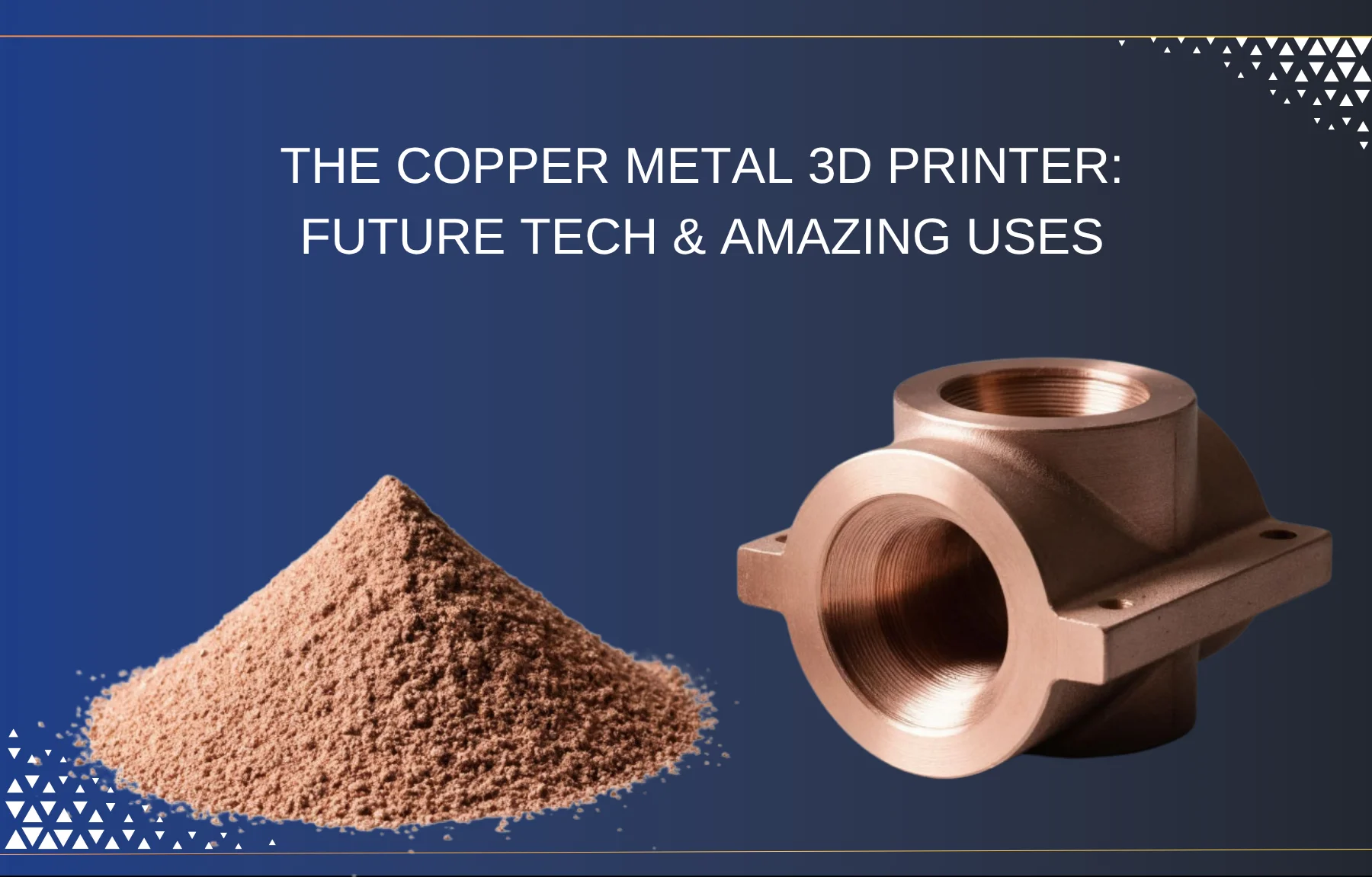
Envision a manufacturing paradigm where intricate designs materialize, layer by precise layer, from raw metal. This isn’t speculative fiction; it’s the transformative reality of additive manufacturing, more commonly known as 3D printing. However, our focus today narrows to a particularly compelling frontier: the copper metal 3D printer.
Copper, that ubiquitous reddish-brown element renowned for its exceptional electrical and thermal conductivity, plays a pivotal role across countless industries, from advanced electronics to robust power generation. Its unparalleled capacity to efficiently conduct heat and electricity makes it an indispensable material. When this vital material is harnessed within advanced additive manufacturing systems, the potential for groundbreaking innovation is profound, opening avenues for designs and functionalities previously unattainable with conventional fabrication methods.
This exploration delves into the intricate mechanics of copper additive manufacturing, examining the myriad metal 3D printing copper applications that are poised to redefine sectors like aerospace, automotive, and thermal management. We will navigate the significant challenges in copper 3D printing, addressing material complexities and process intricacies, before illuminating the cutting-edge technologies for 3D printing copper and the innovative solutions propelling this field forward. Prepare to uncover how this precise, layer-by-layer deposition of copper is not just building components, but actively shaping the technological landscape of tomorrow.
What is a Copper Metal 3D Printer and Why is Copper Special?
Imagine constructing intricate objects not by carving them from a solid block, but by building them up, layer by microscopic layer, from a cloud of super-fine dust. This is the fundamental principle behind a Copper metal 3D printer. Unlike traditional manufacturing methods that remove material, these advanced machines employ additive manufacturing techniques. They begin with incredibly tiny particles of copper powder, meticulously arranging and fusing them to form a complete, three-dimensional component.
The “magic” driving this process often involves powerful lasers. These lasers precisely target specific areas of the copper powder bed, heating and melting the particles together. Once a layer is solidified, a new layer of powder is spread, and the process repeats, gradually building the object from the ground up. This method, known as Copper additive manufacturing, allows for the creation of geometries and internal structures previously deemed impossible with conventional techniques.
Copper itself is not just any metal; it’s a superstar in the material world, prized for several exceptional properties. Firstly, it possesses an extraordinary ability to conduct electricity. This high electrical conductivity is why copper is ubiquitous in everything from household wiring to sophisticated electronics, facilitating the rapid flow of electrical current with minimal energy loss. In fact, copper conducts electricity almost twice as well as aluminum, making it a superior choice for high-performance electrical applications that demand efficiency and reliability (Source: ScienceDaily). Secondly, copper is an outstanding thermal conductor, meaning it efficiently transfers heat away from critical components. This characteristic is vital in applications requiring effective cooling, such as heat sinks in computers or specialized parts in engines. Finally, beyond its practical uses, copper’s distinctive reddish-gold luster also makes it aesthetically appealing, lending itself to decorative and artistic applications.
Super Cool Things We Can Make: Metal 3D Printing Copper Applications
The advent of Copper additive manufacturing has unlocked a new realm of possibilities, allowing engineers and designers to move beyond the limitations of traditional manufacturing. This ability to craft complex, optimized shapes that are impossible to produce with older methods is revolutionizing various industries. These exciting advancements highlight the incredible Metal 3D printing copper applications that are rapidly transforming our technological landscape.
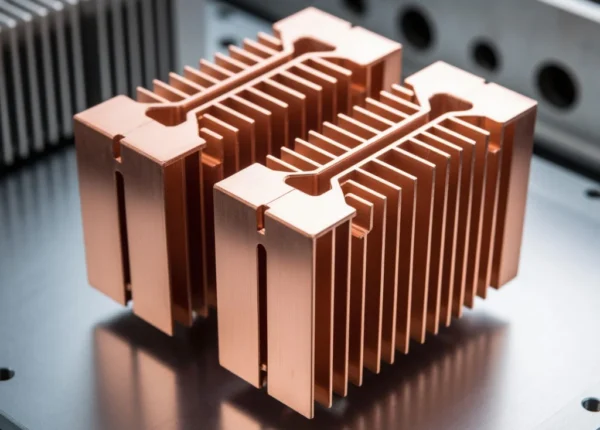
One of the most significant impacts is seen in the realm of electronics. With the increasing demand for smaller, more powerful devices, efficient thermal management becomes paramount. Metal 3D printing copper applications include fabricating highly intricate cooling components like heat sinks with optimized internal geometries. These parts can quickly dissipate heat from microprocessors, graphics cards, and other sensitive electronic components, enabling faster operation and preventing thermal damage. This innovative approach allows for the creation of custom-fit cooling solutions that maximize surface area and airflow, directly translating to more robust and higher-performing computing devices.
Beyond consumer electronics, the energy sector is also benefiting immensely. Copper’s excellent electrical and thermal conductivity makes it an ideal material for components in renewable energy systems and electric vehicles. Copper additive manufacturing is being utilized to produce specialized parts for electric car battery packs, solar panels, and wind turbines. These 3D printed copper components can enhance energy transfer efficiency, reduce weight, and improve the overall performance and longevity of green energy infrastructure.
In the challenging environment of aerospace, Metal 3D printing copper applications are pushing boundaries. The ability to create lightweight, high-strength parts with complex internal cooling channels is critical for rocket engines and spacecraft. Copper can withstand extreme temperatures and help manage the immense heat generated during rocket propulsion. For example, NASA has explored 3D printed copper alloys for rocket engine components, specifically for regenerative cooling channels, improving efficiency and durability. Such innovations are vital for future space exploration, allowing for more durable and efficient propulsion systems.
The medical field also sees immense potential, particularly in creating customized tools and devices. The biocompatibility of copper, combined with the precision of 3D printing, allows for the fabrication of bespoke surgical instruments or intricate parts for medical implants and diagnostic equipment. This level of customization ensures a better fit and improved functionality, potentially leading to better patient outcomes.
Finally, copper’s inherent beauty and workability lend themselves to unique artistic and fashion applications. Designers can now create intricate jewelry, sculptures, or architectural elements with previously unattainable geometric complexity and delicate details, all benefiting from copper’s lustrous appearance. The precision offered by Copper metal 3D printer technology allows for the realization of visionary designs that would be impossible to achieve through traditional casting or machining.
The benefits of utilizing copper 3D printing are clear and compelling:
- Super Shapes: It enables the creation of incredibly complex, internal geometries and optimized structures that are simply not feasible with conventional manufacturing methods.
- Less Waste: Additive manufacturing is inherently more efficient as it only uses the necessary material, significantly reducing waste compared to subtractive processes.
- Make it Fast! Rapid prototyping and on-demand manufacturing capabilities mean that customized parts can be produced quickly, accelerating development cycles and reducing lead times.
However, despite these remarkable advantages, working with copper in a 3D printing environment presents unique technical hurdles. The very properties that make copper so desirable also make it a challenging material to print, leading to specific engineering puzzles that require innovative solutions.

Precision Copper 3D Printing with the A100 Metal Printer
Meet the A100 Metal 3D Printer, the compact, affordable solution engineered to overcome the unique challenges of printing with pure copper and its alloys. Designed for a Ø100×100 mm build volume, the A100 empowers you to produce highly complex and dense copper parts with exceptional detail, unlocking new possibilities in thermal management, electronics, and advanced R&D.
Copper’s exceptional thermal conductivity and laser reflectivity make it difficult to process with standard 3D printers. The A100 rises to this challenge with its optional, innovative 250W blue laser (445 nm). Unlike conventional infrared lasers, the blue laser is highly absorbed by copper, enabling stable melting, finer feature resolution, and smoother surface finishes for superior part quality.
Ideal for Research and Innovation
The A100 is the perfect platform to accelerate your copper additive manufacturing projects. It is ideally suited for:
- Rapid prototyping of copper-cooled components.
- Material testing and new alloy development.
- Process parameter optimization for copper.
- Small-batch production of high-value copper parts.
Navigating the Material Frontier: Advanced Challenges in Copper Additive Manufacturing
While the promise of copper 3D printing is immense, realizing its full potential involves overcoming several significant technical hurdles. These challenges in copper 3D printing are rooted in the very properties that make copper so valuable—its exceptional thermal and electrical conductivity, combined with specific optical characteristics. Unlike more commonly printed metals such as stainless steel or titanium, copper presents a unique set of difficulties for conventional additive manufacturing processes, particularly those relying on laser-based melting.
One primary obstacle is copper’s high reflectivity, especially to the infrared wavelengths typically emitted by standard fiber lasers used in metal 3D printing processes. When a high-power laser strikes a copper powder bed, a substantial portion of the laser energy simply bounces off the surface rather than being absorbed and converted into heat. This phenomenon, often referred to as the “mirror effect,” leads to inefficient energy coupling, requiring significantly higher laser power or slower scan speeds to achieve adequate melting. This not only increases printing time and energy consumption but also creates difficulties in controlling the melt pool, leading to inconsistent material densification and potential defects within the printed part. The reflectivity issue is particularly pronounced with pure copper, which reflects over 90% of common laser wavelengths.
Furthermore, copper’s superior thermal conductivity, while advantageous in end applications like heat exchangers and electrical components, poses another challenge during the rapid heating and cooling cycles inherent in additive manufacturing. As the laser melts a localized spot, the heat quickly dissipates into the surrounding powder and previously solidified material. This rapid heat extraction can cause steep thermal gradients, leading to non-uniform solidification, increased residual stresses, and potentially the formation of micro-cracks and delamination within the printed layers. Maintaining a stable melt pool temperature and ensuring controlled cooling rates across the entire build volume becomes exceptionally difficult, impacting both the structural integrity and mechanical properties of the final component. Materials science research highlights the intricate balance required to manage these thermal dynamics effectively.
Beyond these fundamental material properties, other complexities include the susceptibility of copper powder to oxidation, requiring inert gas atmospheres to prevent contamination that can degrade material properties. The relatively high cost of specialized copper powders and the equipment capable of handling these challenges also contribute to the barriers to wider adoption. Each of these factors demands sophisticated process parameter optimization, advanced equipment design, and novel material formulations to ensure the creation of high-density, defect-free, and functionally superior components. Addressing these challenges in copper 3D printing is paramount for expanding the use of copper additive manufacturing into high-performance industrial applications.
Also read: Ultra-Spherical Copper & Alloy Powders for AM | Optimized Ultrasonic Atomization Process
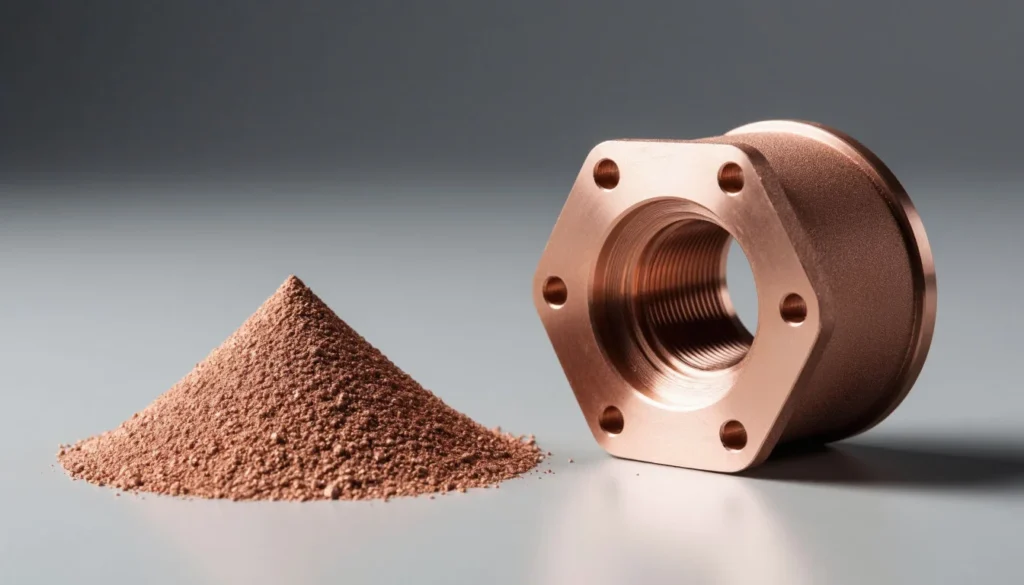
Pioneering Solutions: Emerging Technologies for 3D Printing Copper
Despite the inherent difficulties, concerted research and development efforts are rapidly advancing technologies for 3D printing copper, transforming what was once a theoretical possibility into a practical reality. Engineers and material scientists are innovating across multiple fronts, from laser technology and process parameters to alternative additive manufacturing methods, all aimed at efficiently producing high-quality copper components.
One of the most significant breakthroughs involves the adoption of green or blue spectrum lasers, which directly address copper’s high reflectivity to traditional infrared lasers. Copper exhibits a much higher absorption rate for shorter wavelengths, such as those in the green (around 515 nm) or blue (around 450 nm) spectrum. By switching to these wavelengths, the laser energy is absorbed far more effectively by the copper powder, enabling more stable melt pools, increased process speeds, and better control over material densification. This shift is a game-changer, dramatically improving the printability of pure copper and its alloys. AO Metal is now integrating these specialized laser sources into their copper metal 3D printer systems, opening new avenues for efficient production.
Beyond laser wavelength, advancements in thermal management within the build chamber are crucial. Pre-heating the build plate and the entire powder bed to elevated temperatures (e.g., up to 500-600°C) helps mitigate the rapid cooling effects and reduce thermal gradients during solidification. This controlled thermal environment minimizes residual stresses, prevents cracking, and promotes a more uniform microstructure in the printed part. Sophisticated closed-loop control systems monitor and adjust parameters in real-time, ensuring optimal conditions throughout the entire build process.
Furthermore, alternative additive manufacturing approaches are gaining traction for copper. Binder Jetting, for instance, does not rely on lasers for melting. Instead, a liquid binder selectively joins copper powder particles layer-by-layer to form a “green” part, which is then debound and sintered in a high-temperature furnace. This method allows for rapid production of complex geometries, often at lower costs than laser-based systems, though the final material properties depend heavily on the sintering process and can sometimes require infiltration with a secondary metal for full density. Similarly, Directed Energy Deposition (DED), which uses a laser or electron beam to melt wire or powder feedstock as it’s deposited, offers another pathway. DED is particularly well-suited for larger components, repairing existing parts, or creating multi-material structures, offering flexibility in controlling the melting and solidification dynamics by introducing material directly into the melt pool.
The convergence of these advanced technologies for 3D printing copper, coupled with ongoing material science innovations in developing custom copper alloys specifically tailored for additive manufacturing, is propelling copper additive manufacturing into a new era. These solutions are not only improving the feasibility of producing intricate copper parts but are also pushing the boundaries of what is possible in high-performance electronics, aerospace thermal management, and sustainable energy applications. The continuous evolution of these processes promises to unlock unprecedented design freedom and functional integration for critical copper components.
Conclusion
The advent of the copper metal 3D printer marks a pivotal shift in advanced manufacturing, fundamentally transforming how high-performance components are created. This innovation unlocks unprecedented design freedom, delivering critical advantages in fields ranging from high-frequency electronics to cutting-edge thermal management systems. The ability to produce complex, high-conductivity structures is no longer a theoretical aspiration but a tangible reality, driving progress across numerous industries.
While the unique thermal and reflective properties of copper present inherent manufacturing hurdles, relentless advancements in copper additive manufacturing techniques have provided robust solutions. From optimized laser parameters to novel binder jetting processes, these innovative printing methodologies effectively address previous limitations, rapidly expanding the material’s industrial viability. The era of precision copper fabrication is undeniably here, propelled by continuous technological breakthroughs that overcome what were once considered insurmountable challenges in copper 3D printing.
Ultimately, understanding this landscape positions you at the forefront of engineering innovation. You now possess the critical insights into the transformative metal 3D printing copper applications, the current capabilities, and the direction of future developments. Embrace this technological frontier; the future of high-performance engineering depends on exploring and integrating these powerful capabilities.
Frequently asked questions
What makes 3D printed copper parts so valuable compared to traditionally manufactured ones?
3D printed copper parts offer incredible value primarily due to their ability to create highly complex geometries and optimized internal structures that are impossible or too expensive to achieve with traditional manufacturing methods. This allows for designs with improved heat exchange capabilities, lighter weight, and integrated functionalities, leading to enhanced performance in applications like thermal management and electrical conductivity.
Beyond electronics, what are some emerging or unexpected Metal 3D printing copper applications?
While electronics and heat sinks are primary uses, Metal 3D printing copper applications are expanding. We’re seeing development in custom medical instruments with intricate internal cooling channels for precision surgery, specialized microwave and RF components for telecommunications, and even bespoke artistic or design pieces that leverage copper’s aesthetic appeal and the technology’s design freedom. Its high thermal conductivity is also being explored for cryogenic applications and advanced vacuum chambers.
Why are copper's excellent properties, like high conductivity, also its biggest challenge in 3D printing?
Copper’s high electrical and thermal conductivity, while desirable in end products, poses significant challenges in copper 3D printing. Its high reflectivity means that traditional lasers struggle to transfer enough energy into the copper powder, causing much of the laser light to bounce off. Additionally, its excellent thermal conductivity means that any heat absorbed quickly dissipates, making it difficult to maintain a stable melt pool for proper layer fusion and leading to issues like rapid cooling and potential cracking.
How do "blue lasers" and heated build chambers help overcome the Challenges in copper 3D printing?
Blue lasers represent a significant advancement because copper absorbs blue light much more efficiently than the infrared light used in traditional 3D printing lasers. This allows for better energy absorption and a more stable melt pool, overcoming the “shiny mirror” problem. Heated build chambers address the “heat thief” problem by pre-heating the entire build area. This reduces the temperature difference between the melted layer and the surrounding powder, promoting slower, more uniform cooling and significantly reducing internal stresses that can cause cracking or warping.
Are there other Copper additive manufacturing technologies besides laser powder bed fusion?
Yes, besides laser powder bed fusion (which involves melting powder with a laser), other Copper additive manufacturing technologies are being developed. Binder jetting involves selectively depositing a liquid binding agent onto copper powder layers, followed by a post-processing step like sintering or infiltration to achieve full density. Directed Energy Deposition (DED), another method, uses a laser or electron beam to melt copper powder or wire as it’s precisely deposited, often used for repair or building large components. Each method has its own advantages for specific applications.
How does the strength and quality of 3D printed copper compare to traditional copper components?
The strength and quality of 3D printed copper can be comparable to, and in some cases even exceed, traditionally manufactured copper, especially when the process is optimized. With proper process control, high-density, defect-free parts can be achieved. Due to the rapid melting and solidification inherent in additive manufacturing, 3D printed copper can exhibit unique microstructures that sometimes lead to enhanced mechanical properties like increased hardness or fatigue resistance. However, careful post-processing, such as heat treatment, is often necessary to achieve desired material properties and relieve internal stresses.
Is Copper metal 3D printing becoming more accessible for smaller businesses or research labs?
While Copper metal 3D printer systems and specialized copper powders remain a significant investment, the technology is becoming increasingly accessible. As green laser technology matures and other additive manufacturing methods for copper become more refined, costs are gradually decreasing. This is making it more feasible for specialized research labs, universities, and even smaller, innovative businesses to invest in or utilize service bureaus for Copper additive manufacturing, driving further innovation and broader adoption across various industries.
Have a question or a project? Let’s talk.
Tell us what you need — a real applications engineer replies within 24 hours. NDA standard, no sales script.