1. Introduction Additive manufacturing, commonly known as 3D printing, has fundamentally transformed modern product development,…
3D Printing vs. Injection Molding: Which Manufacturing Method is Right for You?
3.
3D Printing vs. Injection Molding: Which Manufacturing Method is Right for You?
Choosing the right manufacturing method shapes your entire production strategy. Two of the most common options today are 3D printing and injection molding. Both can create high-quality parts, but they work in very different ways. Whether you’re launching a new product or scaling an existing design, understanding how these methods compare will save you time, money, and frustration.
This guide breaks down what each process does best, where they fall short, and how to decide which one fits your project.
Understanding 3D Printing
3D printing builds objects layer by layer using digital models. It’s part of what’s known as additive manufacturing, where material is added instead of removed or molded. This method gives you the freedom to create complex parts quickly, without the need for expensive tooling.
There are several types of 3D printing technologies used in manufacturing:
- Fused Filament Fabrication (FFF) or FDM uses thermoplastic filaments to create functional prototypes and basic end-use parts.
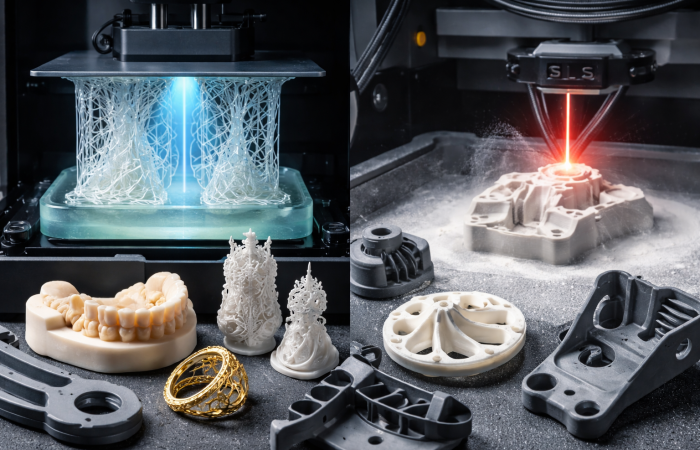
- Stereolithography (SLA) uses resin and a laser to produce smooth, detailed parts, perfect for visual models or tight-tolerance applications.
- Selective Laser Sintering (SLS) fuses powdered nylon to create durable parts with strong mechanical properties and no need for support structures.
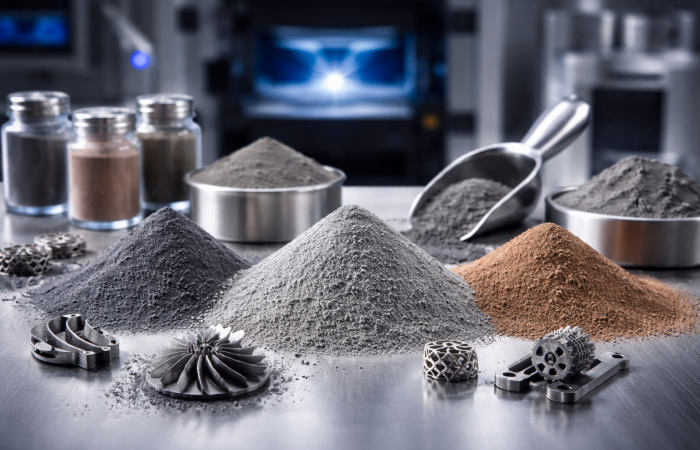
- Metal 3D Printing, including DMLS (Direct Metal Laser Sintering), allows for the production of real metal parts, ideal for aerospace, tooling, and medical applications.
One of the biggest advantages of 3D printing is speed. You can go from design to part in just a few days. It’s also cost-effective for low-volume runs or when testing multiple design versions. There’s no need for mold making, which makes it easier to change or iterate your designs.
That said, 3D printing vs. injection molding strength can be a tradeoff. Printed parts, especially from FDM or SLA, may not match the consistency or density of molded ones.
Surface finish may also require some post-processing. And while material choices are growing, they’re still more limited compared to traditional plastics used in injection molding 3d printing workflows. Still, for mold making, 3D printing, rapid prototyping, or one-off production, 3D printing is hard to beat.
Understanding Injection Molding
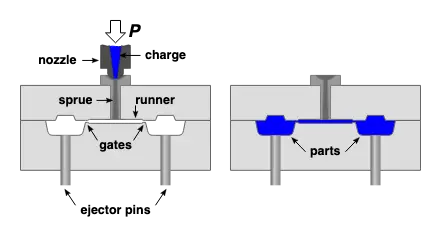
Injection molding is a proven process ideal for high-volume plastic part production. Plastic pellets are melted, injected into a custom mold under high pressure, then cooled and ejected.
This method shines when you need consistent, repeatable parts with a fine surface finish. Once the mold is ready, cycle times can be as fast as 10 seconds, enabling production runs from 10,000 to 100,000+ parts.
Key advantages include
- High production speed & low per-part cost – Molding thousands of parts is much faster and cheaper than most alternatives.
- Great repeatability and tight tolerances (~ ±0.005 in), ensuring consistent dimensions across every part.
- Broad material selection – thermoplastics, thermosets, elastomers, and even filled compounds for enhanced strength.
- Excellent surface finish – parts often exit the mold ready-to-use, with little to no post-processing needed.
- Low waste – unused runners and excess material can be recycled back into production.
Some teams use hybrid solutions, such as 3D-printed molds or urethane casting from printed masters, to lower costs for low-to-medium volume runs. But for large batches, traditional injection molding still wins on speed, quality, and cost.
Key Factors To Consider When Choosing Between 3D Printing And Injection Molding
Choosing between 3D printing and injection molding depends on what you’re making, how many parts you need, and how fast you need them. Both methods can deliver high-quality results, but the right fit comes down to your production goals. Here’s what to weigh:
Production Volume
- If you’re making a few dozen or even a few hundred parts, 3D printing is usually the faster and more flexible choice. There’s no tooling, so you can start immediately and make changes on the fly.
- For thousands or more, injection molding makes more sense. Once the mold is ready, each part costs very little, and production moves fast.
Cost Considerations
- 3D printing has low setup costs but higher per-part prices, especially for larger batches.
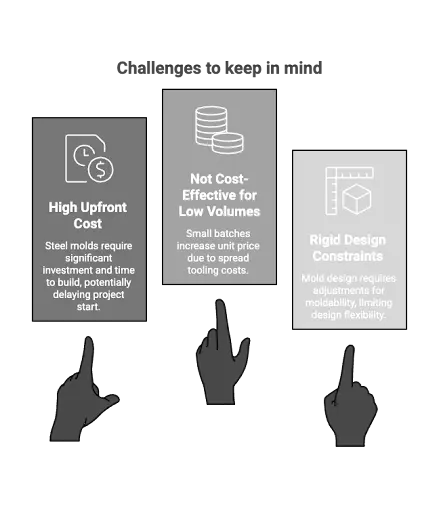
Injection molding comes with high upfront costs—sometimes thousands of dollars for tooling—but becomes much cheaper per unit at scale.
If you only need 100 parts, 3D printing is likely the better deal. For 10,000 parts, injection molding wins.
Material Selection
- Injection molding offers a broader range of plastics, including filled, flexible, and high-temp grades.
- 3D printing supports many useful materials, too, but they tend to be more limited in structural and thermal performance.
Some metal and composite options are available, especially through technologies like DMLS or SLS.
Design Complexity
- 3D printing allows complex geometries, internal channels, and lattice structures that molds can’t reproduce.
- Injection molding needs draft angles, consistent wall thickness, and no deep internal features. That can limit creativity.
If your part requires internal channels or complex shapes, mold making 3d printing may offer more freedom.
Lead Time
- With 3D printing, you can go from design to part in a few days.
- Injection molding may take weeks to prepare the mold before the first part is made.
If you’re on a tight timeline or still testing your design, 3D printing will help you move faster.
Surface Finish and Mechanical Properties
- Molded parts typically offer better surface finish and higher strength, great for end-use components.
- Printed parts may show layer lines and require post-processing.
That said, newer methods like 3d mold printing and high-resolution SLA are closing the gap in appearance.
Ultimately, the right choice depends on your priorities, whether that’s speed, scale, design flexibility, or part performance. Taking the time to match the method to your needs will save you more than just cost; it will shape how quickly and confidently you can move from idea to part.
Use Cases And Industry Applications
Both 3D printing and injection molding have strong use cases, but they serve different roles depending on the production stage and industry.
When to Choose 3D Printing
3D printing is ideal when you need flexibility, speed, or low-volume production. It’s the go-to method for:
- Rapid prototyping – test and refine designs quickly without waiting for mold fabrication.
- Low-volume runs – produce anywhere from 1 to 500 parts without investing in tooling.
- Custom parts – tailor-made designs for individual users, limited editions, or one-off builds.
Applications where 3d printer injection molding isn’t practical—like custom medical devices, aerospace prototypes, or short-run components—often benefit from additive manufacturing. It also allows you to 3d print heat molding fixtures or create functional prototypes from high-performance resins and metals.
When to Choose Injection Molding
Injection molding is the clear choice when your focus is volume, repeatability, and cost per part. It’s commonly used for:
- High-volume production – from 1,000 to over 100,000 parts.
- Standardized components – where every part must meet the same specifications.
- Consumer-ready products – thanks to excellent surface finish and part strength.
Common industries using injection molding 3d printing workflows include:
- Aerospace and automotive – for lightweight, durable housings and brackets.
- Medical and healthcare – for surgical tools, enclosures, and disposable components.
- Consumer electronics – for casings, buttons, and precision-fit plastic parts.
- Industrial manufacturing – for everything from functional gears to custom jigs.
In short, 3D printing vs injection molding isn’t a matter of which is better overall—it’s about which is better for your exact stage, volume, and design needs.
Hybrid Approach: Combining 3D Printing And Injection Molding
You don’t always have to choose one method over the other. In many cases, 3D printing and injection molding work best when used together. This hybrid approach lets you move faster, lower costs, and test more ideas before committing to full production.
Prototyping with 3D Printing Before Injection Molding
Most teams today start with 3D printing to develop and test their designs. It’s faster, cheaper, and easier to revise. Once the final version is ready, you can switch to injection molding for high-volume production. This avoids costly changes to mold tooling down the line.
You can also 3d print injection mold designs as samples to test mold fit, draft angles, or part behavior before cutting steel.
3D-Printed Molds for Short Runs
Need only a few dozen parts, but want the finish and material selection of molding? That’s where injection molding with 3d printer molds makes sense. Using a high-temperature 3D-printed mold—often in resin or metal—you can run small batches without investing in full tooling.
This method is great for:
- Early-stage product testing
- Bridge production before mass manufacturing
- Pilot runs for investor demos or trade shows
Some companies also use mold making 3d printing for internal tooling, casting, or thermoforming setups, reducing downtime and outsourcing costs.
Real-World Efficiency
By blending both methods, you get the best of both worlds:
- Speed and flexibility during design
- Strength, quality, and scale during production
For startups and R&D teams, this means getting to market faster without skipping critical validation steps. For manufacturers, it’s a smart way to test tooling, speed up iteration cycles, or support custom product variants.
Final Thoughts: Making The Right Manufacturing Choice
3D printing and injection molding both have their place. If you need speed, flexibility, or small quantities, 3D printing is your go-to. For high-volume production and consistent quality, injection molding is a better fit.
Many teams use both—starting with 3D printing for prototyping or even 3d print injection mold designs, then shifting to molding once things are locked in.
Your part design, timeline, and budget will guide the decision. And if you’re unsure, we’re here to help.
👉 Explore our 3D printing services or get in touch for a quote
FAQ
Can I use a 3D-printed mold in a real injection molding machine?
Yes, you can 3d print injection mold tools for short production runs using specialized resins or metals. While not as durable as steel molds, they work well for low-volume testing or bridge production, especially when time or tooling budget is limited.
What's the difference in part durability between the two methods?
When it comes to 3d printing vs injection molding strength, molded parts typically outperform printed ones. This is due to better layer bonding, higher density, and stable material properties in molded plastics. 3D-printed parts, while strong, may show weakness along layer lines under stress.
How is 3D mold printing used beyond prototyping?
3d mold printing isn’t limited to prototypes. It’s also used to produce jigs, fixtures, and casting molds for silicone, urethane, or low-temp thermoplastics. This opens up applications in tooling and custom manufacturing without relying on metal mold fabrication.
Is injection molding considered a type of additive manufacturing?
No, injection molding is a subtractive or formative process, not additive. While injection molding 3d printing workflows may overlap (like using printed molds), “is injection molding additive manufacturing”, the answer is no. Additive manufacturing refers specifically to layer-by-layer part creation.
Can I combine mold making and 3D printing with traditional production?
Absolutely. Mold making 3D printing lets you validate designs, test materials, or produce small batches before scaling. You can also use injection molding with 3d printer molds for pilot runs, then move to full production with steel tooling once designs are final.
What’s the best method for heat-formed plastic parts?
For thermoforming or 3d print heat molding, 3D printing is often used to create the molds themselves. This works well when custom shapes or short lead times are required. Some teams even use 3d printer injection molding setups for small-run heat-formed parts
Related Posts
Ashkhen Ovsepyan
Additive manufacturing expert and tech business leader, focused on global strategy, innovation, and advancing women in 3D printing.