
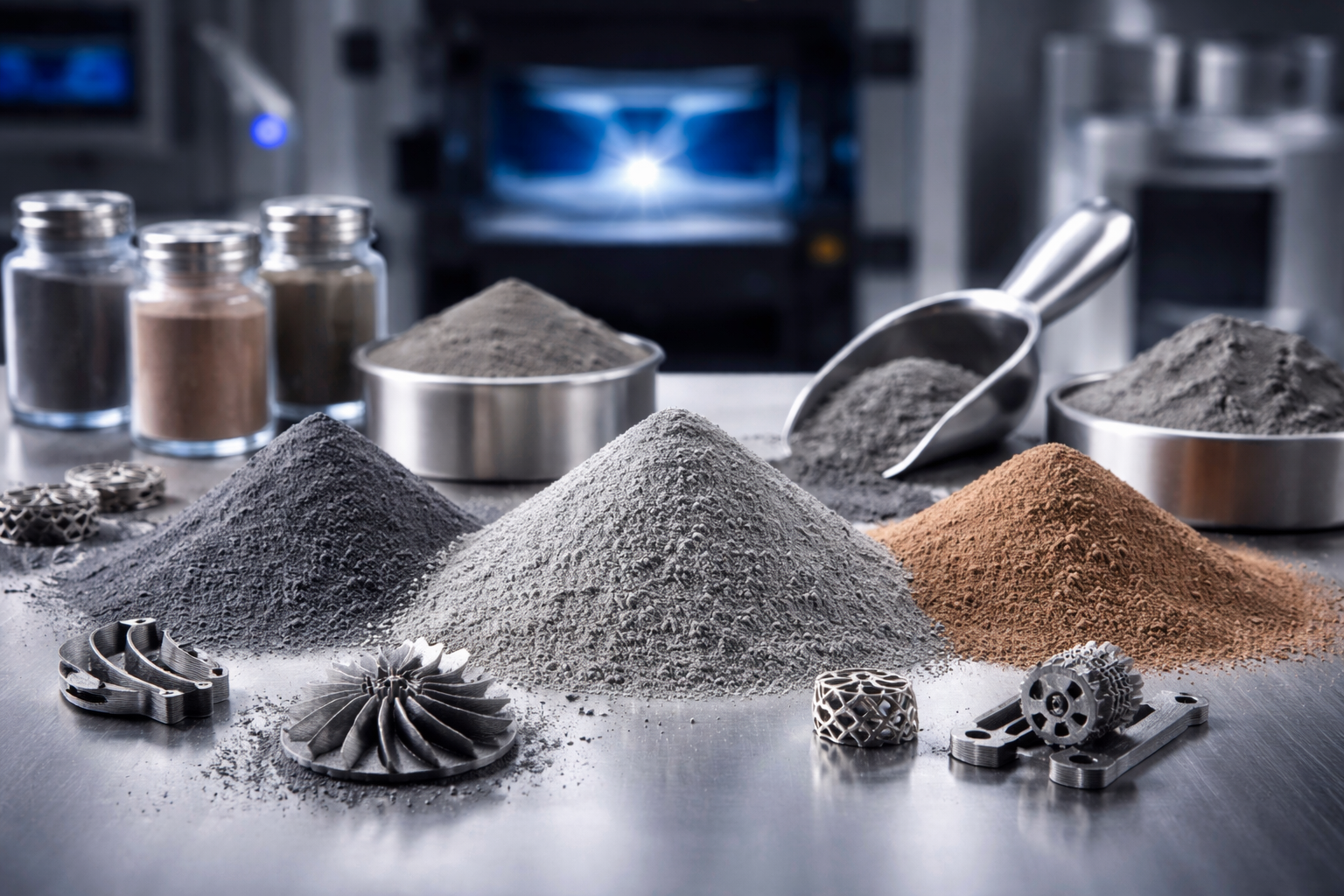
Metal additive manufacturing has fundamentally transformed the way industries approach design and production, enabling the creation of complex, high-performance parts that were once impossible or prohibitively expensive to manufacture. At the heart of this technological revolution lies 3D printing metal powder—a highly engineered material whose properties directly influence the quality, strength, and precision of the final part, as well as the efficiency of the production process.
Unlike traditional bulk metals used in machining or casting, metal powder for 3D printing is designed to meet exceptionally strict specifications. Factors such as particle size distribution, sphericity, flowability, and chemical composition are carefully controlled to ensure consistent behavior across every layer of an additive manufacturing build. This precision is critical in applications ranging from aerospace components, where mechanical performance and weight reduction are paramount, to medical implants that require exact geometries and biocompatibility.
The reliability and repeatability of powder-based 3D printing processes depend heavily on these characteristics. Even minor deviations in powder quality can lead to defects such as porosity, weak mechanical properties, or failed prints. For manufacturers, designers, and engineers, understanding the nuances of metal 3D printing powder is essential to unlocking the full potential of additive manufacturing.
In this guide, we will provide a comprehensive overview of metal powder for 3D printing, including detailed breakdowns of key materials like stainless steel, titanium, aluminum, nickel alloys, and specialty tool steels. We’ll also explore real-world applications, process considerations, and expert tips to help you optimize your workflow, achieve superior part quality, and make informed choices when selecting powders for your additive manufacturing projects.
What is 3D Printing Metal Powder?
3D printing metal powder is a finely engineered material composed of microscopic metal particles, specifically formulated for use in additive manufacturing technologies such as Laser Powder Bed Fusion (LPBF), Electron Beam Melting (EBM), and Directed Energy Deposition (DED). Unlike conventional bulk metals, these powders are designed to flow smoothly, fuse precisely, and produce parts with exceptional mechanical performance and surface quality.
The production of metal 3D printing powder involves highly controlled atomization processes, which break molten metal into tiny droplets that solidify into uniform, spherical particles. This manufacturing precision is critical because the properties of the powder directly impact the quality and consistency of printed components. Variations in particle size, shape, or chemical composition can lead to print defects, including porosity, incomplete fusion, or surface irregularities.
For successful powder metal 3D printing, high-quality metal powders must meet several key requirements:
- Consistent Particle Size Distribution: Uniform particle sizes allow even layering during printing, which ensures better density, surface finish, and dimensional accuracy. Fine particles may improve resolution, while slightly coarser particles can enhance flowability for large-scale builds.
- High Flowability: Good flow characteristics prevent clogging and ensure a uniform spread of powder across the build platform. This is particularly important in LPBF and EBM systems, where layers are extremely thin, and any inconsistency can compromise part integrity.
- Low Oxygen Content: Metals like titanium and aluminum are highly reactive. Low oxygen content in the powder minimizes oxidation, which improves mechanical strength, prevents brittleness, and maintains the intended material properties.
- Spherical Morphology: Spherical particles reduce inter-particle friction, which improves powder spreading and packing density. This enhances the stability of the powder bed and reduces defects, contributing to consistent, repeatable part quality.
By optimizing these characteristics, metal powders for 3D printing ensure stable processing conditions, predictable melt behavior, and superior part performance. Whether you are producing lightweight aerospace brackets, precision medical implants, or durable industrial tooling, the right powder is the foundation for reliable and high-quality additive manufacturing.
Types of Metal Powder for 3D Printing
Stainless Steel Metal 3D Printing Powder
Stainless steel remains one of the most versatile and widely used materials in metal powder for 3D printing, combining strength, corrosion resistance, and cost-efficiency. Its adaptability makes it a go-to choice for a wide range of applications, from industrial tooling to medical instruments.
One of the most popular metal 3D printing powders in this category is 17-4PH stainless steel, a precipitation-hardening alloy known for its high strength, excellent hardness, and heat-treatable properties. This makes it ideal for functional prototypes, precision tooling, and industrial components where durability is critical. Explore these options:
- 17-4PH Stainless Steel Powder – LPBF Compatible
- 17-4PH Stainless Steel Powder – 10 kg / 22 lbs
- 17-4PH Stainless Steel Alloy Powder – 1 kg / 2.2 lbs
For applications where corrosion resistance is critical, 316L stainless steel powder is a leading choice. Its superior resistance to chemicals, moisture, and high temperatures makes it ideal for medical tools, chemical processing components, and marine applications:
Other stainless steel powders, such as 15-5 and 304, offer specialized benefits for different engineering needs. 15-5 stainless steel powder provides excellent mechanical performance and corrosion resistance for aerospace and tooling, while 304 stainless steel powder is widely used for general-purpose applications with moderate corrosion resistance:
Applications of stainless steel metal 3D printing powder include:
- Precision tooling and dies
- Industrial components and fixtures
- Medical instruments and surgical tools
- Automotive and aerospace brackets and housings
With its versatility, mechanical strength, and corrosion resistance, stainless steel remains a cornerstone in metal powder for 3D printing, suitable for both prototyping and end-use production.
Nickel-Based Alloys
Nickel-based superalloys are essential in metal 3D printing powder workflows where high temperature, extreme stress, and demanding mechanical performance are required. These alloys maintain their strength and corrosion resistance in harsh environments, making them ideal for aerospace, energy, and industrial applications.
One of the most widely used nickel-based powders is Inconel 718 (IN718). Known for its excellent high-temperature strength, fatigue resistance, and stability, IN718 is a top choice for aerospace components, rocket engines, and turbine parts. Its compatibility with LPBF, EBM, and DED processes ensures precision and reliability in additive manufacturing. Explore IN718 options here:
- IN718 Nickel Alloy Powder – LPBF, EBM, DED Compatible, 10 kg / 22 lbs
- A-Powder IN718 Nickel Superalloy Powder – LPBF Compatible, 10 kg / 22 lbs
- Dedicated IN718 Nickel-Based Alloy Powder Product Page
For applications that demand superior corrosion resistance in chemically aggressive environments, IN625 nickel alloy powder is a leading option. Its high nickel and chromium content provides excellent oxidation and corrosion resistance, making it suitable for chemical processing, marine components, and high-performance aerospace parts:
- IN625 Nickel Alloy Powder – LPBF, EBM, DED Compatible, 10 kg / 22 lbs
- IN625 Nickel Powder – LPBF Compatible, 10 kg / 22 lbs
For extremely high-temperature applications where exceptional strength and creep resistance are critical, IN939 nickel alloy powder is another high-performance choice. This superalloy is commonly used in turbine blades, gas turbines, and aerospace components:
Applications of nickel-based metal 3D printing powders include:
- Aerospace engine components and structural parts
- Gas and steam turbines
- Energy system components exposed to high temperatures
- Industrial parts requiring exceptional corrosion and oxidation resistance
With their superior mechanical performance, thermal stability, and corrosion resistance, nickel-based alloys are indispensable for additive manufacturing in demanding environments, ensuring that parts perform reliably under the most extreme conditions.
Aluminum Metal Powder for 3D Printing
Aluminum powders are a cornerstone in metal 3D printing powder applications where lightweight, high-strength, and thermally efficient components are needed. Their low density, excellent thermal conductivity, and corrosion resistance make aluminum alloys ideal for industries like automotive, aerospace, and thermal management systems.
One of the most widely used aluminum powders is AlSi10Mg, an aluminum-silicon-magnesium alloy prized for its combination of strength, lightweight properties, and excellent thermal performance. This alloy enables high-speed additive manufacturing while maintaining strong mechanical properties and dimensional stability, making it suitable for both prototypes and functional end-use parts. Explore these options:
- A-Powder AlSi10Mg Aluminum Powder – LPBF Compatible, 10 kg / 22 lbs
- Aluminum Powder AlSi10Mg – LPBF Compatible, 10 kg / 22 lbs
- Aluminum Alloy Powder AlSi10Mg – LPBF Compatible, 5 kg / 11 lbs
Benefits of Aluminum Metal 3D Printing Powder:
- Lightweight Construction: Ideal for aerospace components, automotive parts, and lightweight frames.
- Thermal Efficiency: Excellent for heat exchangers, cooling channels, and electronic housings.
- High-Speed Production: AlSi10Mg allows rapid printing without sacrificing mechanical strength.
- Corrosion Resistance: Suitable for outdoor or high-humidity applications.
Applications of aluminum metal powders in 3D printing include:
- Automotive parts and structural components
- Aerospace brackets, housings, and lightweight assemblies
- Heat exchangers and thermally demanding components
- Functional prototypes requiring strong yet lightweight materials
With its combination of low density, thermal efficiency, and mechanical performance, aluminum powder for 3D printing enables manufacturers to produce high-performance, lightweight parts efficiently while maintaining reliability and precision.
Titanium Powders
Titanium alloys are among the most sought-after metal 3D printing powders due to their exceptional strength-to-weight ratio, corrosion resistance, and biocompatibility. These properties make titanium ideal for aerospace components, medical implants, and other high-performance engineering applications where both durability and weight savings are critical.
The most widely used titanium alloy in additive manufacturing is Ti-6Al-4V (Ti64). This alloy combines high strength, low density, and excellent corrosion resistance, making it the industry standard for aerospace parts, structural components, and functional prototypes. Ti64 also provides excellent performance under cyclic loading, which is essential for mechanical and aerospace applications. Explore these options:
- Ti64 Titanium Alloy Powder – LPBF Compatible, 10 kg / 22 lbs
- A-Powder Ti-6Al-4V Ti64 Titanium Powder – LPBF Compatible, 10 kg / 22 lbs
For medical-grade applications, Grade 23 ELI (Extra Low Interstitial) titanium powder is highly preferred. Its superior biocompatibility and enhanced fatigue resistance make it suitable for patient-specific implants, surgical tools, and other medical devices. Grade 23 titanium is compatible with LPBF, EBM, and DED processes, ensuring precision and repeatability in critical healthcare applications:
Benefits of Titanium Metal 3D Printing Powder:
- Exceptional Strength-to-Weight Ratio: Ideal for aerospace structures, medical implants, and high-performance parts.
- Biocompatibility: Safe for implants, prosthetics, and surgical instruments.
- Corrosion and Oxidation Resistance: Performs well in harsh environments, including saltwater and body fluids.
- Precision and Stability: Titanium powders maintain dimensional accuracy and mechanical reliability in additive manufacturing processes.
Applications of titanium powders in 3D printing include:
- Medical implants, prosthetics, and surgical tools
- Aerospace brackets, housings, and structural components
- High-performance engineering prototypes and end-use parts
- Components requiring extreme strength and corrosion resistance
With their unique combination of strength, lightweight design, and biocompatibility, titanium powders for metal 3D printing enable manufacturers to produce critical, high-performance parts for aerospace, medical, and industrial applications while maintaining precision, reliability, and safety.
Tool Steels and Specialty Alloys
Tool steels and specialty alloys are designed for metal 3D printing powder applications that demand extreme wear resistance, toughness, and durability. These materials are particularly valuable in industries where tooling, molds, dies, and high-strength components must withstand repetitive mechanical and thermal stress.
H13 tool steel powder is one of the most commonly used options for additive manufacturing. Known for its excellent thermal fatigue resistance, toughness, and hardness, H13 is ideal for producing injection molds, die-casting molds, and hot-working tools. Its compatibility with LPBF processes ensures precise layer deposition and consistent part performance:
Maraging steels offer ultra-high strength and low distortion during printing and heat treatment. Alloys like M300 and 18Ni300 are widely used for high-performance tooling, aerospace components, and mechanical fixtures. These powders allow manufacturers to create parts that combine exceptional toughness with excellent dimensional stability:
- M300 Maraging Steel Powder – LPBF, EBM, DED Compatible, 10 kg / 22 lbs
- 18Ni300 Powder – LPBF Compatible, 10 kg / 22 lbs
- 18Ni300 Maraging Steel Powder – LPBF Compatible, 10 kg / 22 lbs
Cobalt chrome powders are another category of specialty alloys for metal 3D printing, offering high wear resistance, hardness, and biocompatibility. These powders are especially suitable for medical implants, dental frameworks, and orthopedic devices, where both strength and biocompatibility are critical. Explore options here:
Benefits of Tool Steels and Specialty Metal 3D Printing Powders:
- Exceptional wear resistance and hardness for long-lasting tooling
- High dimensional stability during heat treatment and printing
- Compatibility with high-performance applications requiring toughness and strength
- Biocompatibility for medical and dental devices (cobalt chrome alloys)
Applications include:
- Molds, dies, and tooling for industrial production
- Aerospace and mechanical components requiring high strength
- Medical implants and orthopedic devices (for cobalt chrome alloys)
- Functional prototypes and end-use parts demanding durability
With their high-performance properties, tool steels and specialty alloys in metal 3D printing enable manufacturers to produce parts that are not only strong and durable but also precise and reliable, supporting both industrial and medical applications.
Cobalt Chrome Powders
Cobalt chrome alloys are a critical class of metal 3D printing powders, especially valued in medical, dental, and high-wear industrial applications. These alloys combine high hardness, excellent wear resistance, corrosion resistance, and biocompatibility, making them ideal for components that must withstand repeated stress while remaining safe for human contact.
CoCrMo powders are widely used for producing dental frameworks, crowns, and bridges, as well as orthopedic implants such as hip and knee replacements. Their strength and durability make them suitable for parts that require long-term reliability and precision:
- CoCrMo Powder – LPBF Compatible, 10 kg / 22 lbs
- Cobalt Chrome Powder CoCrMo – LPBF Compatible, 10 kg / 22 lbs
For applications that demand medical-grade quality, specialized medical-grade cobalt chrome powders are available. These powders meet strict biocompatibility and purity standards, ensuring safe and reliable use in patient-specific implants and surgical devices:
Benefits of Cobalt Chrome Metal 3D Printing Powder:
- Exceptional wear resistance for high-stress applications
- Biocompatibility for medical and dental implants
- Corrosion-resistant, ideal for long-term durability
- High strength and hardness for precise, long-lasting components
Applications of cobalt chrome powders in 3D printing include:
- Dental implants, crowns, bridges, and frameworks
- Orthopedic devices and surgical implants
- High-wear industrial parts requiring durability and strength
- Functional prototypes and end-use components in healthcare and mechanical engineering
With cobalt chrome powders, manufacturers can produce high-performance, long-lasting parts for both medical and industrial applications, combining the reliability of metal additive manufacturing with the precision and safety required for critical components.
Applications of Powder Metal 3D Printing
The use of metal powder for 3D printing has revolutionized modern manufacturing by enabling the production of complex geometries, lightweight structures, and high-performance components that were previously difficult or impossible to make with traditional methods. These powders are integral to additive manufacturing workflows across a wide range of industries.
Aerospace:
In aerospace, metal 3D printing powder is used to produce lightweight, high-strength components such as brackets, housings, and structural parts. Materials like Inconel 718, Ti-6Al-4V, and AlSi10Mg aluminum powder allow engineers to optimize designs for weight reduction while maintaining mechanical integrity under extreme conditions:
Healthcare:
Medical applications benefit from the biocompatibility and precision of powders like Grade 23 ELI titanium and cobalt chrome alloys. These materials are used to produce custom implants, surgical guides, and orthopedic devices, enabling patient-specific solutions that improve recovery outcomes and reduce surgical risks:
Automotive:
Automotive manufacturers leverage metal powder 3D printing for both rapid prototyping and production of end-use parts. Aluminum and stainless steel powders, such as AlSi10Mg and 17-4PH stainless steel, allow for lightweight, high-strength components that improve vehicle efficiency and performance:
Energy and Industrial:
In energy and industrial applications, metal 3D printing powder is used to produce turbine blades, heat exchangers, and high-temperature resistant components. Nickel-based superalloys like IN625 and IN939 withstand extreme heat and corrosion, making them ideal for power generation, oil, and gas sectors:
Tooling:
Metal powders like H13 tool steel and maraging steels (M300, 18Ni300) are widely used in tooling, molds, and fixtures, providing high wear resistance, durability, and precise tolerances. Additive manufacturing enables the production of complex mold geometries and conformal cooling channels, improving cycle times and product quality:
Explore the full range of metal powders suitable for these applications and more:
Conclusion:
Powder metal 3D printing has expanded the possibilities for design, prototyping, and production. By selecting the right metal 3D printing powder for your industry, you can achieve lightweight, durable, and high-precision components that meet demanding performance standards while reducing material waste and production time.
Final Thoughts
Choosing the right metal powder for 3D printing is critical for unlocking the full potential of additive manufacturing. The performance, durability, and precision of your final parts depend heavily on the quality and suitability of the powder used. Each class of metal 3D printing powder brings unique benefits tailored to specific applications:
- Stainless Steel Powders – Reliable and versatile, stainless steel powders like 17-4PH and 316L offer corrosion resistance, high strength, and heat-treatable properties, making them ideal for tooling, industrial parts, and medical instruments.
- Nickel-Based Alloys – Superalloys such as Inconel 718 and IN625 excel in high-temperature, high-stress environments, making them essential for aerospace, turbines, and energy applications.
- Aluminum Powders – Lightweight and thermally efficient, powders like AlSi10Mg enable lightweight structures in automotive, aerospace, and heat-transfer applications, combining strength with rapid production capabilities.
- Titanium Powders – With an unmatched strength-to-weight ratio and biocompatibility, titanium powders such as Ti64 and Grade 23 ELI are widely used for medical implants, aerospace components, and high-performance engineering applications.
- Tool Steels and Specialty Alloys – Powders like H13 tool steel and 18Ni300 maraging steel are engineered for wear resistance, high strength, and precision tooling, ideal for molds, dies, and industrial fixtures.
- Cobalt Chrome Powders – Known for exceptional hardness, corrosion resistance, and biocompatibility, cobalt chrome alloys like CoCrMo are perfect for dental frameworks, orthopedic implants, and high-wear applications.
Using certified, high-quality metal powders ensures reliability, repeatability, and optimal mechanical performance in your additive manufacturing workflow. By carefully selecting materials based on application requirements—such as strength, corrosion resistance, biocompatibility, or thermal performance—you can maximize efficiency, reduce material waste, and achieve precision-engineered components that meet the most demanding standards.
To explore the full range of high-quality metal 3D printing powders, visit:
In summary, understanding your material options and aligning them with your application goals is key to achieving superior results with powder metal 3D printing. High-quality powders, combined with the right printing process, unlock new levels of design freedom, performance, and innovation across industries.
Frequently asked questions
What is 3D printing metal powder?
3D printing metal powder is a finely engineered material composed of microscopic metal particles, designed for additive manufacturing processes like LPBF, EBM, and DED.
Why is metal powder for 3D printing different from traditional metals?
Metal 3D printing powder is engineered for consistent particle size, flowability, and chemical composition, ensuring high-quality, defect-free additive manufacturing parts.
What are the key characteristics of high-quality powder metal 3D printing materials?
Uniform particle size distribution, high flowability, low oxygen content, and spherical morphology are essential for consistent performance in powder metal 3D printing.
How does 3D printing metal powder impact part quality?
Powder properties directly influence surface finish, mechanical strength, density, and dimensional accuracy of printed components.
Which additive manufacturing technologies use metal 3D printing powder?
Metal powders are used in Laser Powder Bed Fusion (LPBF), Electron Beam Melting (EBM), and Directed Energy Deposition (DED).
What is the most common stainless steel metal powder for 3D printing?
17-4PH stainless steel powder is widely used due to its high strength, hardness, and heat-treatable properties.
When should I use 316L stainless steel powder?
316L is ideal for corrosion-resistant applications, such as medical instruments, marine components, and chemical processing equipment.
What applications are best suited for stainless steel powders?
Industrial tooling, precision components, medical instruments, automotive brackets, and aerospace parts.
Can stainless steel metal 3D printing powder be used for functional prototypes?
Yes, 17-4PH and 316L powders are suitable for both prototypes and end-use parts requiring strength and durability.
Are there specialty stainless steel powders for aerospace?
Yes, powders like 15-5 stainless steel are optimized for aerospace applications, offering a balance of strength, corrosion resistance, and mechanical performance.
What are nickel-based alloys used for in powder metal 3D printing?
They are used for high-temperature, high-stress components in aerospace, energy systems, and industrial applications.
What is Inconel 718 (IN718) powder used for?
IN718 is widely used in aerospace components, turbine blades, and rocket engines for its high-temperature strength and fatigue resistance.
What are the benefits of IN625 nickel alloy powder?
IN625 provides excellent corrosion resistance and oxidation protection, suitable for marine, chemical, and high-performance aerospace parts.
Which nickel alloy powder is ideal for extreme environments?
IN939 nickel alloy powder offers exceptional creep resistance and high-temperature stability for turbines and aerospace components.
Are nickel-based powders compatible with all additive manufacturing processes?
Most nickel-based powders are compatible with LPBF, EBM, and DED processes, but always verify specifications for your equipment.
Why use aluminum powders in metal 3D printing?
Aluminum powders like AlSi10Mg provide lightweight, high-strength, and thermally efficient components for automotive, aerospace, and heat-transfer applications.
What is the key advantage of AlSi10Mg aluminum powder?
It allows high-speed production while maintaining strong mechanical properties and dimensional accuracy.
Can aluminum powders be used for functional end-use parts?
Yes, aluminum powders are suitable for both prototypes and functional components requiring strength and lightweight properties.
Which applications benefit most from aluminum metal 3D printing powder?
Automotive parts, aerospace brackets, heat exchangers, and lightweight assemblies.
How does aluminum powder improve thermal efficiency in components?
Its high thermal conductivity makes it ideal for heat exchangers, cooling channels, and electronic housings.
Why is titanium powder preferred in medical applications?
Titanium alloys are biocompatible, corrosion-resistant, and have a high strength-to-weight ratio, ideal for implants and surgical tools.
What is Ti-6Al-4V (Ti64) powder used for?
Ti64 is an industry-standard titanium alloy for aerospace parts, structural components, and functional prototypes.
When should I use Grade 23 ELI titanium powder?
Grade 23 ELI is used in medical implants and patient-specific surgical tools due to its superior biocompatibility and fatigue resistance.
What are the benefits of titanium metal 3D printing powder?
Exceptional strength-to-weight ratio, corrosion resistance, biocompatibility, and precision in additive manufacturing processes.
Can titanium powders be used in aerospace and industrial applications?
Yes, titanium powders are ideal for high-performance, lightweight parts in aerospace, automotive, and mechanical engineering.
What is H13 tool steel powder used for?
H13 is used for molds, dies, and tooling requiring high hardness, toughness, and thermal fatigue resistance.
What are maraging steel powders like M300 and 18Ni300 used for?
They provide ultra-high strength and dimensional stability for aerospace components, tooling, and mechanical fixtures.
Can cobalt chrome powders be used in medical devices?
Yes, CoCrMo powders are biocompatible and ideal for dental frameworks, orthopedic implants, and surgical devices.
What applications are best suited for tool steels and specialty alloys?
Molds, dies, industrial tooling, high-strength aerospace parts, and medical implants requiring durability and precision.
Why choose high-quality tool steels for powder metal 3D printing?
High-quality powders ensure repeatable performance, minimal distortion, precise tolerances, and long-lasting durability in critical components
Which industries benefit most from powder metal 3D printing?
Aerospace, healthcare, automotive, energy, tooling, and industrial manufacturing all benefit from 3D printing metal powder.
Can metal powder for 3D printing produce lightweight structures?
Yes, materials like aluminum and titanium allow for high-strength, lightweight designs.
How does metal powder 3D printing improve prototyping?
It enables rapid iteration, complex geometries, and functional testing without traditional tooling constraints.
Are there powders suitable for high-temperature applications?
Yes, nickel-based superalloys like IN718, IN625, and IN939 are ideal for high-heat and high-stress environments.
Where can I explore the full range of metal 3D printing powders?
Visit Additive Plus Metal Powders for a complete selection of high-quality powders.
Have a question or a project? Let’s talk.
Tell us what you need — a real applications engineer replies within 24 hours. NDA on request, no sales script.