
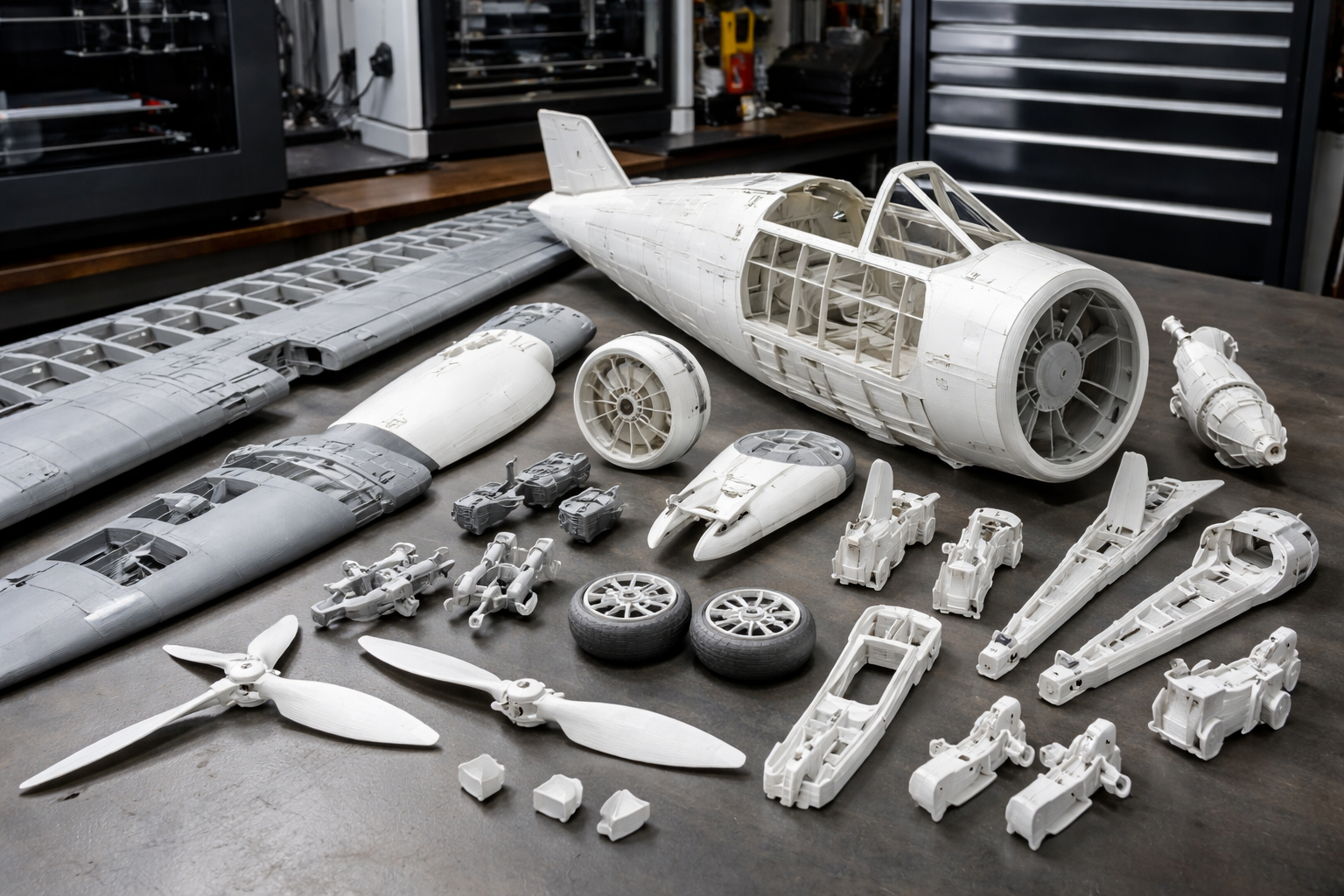
The aerospace industry stands at the forefront of technological innovation, constantly seeking methods to enhance performance, reduce costs, and accelerate development. Central to this evolution is additive manufacturing (AM), more commonly known as 3D printing. This transformative technology is fundamentally changing how aircraft components are designed, produced, and maintained, moving beyond traditional fabrication limits to create superior 3D printing airplane parts.
From the earliest days of its industrial adoption, aerospace recognized the immense potential of 3D printing. The precision and design freedom offered by advanced industrial systems, such as the Farsoon FS350M-4 for high-speed, high-precision applications, enabled engineers to craft intricate geometries previously unattainable. This capability is critical for optimizing components, significantly reducing weight, and consolidating complex assemblies—factors that directly translate to lower fuel consumption, decreased emissions, and enhanced operational efficiency.
The drive for lighter, stronger, and more integrated components propelled major players like Airbus, Boeing, GE Aviation, Rolls-Royce, and Lockheed Martin to integrate flight-ready 3D printed components into their fleets. These range from crucial engine parts like fuel nozzles and turbine blades to intricate ducts and cabin brackets. The ability to print complex, topology-optimized structures, often from specialized metal powders like 718 Nickel Alloy Powder – Aerospace & High-Performance Metal 3D Printing 22 lbs / 10 kg, Aluminum Alloy Powder AlSi10Mg – High-Performance Metal 3D Printing Powder 11 lbs / 5kg, Stainless Steel Powders SS316L | 55.13 lbs / 25 kg, for specific applications, positions additive manufacturing as an indispensable tool in achieving unprecedented levels of design freedom and material efficiency, all while meeting the aerospace sector’s rigorous certification demands.
The aerospace industry stands at the forefront of technological innovation, constantly seeking methods to enhance performance, reduce costs, and accelerate development cycles. At the heart of this revolution is additive manufacturing (AM), commonly known as 3D printing airplane parts. This transformative technology redefines how flight-ready components are conceived, produced, and integrated into aircraft, offering unparalleled advantages in creating lighter, consolidated, and faster-to-produce parts that rigorously adhere to stringent certification demands.
Aerospace was an early adopter of AM, driven by critical imperatives. Even minor reductions in weight yield substantial benefits in fuel burn and emissions, directly impacting operational costs and environmental footprint. Furthermore, AM excels at crafting complex, topology-optimized geometries — designs previously impossible or prohibitively expensive with traditional machining or casting methods. Industry giants such as Airbus, Boeing, GE Aviation, Rolls-Royce, and Lockheed Martin have already integrated 3D printed components into various aircraft systems, from turbine blades and fuel nozzles to ducts and cabin brackets, demonstrating the technology’s maturity and reliability.
Unlocking Aerospace Innovation: Key Benefits
The adoption of additive manufacturing in aerospace is anchored in concrete, measurable advantages that address critical industry challenges.
Weight Reduction and Fuel Efficiency
One of AM’s most significant contributions is its ability to facilitate extreme lightweighting. Through topology optimization, engineers can remove non-load-bearing material from a part while maintaining or even enhancing its structural integrity. This allows for designs that are significantly lighter without compromising strength. A prime example is GE’s 3D-printed LEAP engine fuel nozzle, which is 25% lighter and consolidates 20 separate parts into a single, complex component. This innovation not only reduces weight and cost but also improves overall engine performance and fuel efficiency.
Complex Geometries and Structural Integrity
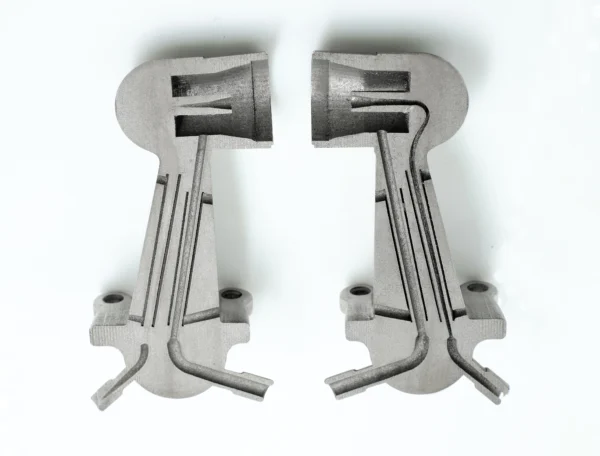
Additive manufacturing empowers designers to create intricate lattice structures, internal cooling channels, and organic shapes that were previously impossible or uneconomical to produce. These complex designs can significantly boost performance and durability by optimizing material distribution, improving thermal management, and avoiding stress concentrations inherent in traditionally manufactured parts.
Part Consolidation
The ability to print complex assemblies as a single unit leads to profound assembly consolidation. This means fewer joints, fasteners, and interfaces, which translates to lower assembly times, reduced potential failure points, and a simpler, more streamlined certification process. NASA’s conceptual work on printing large, integrated wing structures illustrates the potential to dramatically reduce the number of fasteners and crack initiation sites, enhancing both safety and structural efficiency.
Rapid Prototyping and Iteration
For aerospace engineers, the direct conversion from a CAD model to a physical part dramatically shortens development cycles. This capability allows for rapid testing and design refinement, accelerating innovation. The efficiency of rapid prototyping with 3D printing enables faster iteration and validation of designs, bringing new solutions to market more quickly.
Efficient Use of Expensive Materials
Additive manufacturing is a near-net-shape process, meaning it builds parts layer by layer, adding material only where it is needed. This results in significantly less scrap material compared to subtractive machining, especially crucial when working with expensive aerospace-grade materials like titanium and nickel-based superalloys. Furthermore, on-demand manufacturing reduces waste associated with producing and storing obsolete spare parts, leading to more sustainable and cost-effective supply chains.
Core Processes: How 3D Printing Technologies Shape Airplane Parts
Different 3D printing technologies are selected based on the specific material requirements and functional demands of various aircraft components.
Powder Bed Fusion (PBF) for Metals
PBF is a cornerstone technology for producing high-performance metal aerospace parts.
- Selective Laser Melting (SLM) / Laser Powder Bed Fusion (LPBF): These processes use powerful lasers to selectively melt and fuse metallic powders, layer by layer. They are widely employed for manufacturing strong, lightweight components such as titanium brackets, engine mounts, structural fittings, and intricate fuel nozzles. When considering technologies like DMLS, which is a form of LPBF, for high-performance metal parts, understanding comparisons with alternatives like metal binder jetting vs dmls is crucial for material and application suitability.
- Electron Beam Melting (EBM): Utilizing an electron beam in a vacuum, EBM is often chosen for titanium components, where high build temperatures and the vacuum environment offer beneficial material properties and stress relief.
Directed Energy Deposition (DED)
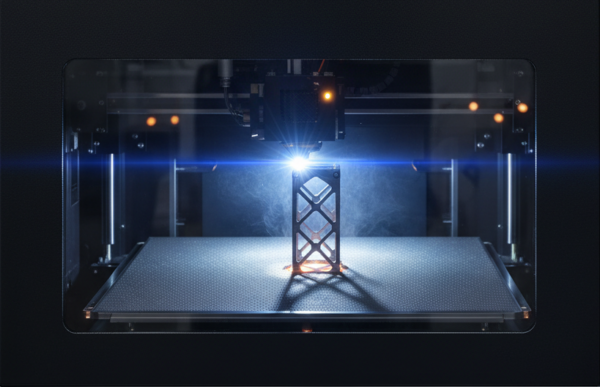
DED processes involve a nozzle that simultaneously deposits and melts material (wire or powder) onto a surface using a laser, electron beam, or plasma arc. This technique is ideal for fabricating larger structural parts, for the repair of high-value components like turbine blades and blisks, and for adding features onto existing parts. DED’s capability for in-situ repair extends the lifespan of costly aerospace hardware, offering significant maintenance and operational benefits.
Polymer AM Processes (Including SLS Prototyping)
For non-metallic components, various polymer additive manufacturing technologies are crucial:
- Selective Laser Sintering (SLS): This process uses a laser to sinter (fuse) polymer powder particles together. Selective Laser Sintering (SLS) 3D printing is extensively used for functional polymer components like ducts, housings, interior parts, and clips. It also serves as a vital tool for pre-production evaluation (known as SLS prototyping), allowing engineers to quickly assess fit, form, and function before committing to final production. An advanced SLS 3D printer can efficiently produce complex, durable parts for various aerospace applications.
- High-Performance Polymers: Materials such as PEEK, PEKK, and ULTEM/PEI, processed via SLS or FDM-style techniques, are critical for applications requiring flame-smoke-toxicity (FST) compliance. These materials are utilized for cabin components, electrical housings, and brackets where high temperature resistance and specific fire ratings are essential.
From Concept to Cockpit: Real-World Applications
Additive manufacturing’s versatility allows it to impact nearly every part of an aircraft, from critical engine components to passenger cabin interiors.
Engine Components
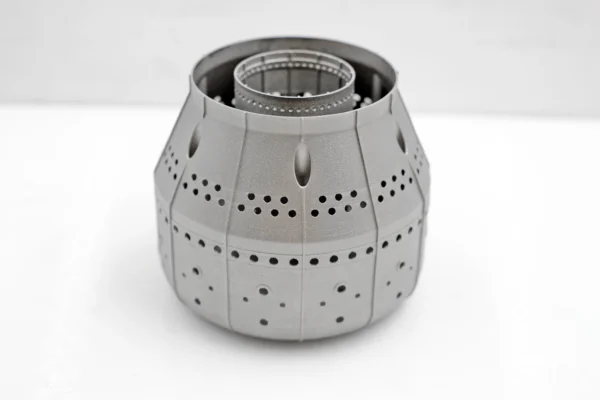
AM has revolutionized the design and production of engine components such as fuel nozzles, turbine blades, stator vanes, swirlers, and combustor hardware. The ability to create intricate internal geometries significantly improves cooling, reduces weight, and enhances emission performance, contributing to more efficient and environmentally friendly propulsion systems.
Structural Brackets & Mounts
Topology-optimized titanium brackets are widely implemented by manufacturers like Airbus. These parts demonstrate substantial weight savings and a reduced part count compared to their traditionally manufactured counterparts, contributing to overall aircraft efficiency.
Air Management & System Ducts
Additive manufacturing allows for the optimization of air ducts, Environmental Control System (ECS) components, and manifolds. These parts can be designed with smoother internal paths and fewer joints, improving airflow efficiency and reducing potential leakage points.
Interior Cabin Parts
For the cabin, AM offers unprecedented flexibility. Seat components, overhead bin fittings, panel clips, cable guides, and lavatory and galley components can be 3D printed. This enables greater customization, cost-effective production of low-volume spares, and flexibility for cabin branding and bespoke interior designs.
Tooling, Jigs, and Fixtures
Beyond flight-critical parts, AM is indispensable for creating lightweight, ergonomic jigs for assembly, maintenance, repair, and overhaul (MRO) operations. Drill guides and alignment fixtures can be rapidly produced on-demand, speeding up production processes, improving accuracy, and reducing manual effort for technicians.
Scaling New Heights: Large-Scale 3D Printing in Aerospace
The aerospace industry is increasingly leveraging large-format additive manufacturing (LFAM) and specialized large scale 3D printing services to produce bigger, more complex parts and tools.
These robust systems are utilized for fabricating tooling, molds, large composite layup tools, big fairings, radomes, interior panels, and even structural demonstrators. The industrial impact of LFAM is profound: it allows for the printing of large tools or parts in a single piece, significantly reducing assembly requirements, improving accuracy, and cutting lead times from months to mere days. This capability also plays a crucial role in mitigating supply-chain bottlenecks, as seen with Airbus, which uses 3D-printed parts to address delays and optimize inventory management.
The integration of industrial-scale printers for producing turbine blades, ducts, structural components, and cabin brackets at major OEMs signifies the transition of AM from niche applications to mainstream production. This level of industrialization is powered by sophisticated machines, including high-speed industrial LFAM 3D printers like the Heron AM HF, capable of rapidly producing large, accurate polymer parts and tooling.
The Technical Revolution: How 3D Printing Transforms Aerospace Manufacturing
Having explored the fundamental advantages of 3D printing airplane parts in making aircraft lighter, stronger, and more efficiently designed, it’s time to delve deeper into the sophisticated technologies and applications driving this revolution. Additive manufacturing (AM) isn’t just about printing; it’s a suite of advanced processes enabling unprecedented design freedom and performance gains across the aerospace sector.
Core Processes: Engineering the Future, Layer by Layer
The “how” of 3D printing airplane parts is as fascinating as the “why.” Industrial AM isn’t a single technology but a diverse set of methods tailored for specific materials and part requirements.
For metal components, Powder Bed Fusion (PBF) reigns supreme. This category includes Selective Laser Melting (SLM), also known as Laser Powder Bed Fusion (LPBF), where powerful lasers selectively melt and fuse fine metal powder layer by layer. This process is critical for producing high-strength, complex parts like titanium brackets, engine mounts, structural fittings, and advanced fuel nozzles. Another PBF variant, Electron Beam Melting (EBM), utilizes an electron beam in a vacuum, often favored for titanium components due to its high build temperatures that can improve material properties.
Beyond PBF, Directed Energy Deposition (DED) technologies employ a focused energy source (laser or electron beam) to melt material as it’s simultaneously fed into the melt pool. This method is highly effective for larger structural components, the repair of high-value parts such as turbine blades and blisks, and for adding complex features onto existing hardware. DED enables in-situ repair, significantly extending the operational life of costly aerospace components, a boon for maintenance, repair, and overhaul (MRO) operations.
When it comes to polymer components, Selective Laser Sintering (SLS) stands out. Unlike melting, SLS uses a laser to sinter (fuse without fully melting) polymer powder, layer by layer. This technology is widely utilized for creating functional polymer components, intricate ducts, specialized housings, interior parts, and clips. It also excels in SLS prototyping, allowing engineers to quickly produce accurate, complex geometries for pre-production evaluation of fit, form, and and functionality. Our comprehensive guide on Selective Laser Sintering 3D Printing further explores this versatile process, while details on optimizing your setup can be found in our discussion on the SLS 3D printer.
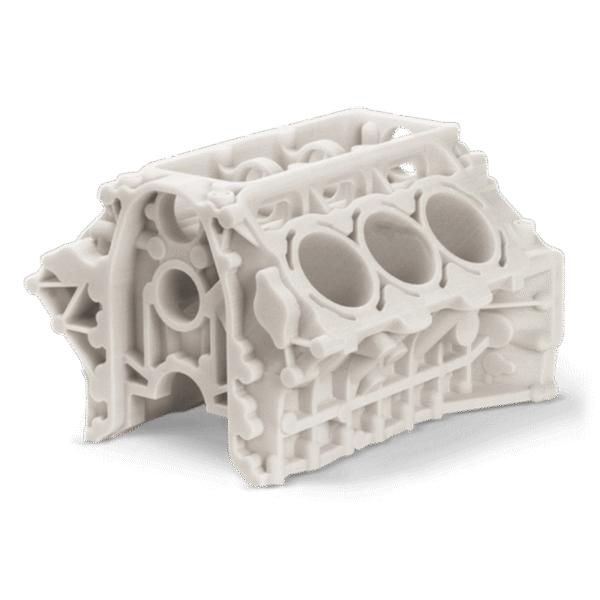
For specialized applications, high-performance polymers like PEEK, PEKK, and ULTEM (PEI) are processed via SLS or FDM-style technologies. These materials are crucial for cabin components, electrical housings, and brackets that demand stringent flame, smoke, and toxicity (FST) compliance, ensuring passenger safety and operational integrity.
From Concept to Cockpit: Real-World Applications Soaring High
The abstract benefits of AM translate into tangible components seen across modern aircraft.
- Engine Components: Perhaps the most impactful application, 3D printing enables the creation of advanced fuel nozzles, turbine blades, stator vanes, swirlers, and combustor hardware. These parts benefit from optimized internal cooling channels and geometry, leading to improved fuel efficiency, reduced emissions, and enhanced engine performance. GE’s LEAP engine fuel nozzle, for instance, consolidated 20 parts into one, achieving a 25% weight reduction.
- Structural Brackets & Mounts: Historically complex and heavy, these components are now prime candidates for topology optimization. Airbus and other OEMs leverage 3D printing to produce lightweight titanium brackets that significantly reduce aircraft weight and part count, streamlining assembly.
- Air Management & System Ducts: Additive manufacturing facilitates the creation of optimized air ducts, environmental control system (ECS) components, and manifolds. These parts can have smoother internal paths and fewer joints, improving airflow efficiency and reducing potential leak points compared to traditionally assembled ducting.
- Interior Cabin Parts: From seat components and overhead bin fittings to panel clips, cable guides, and components for lavatories and galleys, polymer AM offers significant advantages. It allows for rapid customization, on-demand production of low-volume spares, and greater flexibility for cabin branding and design aesthetics.
- Tooling, Jigs, and Fixtures: Beyond flight-critical parts, 3D printing transforms the manufacturing floor. Lightweight, ergonomic jigs for assembly, drill guides, and alignment fixtures can be rapidly produced. These custom tools accelerate production cycles and reduce manual effort, improving efficiency in both manufacturing and MRO operations.
Each of these applications underscores how AM directly contributes to lightweighting, enhanced performance, improved maintainability, customization, and greater supply-chain resilience.
Scaling New Heights: The Industrialization of Large-Scale 3D Printing
As the technology matures, large-scale 3D printing service providers are emerging as critical partners for aerospace. Large-Format Additive Manufacturing (LFAM) systems are now capable of producing substantial components, from tooling and molds for composite layup to large fairings, radomes, interior panels, and even structural demonstrators.
The industrial impact is profound. The ability to print massive tools or parts in a single piece drastically reduces assembly time, improves geometric accuracy, and can cut lead times from months to mere days. This capability is vital for mitigating supply-chain bottlenecks, as seen with Airbus using 3D-printed parts to address delays and minimize inventory. Industrial-scale printers are no longer niche; they are strategically deployed for producing turbine blades, ducts, structural components, and cabin brackets across major aerospace original equipment manufacturers (OEMs). For those seeking substantial component manufacturing, exploring a large scale 3D printing service is a crucial step toward leveraging these capabilities.
Materials & Qualification: Forging Flight-Ready 3D Printed Parts
The journey from a digital design to a certified, flight-ready component is rigorous, with materials and qualification being paramount. The choice of material is dictated by the part’s function and environmental demands.
- Titanium alloys, particularly Ti-6Al-4V, are favored for their exceptional strength-to-weight ratio and corrosion resistance, finding extensive use in brackets, structural components, and engine parts.
- Nickel-based superalloys like Inconel are indispensable for the extreme temperatures of hot-section engine parts, where traditional manufacturing struggles.
- Aluminum alloys are also being qualified for structural and interior applications where their properties align with requirements.
- For polymer applications, high-performance polymers such as PEEK, PEKK, and ULTEM/PEI are selected for their flame-retardant, high-temperature capabilities in cabin and system components.
The qualification and certification process for aerospace AM parts are exceptionally stringent. It demands comprehensive material allowables data, rigorous process qualification, precise machine calibration, and extensive part-level testing encompassing fatigue, creep, and thermal cycling. Compliance with regulatory bodies like the FAA (Federal Aviation Administration) and EASA (European Union Aviation Safety Agency) is non-negotiable for flight-critical components. Furthermore, parts must meet stringent thresholds for traceability, repeatability, and quality assurance, often exceeding those of traditional manufacturing methods. This ecosystem is bolstered by advanced techniques like in-situ monitoring, non-destructive testing (NDT), and detailed process control, ensuring every layer meets the highest standards.
Beyond Aerospace: Additive Manufacturing’s Wider Horizons
Aerospace has often served as the proving ground for advanced technologies, and additive manufacturing is no exception. Its success in aviation is now a powerful reference case for other demanding industries.
The additive manufacturing automotive sector, for example, is rapidly adopting AM principles. Vehicle manufacturers leverage 3D printing for applications strikingly similar to aerospace, including lightweight brackets, optimized fluid manifolds, custom ducts, and components for motorsport. Race teams, in particular, utilize 3D printable car parts to produce short-run performance parts, bespoke interior customization elements, and complex cooling or exhaust components that provide a competitive edge. The shared themes are clear: sophisticated material science, Design for Additive Manufacturing (DfAM) principles, topology optimization, and the pursuit of supply-chain agility are the foundational building blocks being transferred from aerospace to automotive and beyond.
Other sectors like defense, space exploration, energy, and industrial machinery are similarly benefiting from AM’s capabilities to produce complex, high-performance, and lightweight components, often with significantly reduced lead times.
The Next Frontier: Future Trends in Aviation AM
The evolution of additive manufacturing in aviation is far from complete, with exciting advancements on the horizon.
- Multi-material and Functionally Graded Structures: Future printers will increasingly offer the ability to print different alloys or polymers within a single build. This allows for the creation of parts with tailored stiffness, weight, and thermal properties that vary throughout the component, opening new frontiers for integrated functionality.
- In-situ Monitoring & Closed-Loop Control: Real-time melt-pool monitoring and layer-wise inspection using sensors and AI are becoming standard. This closed-loop control will lead to higher confidence in part quality, faster certification times, and automated defect detection and correction during the build process.
- Advances in Post-Processing: Automation will play a critical role in streamlining the post-processing chain—from heat treatment and Hot Isostatic Pressing (HIP) to support removal, machining, and surface finishing. This will drive down the cost per part and ensure consistent, repeatable quality essential for high-volume production.
- Digital Thread & MRO: The concept of a fully digital workflow, from initial design through production to maintenance, is gaining traction. This “digital thread” will enable distributed manufacturing of certified spares on demand, allowing parts to be printed closer to where aircraft are operated, drastically reducing lead times and logistical challenges for MRO.
- Broader Adoption: Expect a significant increase in AM’s penetration across the entire aircraft lifecycle. This means more widespread use not just for niche parts or prototypes, but for mainstream production parts, advanced tooling, and robust spare parts inventories, fundamentally altering how aircraft are designed, built, and maintained.
Conclusion
The journey through the capabilities of 3D printing airplane parts reveals a transformative force in modern aviation. From engine components to intricate cabin elements, additive manufacturing consistently delivers on the promise of lightweight, robust, and topology-optimized designs. It enables unprecedented part consolidation, leading to simplified assemblies, faster development cycles, and more resilient supply chains that adapt to dynamic industry demands.
As materials science progresses and advanced processes become increasingly sophisticated, the integration of 3D printing will be fundamental to achieving critical aviation objectives. This includes accelerating decarbonization efforts through fuel-efficient designs, ensuring cost-effective fleet support, and unlocking entirely new aircraft architectures previously deemed impossible.
So, the next time you witness a commercial jet preparing for takeoff, understand that it represents more than just a marvel of engineering; it embodies the future. Many of its critical components likely began as a digital design, brought to life layer by layer through additive manufacturing. We are truly charting a new course, flying into a future built one precisely printed part at a time.
Frequently asked questions
What is 3D printing (Additive Manufacturing) in aviation?
3D printing, also known as Additive Manufacturing (AM), is a revolutionary process where aircraft components are built layer by layer from digital 3D designs. Unlike traditional manufacturing which removes material, AM adds it, allowing for the creation of incredibly complex, lightweight, and highly optimized parts that would be impossible or too expensive to produce otherwise.
What are the key benefits of using 3D printing for airplane parts?
The main advantages are significant weight reduction, which directly translates to fuel savings and lower emissions. It also enables the creation of complex geometries like internal lattice structures or cooling channels, part consolidation (merging multiple parts into one stronger component), and rapid prototyping for faster design iterations. This speeds up development and improves overall aircraft performance.
Which 3D printing technologies are commonly used to create flight-ready airplane parts?
For metal components that require high strength and temperature resistance, Powder Bed Fusion (SLM/LPBF, EBM) is widely used for engine parts, brackets, and structural elements. For polymer components, such as interior parts, ducts, or functional prototypes, Selective Laser Sintering (SLS) and FDM-style processes are common. High-precision Stereolithography (SLA) printers, like the Nexa3D NXE400, are also gaining traction for producing highly detailed and functional polymer parts with advanced resins.
What types of materials are qualified for 3D printed airplane parts?
Aerospace-grade materials for AM include robust titanium alloys (e.g., Ti-6Al-4V) for structural parts, nickel-based superalloys (e.g., Inconel) for extreme-temperature engine components, and aluminum alloys for some structural applications. For cabin interiors and system components, high-performance polymers such as PEEK, PEKK, and ULTEM/PEI are used for their flame-retardant and high-temperature properties.
How are 3D printed parts for aircraft certified for flight safety?
Certification is a rigorous and comprehensive process. It involves extensive material characterization, process qualification, machine calibration, and exhaustive part-level testing. Every part must demonstrate consistent mechanical properties under various conditions (fatigue, creep, thermal cycling) and meet the stringent regulatory standards set by bodies like the FAA and EASA. This ensures unparalleled traceability, repeatability, and quality assurance.
Can 3D printing be used for large aircraft components?
Yes, large-scale 3D printing services are increasingly employed in aerospace. While entire wings are still future concepts, large-format additive manufacturing is routinely used for creating massive composite layup tools, molds, assembly jigs, and even some non-critical structural demonstrators. This capability helps in reducing lead times, consolidating large assemblies, and beating supply-chain bottlenecks.
How does 3D printing support the maintenance, repair, and overhaul (MRO) of existing aircraft?
AM significantly enhances MRO operations by enabling the on-demand production of obsolete or difficult-to-source spare parts. This reduces inventory holding costs, minimizes logistical delays, and keeps aircraft flying longer. Additionally, technologies like Directed Energy Deposition (DED) can be used for in-situ repair of high-value components, such as turbine blades, extending their operational lifespan.
What impact does 3D printing in aviation have on other demanding industries like automotive?
Aerospace often serves as a proving ground for advanced AM technologies, with innovations rapidly transferring to other sectors. The emphasis on lightweighting, complex geometries, and efficient material use developed for aircraft directly benefits the additive manufacturing automotive industry. This leads to lighter, more fuel-efficient vehicles, especially in high-performance and motorsport applications, where 3D printable car parts are becoming essential for custom, optimized components. The ability to quickly produce tooling patterns, for example, using resins like https://additiveplus.com/product/ks608a-uv-sla-resin/ also provides benefits across various manufacturing sectors.
What does the future hold for 3D printing in the aerospace industry?
The future is bright and dynamic. We can expect advancements in multi-material and functionally graded structures, where different materials are printed together for tailored properties. Enhanced in-situ monitoring and closed-loop control will ensure even higher quality and faster certification. Furthermore, the development of a fully digital "thread" from design to maintenance will facilitate distributed manufacturing of certified spare parts globally, enabling even more radical and sustainable aircraft architectures.
Have a question or a project? Let’s talk.
Tell us what you need — a real applications engineer replies within 24 hours. NDA on request, no sales script.