
Introduction
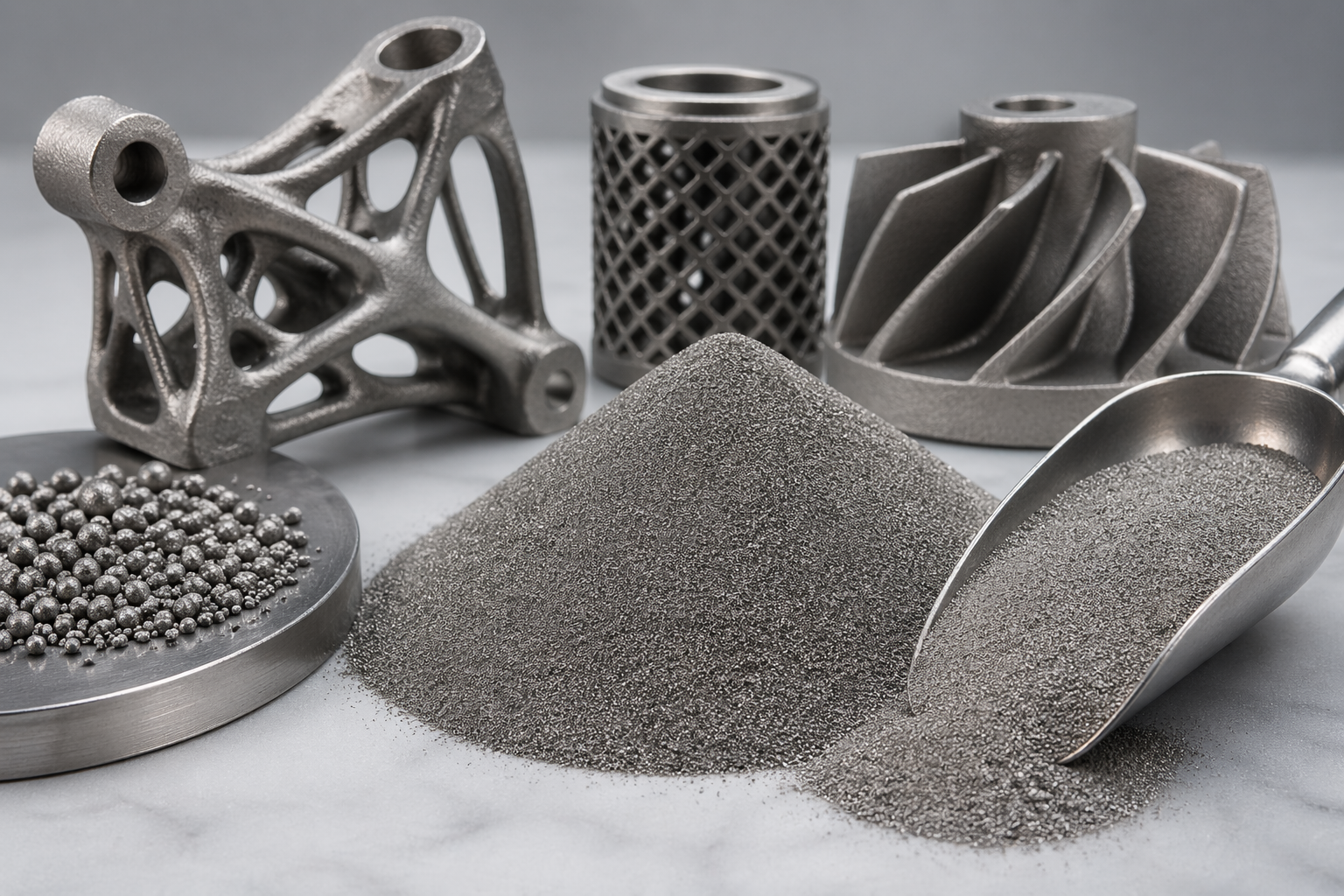
Metal additive manufacturing is rapidly reshaping how modern industries design and produce functional parts. By enabling the direct fabrication of highly complex geometries that would be difficult or impossible to achieve with traditional methods, it opens up new levels of design freedom, efficiency, and performance across sectors such as aerospace, automotive, medical, and industrial manufacturing.
Within the wide range of available materials, stainless steel powder has established itself as one of the most dependable and versatile choices in metal 3D printing. It combines a strong mechanical profile with excellent corrosion resistance and good thermal stability, making it suitable for both demanding engineering applications and cost-effective production workflows.
One of the key advantages of stainless steel is its balance between performance and accessibility. It delivers high strength and durability while remaining relatively affordable compared to many specialized metal alloys. This makes it an ideal material not only for rapid prototyping but also for producing end-use parts that must withstand real-world operating conditions over time.
As a result, stainless steel powders are widely used for manufacturing functional components, industrial tooling, custom fixtures, and parts that require both precision and long-term reliability. Its adaptability across different 3D printing technologies further reinforces its role as a foundational material in metal additive manufacturing.
To explore a broader selection of materials for different applications and performance requirements, you can browse the full range of metal powders for 3D printing here.
What Is Stainless Steel Powder for 3D Printing?
Stainless steel powder is a finely atomized metallic material specifically engineered for metal additive manufacturing processes such as Laser Powder Bed Fusion (LPBF), Electron Beam Melting (EBM), and Direct Energy Deposition (DED). It is one of the most widely used material groups in industrial 3D printing due to its strong mechanical performance, corrosion resistance, and process stability.
Unlike conventional bulk stainless steel, the powder form is designed with very tight control over particle morphology and distribution, which is critical for achieving consistent and high-quality printed parts. Each particle acts as a building block in the layer-by-layer manufacturing process, meaning powder quality directly influences part density, surface finish, and mechanical strength.
To ensure reliable performance in additive manufacturing systems, stainless steel powders are typically produced using advanced atomization technologies. These processes transform molten metal into fine droplets that rapidly solidify into powder particles with highly controlled characteristics.
Key quality features of stainless steel powder include:
- High sphericity – spherical particles improve packing density and reduce friction during spreading
- Consistent particle size distribution – ensures uniform melting behavior and stable printing results
- Excellent flowability – allows smooth and even layering in powder bed systems
- High purity and controlled chemistry – essential for achieving repeatable mechanical properties
These characteristics make stainless steel powder suitable for producing functional prototypes, industrial tooling, end-use components, and parts exposed to mechanical stress or corrosive environments.
For manufacturers aiming to take greater control over their material production and quality consistency, advanced powder production systems provide a significant advantage. For example, next-generation technologies such as the ATO SPARQ AI-powered ultrasonic metal powder atomizer enable controlled, high-precision powder production with improved particle uniformity and process stability. This type of system supports on-demand powder manufacturing, helping reduce dependency on external suppliers and allowing tighter optimization of powder characteristics for specific applications.
By combining material engineering with advanced atomization technology, manufacturers can achieve higher repeatability, improved performance, and greater flexibility in metal additive manufacturing workflows.
Common Types of Stainless Steel Powders
Stainless steel powders are among the most widely used materials in metal additive manufacturing due to their balance of mechanical strength, corrosion resistance, and versatility across industries. Below is a more detailed overview of the most common grades used in 3D printing.
316L Stainless Steel
316L is one of the most popular stainless steel powders in metal 3D printing due to its excellent corrosion resistance, high ductility, and strong performance in harsh environments. It is particularly suitable for applications exposed to moisture, chemicals, or saltwater conditions.
This material is widely used in medical devices, marine components, chemical processing equipment, and food-grade applications, where cleanliness and resistance to corrosion are critical.
316L also offers good printability in LPBF processes, stable mechanical properties, and consistent surface quality, making it a reliable choice for both prototyping and end-use parts.
Popular options include:
- SS316L Stainless Steel Powder for Metal 3D Printing (LPBF Compatible, 1 kg / 2.2 lbs)
- 316L Stainless Steel Powder for Metal 3D Printing (LPBF / EBM Compatible, 10 kg / 22 lbs)
- A-Powder SS316L Stainless Steel Powder for Metal 3D Printing (LPBF Compatible, 10 kg / 22 lbs)
17-4 PH Stainless Steel
17-4 PH is a precipitation-hardened stainless steel known for its combination of high strength, hardness, and moderate corrosion resistance. After heat treatment, it achieves excellent mechanical performance, making it ideal for demanding structural applications.
It is commonly used in aerospace components, tooling, mechanical parts, industrial machinery, and functional prototypes where strength and dimensional stability are essential.
In additive manufacturing, 17-4 PH is valued for its ability to produce high-performance, load-bearing parts with post-processing flexibility through heat treatment.
Explore available options:
- 17-4PH Stainless Steel Powder for Metal 3D Printing (LPBF Compatible)
- 17-4PH Stainless Steel Alloy Powder (LPBF Compatible, 1 kg / 2.2 lbs)
- 17-4PH Stainless Steel Powder (LPBF Compatible, 10 kg / 22 lbs)
- A-Powder 17-4PH Stainless Steel Alloy Powder (LPBF Compatible, 10 kg / 22 lbs)
- 17-4 AR Stainless Steel Powder for Metal 3D Printing (LPBF Compatible, 10 kg / 22 lbs)
15-5 Stainless Steel
15-5 stainless steel is similar to 17-4 PH but offers improved toughness and better transverse mechanical properties, especially in demanding structural applications.
It is commonly selected for aerospace parts, precision engineering components, and high-stress industrial applications, where a combination of strength and toughness is required.
In metal 3D printing, 15-5 stainless steel provides excellent dimensional stability and reliable performance after heat treatment, making it suitable for functional end-use parts.
Available option:
304 Stainless Steel
304 stainless steel is a cost-effective, general-purpose alloy known for its good corrosion resistance and ease of processing. It is one of the most widely used stainless steels across industries.
In additive manufacturing, 304 is often used for functional prototypes, industrial fixtures, consumer products, and non-critical components, where extreme mechanical performance is not required but reliability and corrosion resistance are important.
It is especially suitable for applications requiring good weldability and balanced mechanical properties at a lower material cost.
Available option:
Key Properties of Stainless Steel Powder
Stainless steel powders are among the most widely used materials in metal additive manufacturing because they offer a balanced combination of strength, corrosion resistance, and process stability. These properties make them suitable for both prototyping and production-grade parts across multiple industries, including aerospace, medical, automotive, and industrial manufacturing.
Mechanical Strength
Stainless steel powders provide reliable mechanical strength, hardness, and durability, making them suitable for a wide range of structural and functional components.
Depending on the alloy grade (such as 316L, 17-4 PH, or 15-5), the final printed parts can be optimized for:
- High tensile strength for load-bearing applications
- Good ductility for impact resistance
- Improved hardness after heat treatment (especially in precipitation-hardened grades)
This makes stainless steel a strong choice for functional parts, tooling, brackets, housings, and mechanical assemblies where long-term performance is required.
Corrosion Resistance
One of the defining advantages of stainless steel powders is their excellent resistance to corrosion, oxidation, and chemical exposure.
This makes them ideal for environments such as:
- Marine and offshore applications (saltwater exposure)
- Medical and healthcare equipment (sterilization and hygiene requirements)
- Chemical processing systems (acidic or reactive environments)
- Outdoor industrial installations (weather exposure)
Grades like 316L are especially valued for their superior corrosion resistance, making them one of the most commonly used powders in metal 3D printing.
Thermal Stability
Stainless steel powders maintain stable mechanical properties under moderate to elevated temperatures, which is essential for many industrial applications.
While not designed for extreme heat environments like nickel-based superalloys, stainless steels perform well in:
- Engine components with moderate thermal loads
- Industrial machinery exposed to heat cycles
- Functional prototypes tested under real operating conditions
This thermal stability ensures consistent performance without significant deformation or degradation in typical industrial temperature ranges.
Powder Quality (Flowability & Packing Density)
In metal additive manufacturing, powder quality is critical for achieving reliable and repeatable results. High-quality stainless steel powders are engineered for:
- Excellent flowability → ensures smooth and uniform powder spreading during LPBF processes
- High packing density → reduces porosity and improves part density
- Controlled particle size distribution → enhances printing stability and surface finish
- Low contamination levels → improves mechanical performance and consistency
These characteristics directly influence build quality, dimensional accuracy, and final part integrity, making powder selection a key factor in production success.
When to Consider Alternative Materials
Although stainless steel is highly versatile, some applications require higher temperature resistance, superior strength-to-weight ratio, or enhanced mechanical performance under extreme conditions. In such cases, alternative materials like nickel-based alloys or titanium alloys are more suitable.
Nickel-Based Alloys (High-Temperature Performance)
Nickel alloys such as IN625 and IN718 are preferred for applications that require exceptional heat resistance, oxidation resistance, and creep strength.
They are commonly used in:
- Jet engines and turbine components
- High-temperature industrial systems
- Aerospace structural parts exposed to extreme environments
Examples:
- IN625 Nickel Alloy Powder for Metal 3D Printing (LPBF / EBM / DED Compatible, 10 kg / 22 lbs)
- IN718 Nickel Alloy Powder for Metal 3D Printing (LPBF / EBM / DED Compatible, 10 kg / 22 lbs)
Titanium Alloys (Lightweight + High Strength)
Titanium alloys like Ti64 (Ti-6Al-4V) are chosen when high strength-to-weight ratio and corrosion resistance combined with low density are required.
They are widely used in:
- Aerospace and aviation structures
- Medical implants and prosthetics
- High-performance automotive components
Example:
3D Printing Technologies Compatible with Stainless Steel
Stainless steel powders are widely used across modern metal additive manufacturing because they are compatible with several advanced 3D printing technologies. Each process uses a different energy source and deposition method, which directly influences part accuracy, mechanical properties, surface quality, and production efficiency.
The choice of technology depends on the application requirements—whether the goal is high-resolution prototypes, functional end-use parts, or large-scale industrial components.
LPBF (Laser Powder Bed Fusion)
LPBF is one of the most precise and widely adopted metal 3D printing technologies for stainless steel. In this process, a high-powered laser selectively melts thin layers of stainless steel powder spread across a build platform.
This technology is especially valued for:
- Extremely high dimensional accuracy
- Excellent surface finish compared to other metal AM methods
- Ability to produce complex geometries and fine details
- High repeatability for industrial production
Stainless steel powders used in LPBF are typically engineered for optimal flowability, controlled particle size distribution, and high sphericity. These characteristics ensure smooth recoating, stable melting behavior, and consistent part quality across builds.
LPBF is commonly used in aerospace components, medical devices, tooling, and high-precision engineering applications.
EBM (Electron Beam Melting)
EBM uses a high-energy electron beam instead of a laser to melt metal powder in a vacuum environment. This makes it particularly suitable for materials that benefit from high-temperature processing and reduced oxidation risks.
Key advantages of EBM include:
- High energy efficiency for dense metal parts
- Reduced residual stress due to elevated build temperatures
- Excellent performance for large, robust components
- Ideal for aerospace and biomedical applications
Stainless steel powders used in EBM must maintain stable behavior under vacuum conditions and elevated temperatures, ensuring consistent melting and solidification throughout the build process.
DED (Directed Energy Deposition)
DED is a more flexible metal additive manufacturing process where stainless steel powder (or wire) is fed directly into a focused energy source such as a laser, electron beam, or plasma arc. The material is melted and deposited simultaneously to build or repair parts.
This technology is commonly used for:
- Repairing high-value industrial components
- Adding features to existing parts
- Producing large-scale structures
- Hybrid manufacturing applications (combining CNC + AM)
DED is less focused on fine detail and more on material deposition rate and structural performance, making it ideal for heavy-duty industrial use cases.
Material Optimization for LPBF Systems
While stainless steel powders are compatible with multiple technologies, a significant portion of commercially available powders today are specifically optimized for LPBF systems. This is due to LPBF’s high demand for precision and repeatability.
Optimized powders typically feature:
- Tight particle size distribution for uniform layering
- High sphericity for improved flowability and recoating
- Controlled chemical composition for stable melting behavior
- Low porosity to ensure dense final parts
These characteristics help achieve consistent part quality, reduced defects, and improved mechanical performance, especially in production environments where repeatability is critical.
Applications of Stainless Steel in 3D Printing
Stainless steel powders are widely used in metal additive manufacturing due to their combination of strength, corrosion resistance, and cost efficiency. These properties make them suitable for both prototyping and end-use production across multiple high-demand industries.
Aerospace
In the aerospace industry, stainless steel is commonly used for structural components, brackets, housings, and functional prototypes, where moderate strength and corrosion resistance are required along with design flexibility.
It is especially valuable for non-extreme temperature applications where weight optimization and manufacturability of complex geometries are important.
However, for higher temperature environments and extreme mechanical stress conditions, nickel-based superalloys are often preferred due to their superior thermal stability and creep resistance.
A commonly used alternative is:
IN718 is widely used in jet engines, turbine components, and high-temperature aerospace parts where stainless steel would not meet performance requirements.
Medical
Stainless steel plays a significant role in the medical industry due to its biocompatibility, corrosion resistance, and ease of sterilization. It is commonly used for:
- Surgical instruments
- Orthopedic tools
- Medical device housings
- General hospital equipment
Its durability and hygiene properties make it a reliable material for reusable medical tools and non-implant-grade components.
For more demanding medical applications, other advanced materials are often used depending on performance requirements:
Cobalt Chrome Alloys
Cobalt chrome is widely used for high-wear, high-strength medical implants such as dental frameworks and orthopedic components.
Titanium Alloys (Ti64 Grade 23 ELI)
Titanium is a preferred material for long-term implants and bio-integrated components due to its lightweight nature and excellent biocompatibility.
Industrial Tooling
In industrial manufacturing, stainless steel is widely used for jigs, fixtures, molds, tooling inserts, and production aids. Its strength, wear resistance, and cost-effectiveness make it ideal for both prototyping and production environments.
Additive manufacturing enables the production of complex tooling geometries, internal cooling channels, and lightweight structures, improving efficiency and reducing lead times compared to traditional machining.
For higher hardness, wear resistance, or tool-grade performance, alternative materials are commonly used:
H13 Tool Steel
H13 is a hot-work tool steel known for its excellent thermal fatigue resistance, making it ideal for dies and molds.
M300 Maraging Steel
M300 offers exceptional hardness and strength after heat treatment, making it ideal for high-performance tooling and injection molds.
Automotive & Manufacturing
In the automotive and general manufacturing sectors, stainless steel is widely used for functional parts, housings, exhaust components, brackets, and custom production tooling.
Its key advantages include:
- Ability to produce complex geometries with reduced assembly steps
- Good balance of strength, durability, and corrosion resistance
- Cost-effective solution for medium-performance functional parts
- Fast iteration for prototyping and design validation
Additive manufacturing with stainless steel enables rapid production of end-use components, helping manufacturers reduce lead times, optimize part consolidation, and improve overall design flexibility.
Advantages of Stainless Steel Powder
Stainless steel powders are one of the most established materials in metal additive manufacturing, offering a balanced combination of mechanical performance, process reliability, and cost efficiency. This makes them a practical choice across industries ranging from aerospace and automotive to medical and general industrial manufacturing.
Excellent Strength-to-Cost Ratio
One of the key advantages of stainless steel powders is their strong mechanical performance relative to their cost. While not as expensive as titanium or nickel-based superalloys, stainless steel still delivers reliable structural integrity and durability.
This balance makes it highly suitable for:
- Functional prototypes that must withstand real testing conditions
- Medium-load structural parts
- Tooling components such as jigs and fixtures
- Cost-efficient end-use production parts
Because of this combination of affordability and performance, stainless steel is often considered a baseline material in industrial metal 3D printing.
High Corrosion Resistance
Stainless steel powders provide excellent resistance to corrosion, oxidation, and chemical exposure, which is essential for parts operating in demanding environments.
This property is especially important in applications such as:
- Marine and offshore equipment exposed to saltwater
- Chemical processing systems handling aggressive substances
- Medical and laboratory environments requiring hygiene and sterilization
- Outdoor industrial components exposed to weather conditions
Grades like 316L are particularly valued for their ability to maintain long-term durability without significant surface degradation, even in harsh environments.
Wide Availability of Grades
Stainless steel is available in a broad range of alloy grades, allowing engineers to select materials based on specific performance requirements.
Common grades used in additive manufacturing include:
- 316L – superior corrosion resistance and general-purpose use
- 17-4 PH – high strength and hardness after heat treatment
- 15-5 PH – improved toughness and mechanical stability
- 304 – cost-effective, widely used general stainless steel
This variety gives manufacturers the flexibility to optimize material selection for strength, corrosion resistance, or cost efficiency depending on the application.
Compatibility with Multiple 3D Printing Technologies
Stainless steel powders are compatible with several major metal additive manufacturing technologies, including:
- LPBF (Laser Powder Bed Fusion)
- EBM (Electron Beam Melting)
- DED (Directed Energy Deposition)
This multi-process compatibility provides significant advantages:
- Flexibility in production methods
- Easy integration into different manufacturing setups
- Scalability from prototyping to full production
- Consistent performance across various machine platforms
As a result, stainless steel is widely adopted in both research environments and industrial-scale manufacturing facilities.
Ideal for Both Prototyping and Production
Stainless steel powders are uniquely suited for use throughout the entire product lifecycle, from early-stage design validation to final production.
They are commonly used for:
- Functional prototypes for testing and iteration
- Engineering validation parts
- Low- to mid-volume production runs
- Replacement and spare components
Their combination of reliable printability, mechanical stability, and consistent material behavior ensures predictable results, making them a dependable choice for scalable manufacturing workflows.
Stainless Steel vs Other Metal Powders
When selecting a material for metal 3D printing, the choice depends on the required balance between strength, weight, temperature resistance, cost, and wear performance. Stainless steel is often used as a baseline material due to its versatility, but other metal powders may be more suitable for specialized applications.
Stainless Steel
Stainless steel powders offer a well-balanced combination of strength, corrosion resistance, and affordability, making them one of the most commonly used materials in additive manufacturing.
They are ideal for:
- Functional prototypes
- Industrial tooling and fixtures
- General-purpose structural parts
- Cost-efficient end-use components
However, stainless steel is typically not the best option for extreme lightweight or ultra-high-temperature applications, where specialized alloys perform better.
Aluminum (AlSi10Mg)
Aluminum alloys such as AlSi10Mg are widely used in applications where weight reduction is a critical requirement. They provide good thermal conductivity and decent mechanical properties, but generally lower strength compared to stainless steel.
Key advantages:
- Very lightweight
- Good thermal performance
- Suitable for aerospace and automotive structures
Typical use cases:
- Lightweight housings
- Heat exchangers
- Aerospace brackets and components
Example material:
Titanium (Ti64)
Titanium alloys such as Ti6Al4V (Ti64) offer an excellent strength-to-weight ratio combined with superior corrosion resistance. They are significantly stronger than aluminum while remaining lightweight, but come at a higher cost.
Key advantages:
- High strength-to-weight ratio
- Excellent corrosion resistance
- Biocompatibility
Typical use cases:
- Aerospace structural parts
- Medical implants
- High-performance automotive components
Example material:
Nickel Alloys (IN625, IN718, 18Ni300)
Nickel-based alloys are designed for extreme environments, especially where high temperatures, oxidation resistance, and creep strength are required.
They are significantly more performance-focused than stainless steel, but also more expensive and often more complex to process.
Key advantages:
- Excellent high-temperature stability
- Superior oxidation and corrosion resistance
- High mechanical strength under stress
Typical use cases:
- Jet engines and turbine components
- High-temperature industrial systems
- Aerospace propulsion parts
Example materials:
- A-Powder INCONEL 718 Nickel Superalloy Powder for Metal 3D Printing (LPBF Compatible, 10 kg / 22 lbs)
- 18Ni300 Nickel Alloy Powder for Metal 3D Printing (LPBF Compatible, 10 kg / 22 lbs)
Cobalt Chrome (CoCrMo)
Cobalt chrome alloys are known for their exceptional wear resistance, hardness, and biocompatibility, making them ideal for demanding applications where durability is critical.
Key advantages:
- Extremely high wear resistance
- Excellent fatigue strength
- Biocompatible for medical use
Typical use cases:
- Dental frameworks
- Orthopedic implants
- High-wear industrial components
Example material:
How to Choose the Right Stainless Steel Powder
When selecting a powder, consider:
- Application requirements
- Mechanical properties needed
- Printer compatibility
- Budget
For flexibility, choose between:
- Small batch (1 kg) options for testing
- Larger quantities (10 kg) for production
Browse available stainless steel powders here:
Additive Plus – Browse stainless steel powders
Powder Quality & Production Considerations
High-quality powder is critical for successful prints. Key factors include:
- Particle size consistency
- Sphericity
- Low contamination levels
Advanced atomization technologies, such as the ATO SPARQ system, enable manufacturers to produce premium powders with consistent quality:
https://additiveplus.com/product/ato-sparq-ai-powered-ultrasonic-metal-powder-atomizer/
Future Trends in Stainless Steel 3D Printing
- Improved powder consistency through AI-driven production
- Expansion of alloy options
- Increased adoption in industrial manufacturing
As the technology evolves, stainless steel will continue to play a critical role in scalable additive manufacturing.
Conclusion
Stainless steel powder remains one of the most versatile and cost-effective materials in metal 3D printing. With a wide range of grades, excellent mechanical properties, and compatibility with leading technologies, it is a reliable choice for industries ranging from aerospace to manufacturing.
Frequently asked questions
What is stainless steel powder for 3D printing used for?
Stainless steel powder is used in metal additive manufacturing to produce durable, corrosion-resistant, and high-performance parts. In Los Angeles and other major industrial hubs, it is widely used for aerospace components, medical tools, automotive parts, and industrial prototypes created through technologies like LPBF, EBM, and DED.
Why is stainless steel powder popular in Los Angeles for 3D printing?
In Los Angeles, stainless steel powder is popular because the region has strong aerospace, medical, and entertainment manufacturing industries. These sectors require reliable, cost-effective, and scalable materials for producing functional metal parts with high precision and durability.
What are the main types of stainless steel powders used in 3D printing?
The most commonly used stainless steel powders include 316L, 17-4 PH, 15-5, and 304. Each grade is selected based on application requirements. In Los Angeles manufacturing environments, 316L is often used for corrosion resistance, while 17-4 PH is preferred for high-strength industrial applications.
What makes 316L stainless steel powder important?
316L stainless steel powder is important because of its excellent corrosion resistance and biocompatibility. It is widely used in medical and marine applications and is also popular in Los Angeles-based prototyping labs that require high-performance and chemically resistant materials.
Why is 17-4 PH stainless steel widely used?
17-4 PH stainless steel is widely used because it provides a strong combination of hardness, strength, and corrosion resistance. In Los Angeles aerospace and tooling industries, it is commonly used for structural components and functional prototypes.
What is 15-5 stainless steel powder used for?
15-5 stainless steel powder is used in applications that require improved toughness and mechanical stability. It is often selected in industrial environments where parts are exposed to stress, vibration, or mechanical load.
What is 304 stainless steel powder used for?
304 stainless steel powder is used for general-purpose applications where cost efficiency and moderate corrosion resistance are required. It is commonly used in non-critical industrial components and prototypes.
How is stainless steel powder produced?
Stainless steel powder is produced through atomization processes that break molten metal into fine particles. These processes ensure high sphericity, uniform particle size distribution, and good flowability, which are essential for consistent 3D printing performance in professional manufacturing environments like those in Los Angeles.
What is LPBF in stainless steel 3D printing?
LPBF, or Laser Powder Bed Fusion, is a 3D printing process that uses a laser to selectively melt layers of stainless steel powder. It is widely used in Los Angeles manufacturing due to its high precision and ability to produce complex geometries.
What is EBM in metal 3D printing?
EBM, or Electron Beam Melting, is a process that uses an electron beam instead of a laser to fuse metal powder. It is commonly used for high-performance applications where deep fusion and strong mechanical properties are required.
What is DED in stainless steel 3D printing?
DED, or Directed Energy Deposition, is a metal 3D printing process where material is deposited and melted simultaneously. It is often used for repairing or adding features to existing metal parts in industrial applications.
What industries in Los Angeles use stainless steel powder?
In Los Angeles, stainless steel powder is used in aerospace manufacturing, medical device production, automotive prototyping, and industrial tooling. The region’s strong engineering ecosystem drives high demand for reliable metal powders.
What are the advantages of stainless steel powder?
Stainless steel powder offers excellent strength, corrosion resistance, and thermal stability. It is also cost-effective compared to advanced alloys, making it a preferred material for both prototyping and production in Los Angeles manufacturing facilities.
Is stainless steel powder good for aerospace applications?
Yes, stainless steel powder is widely used in aerospace applications due to its strength and resistance to corrosion. In Los Angeles aerospace manufacturing, it is often used for structural components and functional prototypes.
Is stainless steel powder used in medical applications?
Yes, stainless steel powder is commonly used in medical applications for surgical tools and devices. Its corrosion resistance and mechanical stability make it suitable for healthcare manufacturing environments.
How does stainless steel compare to aluminum in 3D printing?
Stainless steel is stronger and more durable than aluminum, but aluminum is lighter. In Los Angeles manufacturing, stainless steel is often chosen for strength-critical parts, while aluminum is selected when weight reduction is a priority.
How does stainless steel compare to titanium?
Titanium offers a higher strength-to-weight ratio than stainless steel but is significantly more expensive. Stainless steel is preferred in Los Angeles industries when cost efficiency and durability are more important than weight reduction.
How does stainless steel compare to nickel alloys?
Nickel alloys perform better in extremely high-temperature environments, while stainless steel offers a more balanced and cost-effective solution. In many Los Angeles industrial applications, stainless steel is chosen for general-purpose metal parts.
What is cobalt chrome used for in comparison?
Cobalt chrome is used for applications requiring extreme wear resistance and hardness. Stainless steel is more versatile and cost-effective, making it more widely used in general manufacturing.
What factors affect stainless steel powder quality?
Key factors include particle size distribution, sphericity, purity, and flowability. High-quality powder ensures better print consistency and mechanical performance, especially in advanced manufacturing environments like Los Angeles.
Can stainless steel powder be used for production parts?
Yes, stainless steel powder is widely used for production-grade parts. It is suitable for both small-scale prototyping and full industrial production, depending on the grade and printing process.
Is stainless steel powder cost-effective?
Yes, stainless steel powder is one of the most cost-effective metal materials in 3D printing. It provides a strong balance between performance and affordability, making it highly popular in Los Angeles manufacturing industries.
What are the limitations of stainless steel powder?
While versatile, stainless steel is heavier than aluminum and not suitable for extreme high-temperature applications compared to nickel alloys. However, it remains one of the most balanced materials for general industrial use.
What is the role of atomization in powder production?
Atomization is the process of turning molten metal into fine powder particles. It plays a critical role in ensuring consistent quality, which is essential for reliable 3D printing performance in industrial environments.
Why is powder sphericity important?
High sphericity improves powder flowability and packing density, which leads to better layer formation and more accurate 3D printed parts. This is especially important in precision-focused industries in Los Angeles.
Can stainless steel powder be used in LPBF machines in Los Angeles?
Yes, stainless steel powder is fully compatible with LPBF systems, which are widely used in Los Angeles for high-precision metal part manufacturing.
What safety considerations are important when handling metal powders?
Metal powders should always be handled in controlled environments with proper safety measures to avoid inhalation and contamination. Industrial facilities in Los Angeles follow strict safety protocols for powder handling.
What is the future of stainless steel 3D printing?
The future includes improved powder quality, AI-driven manufacturing systems, and wider industrial adoption. In Los Angeles, demand is expected to grow as aerospace and advanced manufacturing continue expanding.
Where can stainless steel powder be used most effectively?
Stainless steel powder is most effective in industries requiring durable, corrosion-resistant, and cost-efficient metal parts. This includes aerospace, automotive, medical, and industrial manufacturing sectors in Los Angeles.
Why is stainless steel a good choice for beginners in metal 3D printing?
Stainless steel is a good choice for beginners because it offers a stable balance of performance, cost, and processability. Many Los Angeles-based prototyping labs start with stainless steel before moving to more advanced alloys.
Is stainless steel powder suitable for large-scale manufacturing?
Yes, stainless steel powder is widely used in large-scale production because it is reliable, scalable, and cost-effective compared to many other metal powders.
What makes stainless steel a versatile material in 3D printing?
Its combination of strength, corrosion resistance, affordability, and compatibility with multiple technologies makes stainless steel one of the most versatile materials in additive manufacturing.
Have a question or a project? Let’s talk.
Tell us what you need — a real applications engineer replies within 24 hours. NDA standard, no sales script.